
Home Energy Monitor vs Home Energy Management System: Which Does Your Solar Home Need in 2026?

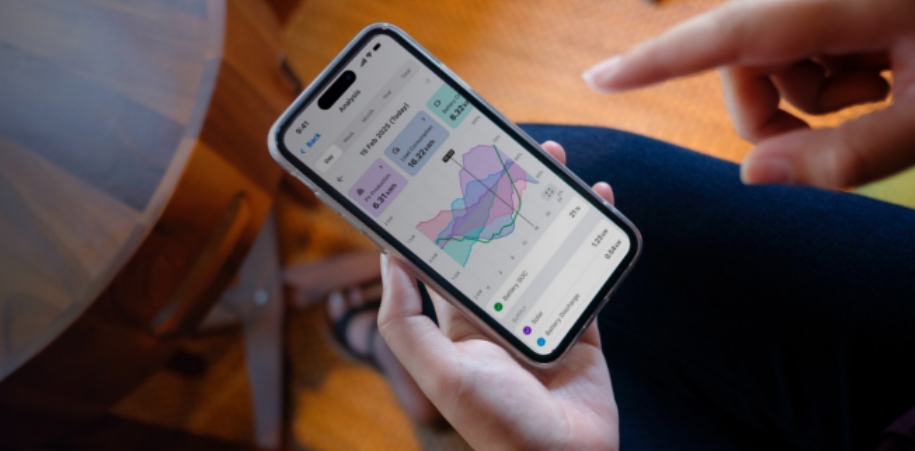
In 2026, energy monitoring is becoming a baseline capability for solar homes, but visibility alone cannot coordinate batteries, variable tariffs, and flexible electrical loads. A home energy monitor supports insight and occasional manual changes, while a home energy management system adds active control across connected assets. Platforms such as FoxCloud 2.0 span both levels by combining system data with scheduling, automation, tariff tools, and installer support. This comparison explains where monitoring remains sufficient and when a solar home benefits from full energy management.
Quick Comparison: Home Energy Monitor vs Home Energy Management System
| Comparison point | Home energy monitor | Home energy management system |
| Purpose and data visibility | Shows where and when electricity is used. More detailed systems may track individual circuits or appliances. | Combines monitoring with rules, schedules, or optimization across connected assets. |
| Control and automation | Primarily supports manual decisions based on current and historical data. | Can adjust compatible batteries, loads, or export behavior according to settings and external signals. |
| Solar and battery integration | May display PV output, battery state of charge, and grid imports or exports. | Can coordinate charging and discharging with solar availability, tariffs, and household priorities. |
| User involvement | The user reviews a pattern and then changes appliance use or system settings. | The user defines goals or schedules, while the system carries out some decisions automatically. |
| Best-fit household | A home with few controllable assets that mainly needs visibility, fault awareness, or help changing daily habits. | A home with several flexible assets, changing prices, export conditions, or a need for coordinated control. |
The practical difference is how much action each tool can take. A home energy monitor helps the household interpret energy use and decide what to change, while a home energy management system can carry out selected responses across compatible assets.[1]
When Is a Home Energy Monitor Enough?
A home energy monitor is usually enough when the household has few controllable assets and the useful response to new data is clear and repeatable.[2] In practice, a home energy monitoring system supports three tasks:
- Identify the source of demand peaks. In a solar-only home or a home on a fixed tariff, daily trends and circuit-level data from a whole home energy monitor can distinguish a general rise in consumption from a recurring appliance load.
- Align flexible use with solar production. Comparing PV output with household demand reveals whether dishwashing, water heating, or EV charging could move into solar hours.
- Check whether a manual change worked. In a straightforward solar-and-battery system, similar-day comparisons can show whether a timing adjustment reduced a peak or increased local solar use. They can also expose a performance issue for installer review.
FoxCloud 2.0 energy monitoring dashboard
For a household with a limited and predictable set of decisions, monitoring can provide the guidance needed for day-to-day adjustments. Once several assets must respond to prices, forecasts, or export limits together, the question is no longer only what the data shows, but how the home should act on it.
When Does a Solar Home Need Active Energy Management?
A solar home needs active energy management when the best operating decision changes during the day and several devices must respond together. In 2026, that threshold is becoming easier to reach as tariffs, export arrangements, and distributed-energy programs become more dynamic:
| Market development | Confirmed change | Energy-management implication |
| Germany: dynamic electricity tariffs | Since January 1, 2025, every electricity supplier has been required to offer at least one dynamic tariff.[3] | Battery charging and flexible demand can be scheduled around changing price periods instead of a single fixed rate. |
| The Netherlands: end of net metering | The net metering scheme for small-scale solar users will be abolished from 2027.[4] | Households have a stronger reason to compare local solar use, storage, and export timing. |
| South Australia: dynamic solar exports | From July 1, 2023, prescribed generating plants connecting to the South Australian distribution network must be capable of receiving and enacting updated export limits, unless an exemption applies.[5] | Compatible equipment and responsive export control become part of system design and commissioning. |
| Australia: VPP-capable on-grid batteries | Batteries supported under the Cheaper Home Batteries Program must have the technical capability to participate in a virtual power plant.[6] | Remote communication and response create the option for coordinated battery operation, although participation remains the owner’s choice. |
These market changes matter at home because a battery, EV charger, or heat pump can often move consumption or storage within practical limits. A home energy management system can bring price data, forecasts, device states, and household priorities into one operating plan instead of asking the homeowner to review each signal separately. A solar energy management system can then schedule storage, shift flexible loads, and update selected responses as conditions change. This is the defining step from monitoring to smart home energy management.
Applying the Checklist: How Does FoxCloud 2.0 Compare?
Developed by Fox ESS for system owners and installers, FoxCloud 2.0 links system visibility with battery scheduling, tariff tools, alarms, and service workflows for compatible Fox ESS equipment.[7]
The following comparison evaluates the platform across the five criteria that distinguish monitoring from active energy management.
| Criterion | FoxCloud 2.0 evidence | Availability or configuration note |
| Data coverage | Presents PV generation, household consumption, battery status, grid exchange, device status, and historical performance in one environment. | The available data depends on installed metering and the equipment connected to the plant. |
| Control and automation | Supports work modes and Mode Scheduler for user-defined battery operation, with up to 96 time segments across 24 hours. AI Mode can use energy habits, PV forecasts, weather, and tariff information to optimize charging and discharging. | Mode Scheduler depends on compatible equipment and system configuration. AI Mode is currently available to owner accounts in the Netherlands. |
| Device compatibility | Connects compatible Fox ESS hybrid inverters and residential batteries and can extend management to supported EV chargers and heat pumps. | Supported combinations are defined by the current device compatibility list and the intended system configuration. |
| Tariff support | Provides manual tariff plans for peak, off-peak, and mid-peak prices, as well as Smart Tariff options that can create a plan from a supported provider. | Smart Tariff is currently available in the Netherlands, Belgium, and the UK. Supported providers and tariff data vary by market. |
| Installer and service support | Gives installers centralized plant management, remote status views, alarms, reports, and multi-plant service workflows alongside the owner’s app experience. | Installer permissions, commissioning functions, and service arrangements depend on the account and local support availability. |
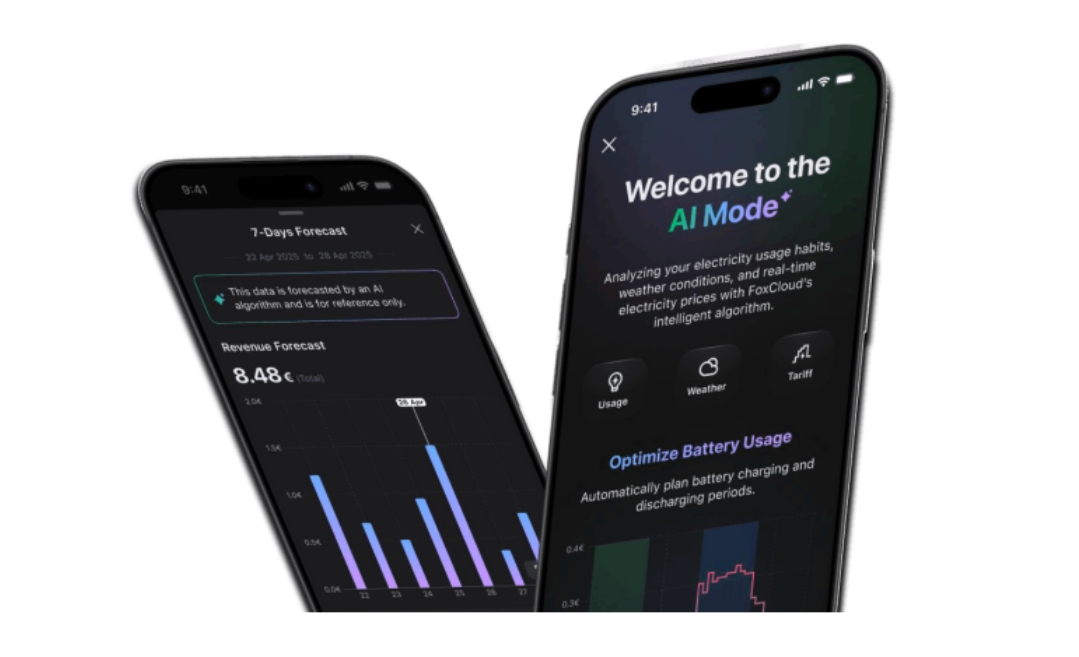
FoxCloud 2.0 AI Mode interface
The comparison highlights three advantages for solar homes that need more than basic visibility:
- Monitoring data can guide system operation. A pattern identified in the monitoring view can be translated into a work mode, tariff setting, or battery schedule within the same platform.
- Automation can follow changing conditions. Mode Scheduler supports detailed user-defined plans, while AI-based planning can update charging and discharging based on household demand, forecasts, and supported tariff data.
- Owner and installer workflows remain connected. Homeowners manage day-to-day operation while installers support commissioning, alarms, reports, and multi-plant service.
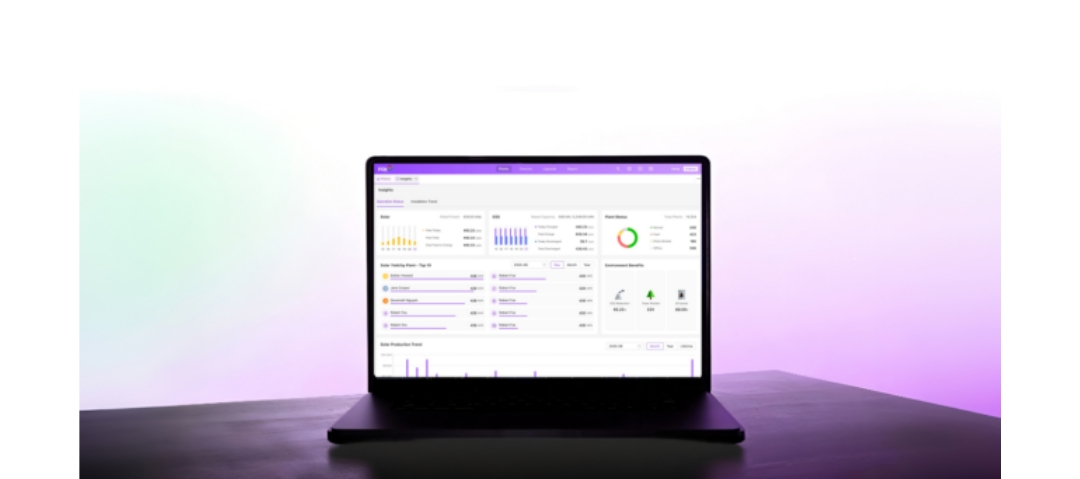
FoxCloud Web 2.0 installer dashboard
Together, these functions make FoxCloud 2.0 most relevant where coordinated settings must be applied and maintained over time.
Conclusion
The choice between a home energy monitor and a home energy management system depends on the level of coordination the household requires:
- Choose a home energy monitor when the main need is to see energy flows, identify recurring patterns or faults, and make occasional manual changes.
- Choose a home energy management system when batteries, flexible loads, tariffs, and export conditions require coordinated control.
Fox ESS supports this system-level approach with product engineering, manufacturing, and regional service capabilities. Founded in 2019, the company has five R&D centers and reports more than 5,000 employees and operations in over 90 countries. Its service network includes Germany, Benelux, Australia, and other key markets. This combination matters because effective energy management depends on commissioning, compatible equipment, ongoing support and software.
Homeowners and installers can contact Fox ESS to determine whether a property needs monitoring alone or coordinated energy management, and to confirm a FoxCloud 2.0 configuration matched to its equipment, tariff structure, export rules, and future energy plans.
References
[1] Australian Government, Smart Homes.
[2] Australian Government, Monitor Your Solar System.
[3] Bundesnetzagentur, Monitoring Report 2025.
[4] Government of the Netherlands, 2025 Tax Plan: More Balanced Income Distribution and Healthy Public Finances.
[5] Government of South Australia, Department for Energy and Mining, Dynamic Export Limits Requirement.
[6] Australian Government, Batteries.
[7] Fox ESS, FoxCloud 2.0 App User Manual, Version 2.1.





Comment