
Google Ads vs. SEO for Local Businesses: When to Use Paid Search, Organic Growth, or Both

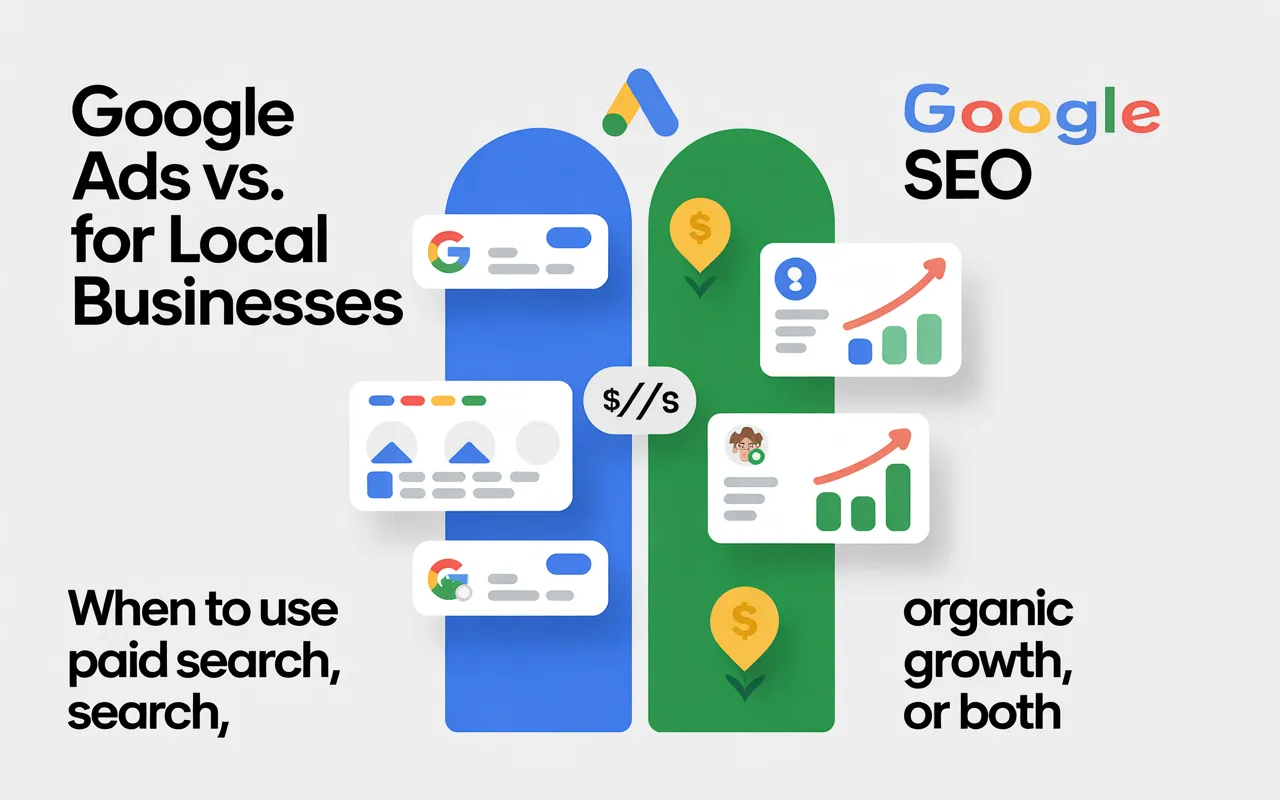
Local businesses often ask whether they should invest in Google Ads or SEO, but the better question is what the business needs right now. The right choice depends on urgency, budget, competition, profit margins, and how quickly the business needs qualified leads.
Google Ads can help create faster visibility when campaigns are set up properly, while SEO builds long-term trust and organic presence. Many local businesses need both, as customers use search to compare services, read reviews, check hours, and decide whom to contact.
Google Ads Gives Local Businesses Speed and Control
Paid search is best when a business needs visibility fast. Through Search Ads, Local Services Ads, and Maps ads, Google Ads can help businesses reach people actively searching for nearby services. They also give businesses more control over targeting, budget, messaging, landing pages, and lead flow.
When Paid Search Makes the Most Sense
Google Ads is useful for new businesses, new locations, seasonal offers, and urgent services where customers need help fast. It works well for industries like HVAC, plumbing, roofing, legal, dental, pest control, restoration, auto repair, and emergency home services. Paid search can also help businesses test which services, locations, and offers generate real leads before investing heavily in long-term organic campaigns.
The Real Risk of Paid Search
Google Ads can waste budget fast when campaigns are poorly managed. The real problem is often weak execution, not click cost, because traffic still needs to turn into leads, appointments, or revenue.
Common risks include:
- Sending traffic to a weak or generic landing page
- Using an unclear offer or call-to-action
- Targeting keywords that are too broad
- Failing to track calls and lead quality
- Ignoring call quality and booked appointment rates
- Responding too slowly to new inquiries
- Running ads without a clear conversion and follow-up process
Best Metrics to Track
Local businesses should judge paid search by revenue, not just clicks or impressions. Cheap leads are worthless if they do not become customers, while higher-cost leads can still be profitable if they turn into valuable jobs or long-term clients.
Key metrics to track include:
- Cost per qualified lead
- Conversion rate
- Booked appointment rate
- Call quality
- Revenue per campaign
Return on ad spend - Lead-to-customer rate
SEO Builds Long-Term Local Visibility and Trust
SEO is best for businesses that want long-term visibility in Google Search, Google Maps, and organic results. It requires strategy, content, technical work, and consistency, but it can help businesses earn trust and reduce overreliance on paid traffic. Structured SEO services can also improve site architecture, local relevance, technical performance, and visibility for service-based searches.
What Local SEO Actually Includes
Local SEO is more than blog posts; it includes Google Business Profile optimization, accurate business details, reviews, website performance, and service or location pages. These elements help customers understand what the business offers, where it operates, why it is trustworthy, and how to contact it. Reviews, photos, business hours, service descriptions, and clear contact information are key trust signals that influence who gets the lead.
When SEO is the Better First Investment
SEO is often the better first investment when a business already has some lead flow and wants a stronger long-term foundation. It helps local businesses build credibility, improve visibility, and reduce overreliance on paid ads.
SEO also supports other channels. Customers who click an ad may still search for the business name, read reviews, compare with competitors, or revisit the website before converting.
The Biggest SEO Mistake Local Businesses Make
The biggest mistake is treating SEO like shallow blogging. Publishing generic articles applicable to any business in any city is a weak strategy.
Local SEO needs service-specific, location-specific, trust-building content. A roofing company does not need vague posts about “why roofs matter.” It needs pages that explain its services, service areas, proof of experience, customer concerns, financing options, warranties, and reasons to choose the business locally.
Paid Search vs. Organic Growth: How to Decide
The choice should be based on business goals, not guesswork. Use Google Ads for fast leads, new offers, demand testing, or urgent services. Use SEO for long-term visibility, trust, and stronger organic rankings.
In competitive markets, using both can capture immediate demand while building lasting authority.
| Choose This Strategy | Best When | Main Benefit |
| Google Ads | The business needs leads now, is launching a new offer, or wants to test demand | Faster visibility and more control over targeting |
| SEO | The business wants long-term visibility, stronger trust, and better organic rankings | Builds lasting local search presence |
| Both | The market is competitive, and the business has the margins to support both | Captures short-term demand while building long-term authority |
The Strongest Local Strategy Uses Ads and SEO Together
The best local search strategy often combines both channels. Google Ads can target bottom-of-funnel searches from people who are ready to call, while SEO builds visibility for service pages, location pages, branded searches, and informational queries.
Paid search data can also guide SEO by showing which keywords, services, and offers drive high-quality leads. At the same time, strong SEO assets like reviews, landing pages, and local credibility can improve paid search results.
Ads provide speed, while SEO builds long-term visibility. Instead of asking which is better, local businesses should choose the channel that matches their current goal: fast leads, lasting visibility, or both.






Comment