
CRM Software: The Smart Way to Manage Customer Relationships and Grow Your Business

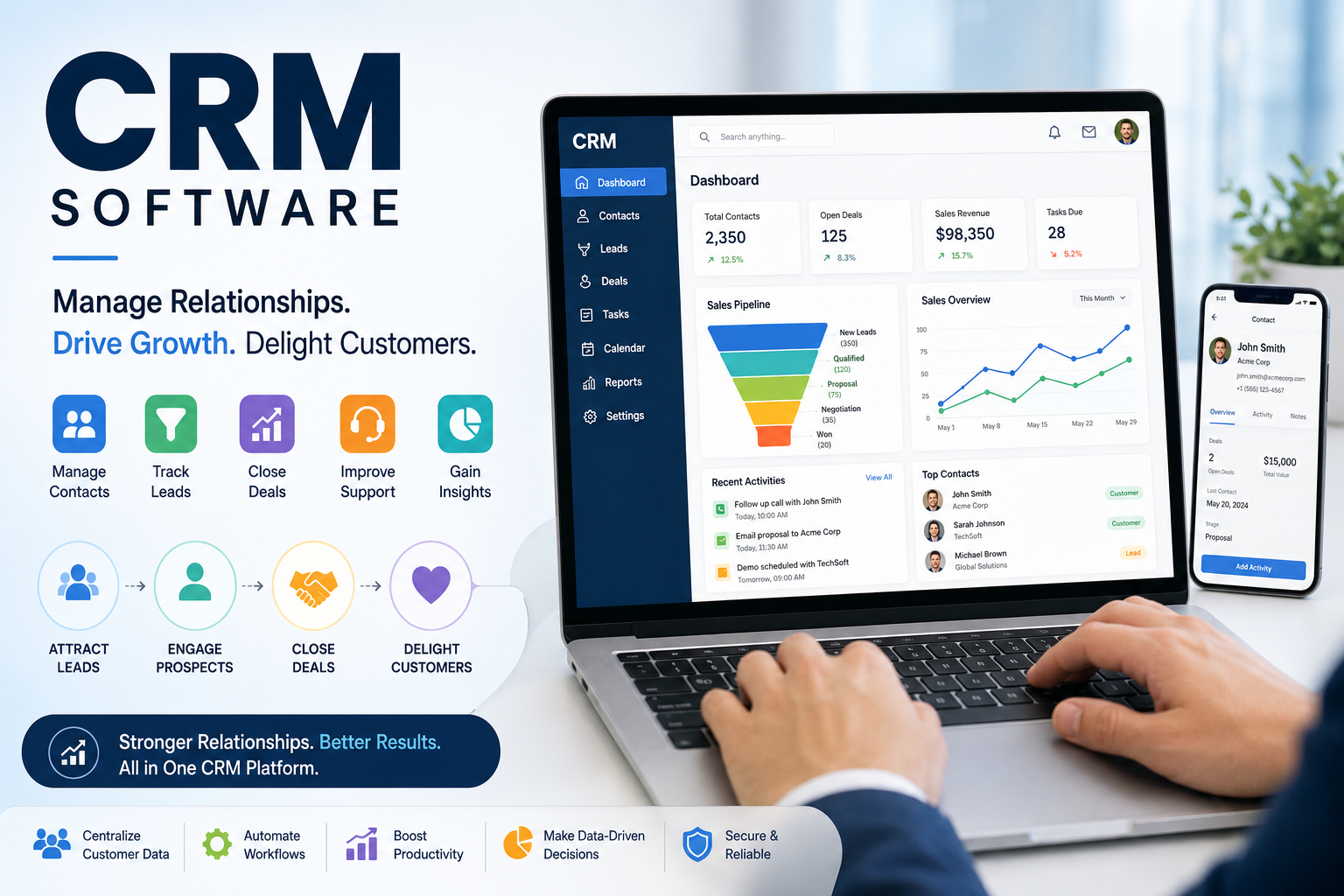
In today’s competitive business landscape, managing customer relationships effectively is no longer optional—it’s essential. Whether you’re a startup, a growing business, or an established enterprise, keeping track of leads, customers, sales, and support interactions can quickly become overwhelming. This is where AI CRM software plays a vital role.
A Customer Relationship Management (CRM) system helps businesses organize customer information, streamline sales processes, improve communication, and build stronger relationships. By centralizing customer data in one platform, teams can work more efficiently while delivering a better customer experience.
What is CRM Software?
CRM (Customer Relationship Management) software is a business solution that stores and manages customer information, sales activities, communication history, and support interactions in a single platform.
Instead of relying on spreadsheets, emails, or multiple disconnected tools, businesses can use CRM software to manage every stage of the customer journey—from generating leads to closing deals and providing after-sales support.
Why Businesses Need CRM Software
As companies grow, managing customer interactions manually becomes increasingly difficult. CRM software simplifies this process by providing a centralized database accessible to sales, marketing, and customer support teams.
Some major benefits include:
- Better customer relationship management
- Improved sales tracking
- Faster lead follow-ups
- Increased team collaboration
- Better forecasting and reporting
- Higher customer satisfaction
- Increased business productivity
Key Features of CRM Software
Contact Management
CRM software stores complete customer profiles, including contact details, purchase history, communication records, and notes. This allows employees to access customer information instantly.
Lead Management
Businesses can capture, organize, and prioritize leads efficiently. Sales teams can monitor each lead’s progress and focus on prospects that are most likely to convert.
Sales Pipeline Management
CRM platforms provide visual sales pipelines that help businesses track opportunities from the first interaction to the final sale. Managers gain complete visibility into the sales process.
Task and Activity Tracking
Users can create reminders, schedule meetings, assign follow-up tasks, and receive notifications to ensure that no opportunity is missed.
Marketing Automation
Many CRM systems include marketing features such as email campaigns, customer segmentation, and lead nurturing workflows that help businesses engage customers effectively.
Reporting and Analytics
CRM software generates detailed reports on sales performance, customer behavior, conversion rates, and employee productivity, enabling data-driven decision-making.
Benefits of Using CRM Software
Improved Customer Experience
Having access to complete customer information allows businesses to provide personalized interactions and resolve issues more efficiently.
Increased Sales
Sales representatives can identify high-potential leads, automate repetitive tasks, and close deals faster.
Better Team Collaboration
Sales, marketing, and customer service teams can access the same customer information, reducing communication gaps and improving coordination.
Time Savings Through Automation
CRM software automates repetitive tasks like email follow-ups, reminders, lead assignments, and reporting, allowing employees to focus on strategic work.
Better Business Insights
Real-time dashboards and analytics help business leaders understand customer trends, forecast revenue, and identify growth opportunities.
Industries That Use CRM Software
CRM software is widely used across different industries, including:
- Healthcare
- Education
- Real Estate
- Manufacturing
- Retail
- Finance
- Information Technology
- E-commerce
- Hospitality
- Professional Services
Almost every business that interacts with customers can benefit from a CRM solution.
How to Choose the Right CRM Software
When selecting CRM software, consider the following factors:
- Ease of use
- Customization options
- Automation capabilities
- Third-party integrations
- Mobile accessibility
- Data security
- Reporting features
- Customer support
- Pricing
- Scalability
Choosing a CRM that aligns with your business goals will maximize long-term value.
Future of CRM Software
Modern CRM solutions are rapidly evolving with technologies such as Artificial Intelligence (AI), machine learning, predictive analytics, and automation. AI-powered CRM systems can recommend next actions, predict customer behavior, automate workflows, and improve sales forecasting.
As businesses continue to prioritize customer experience, CRM software will become even more intelligent, helping organizations build stronger relationships while improving operational efficiency.
Conclusion
CRM software has become one of the most valuable business tools for organizations of all sizes. It simplifies customer management, improves sales performance, enhances collaboration, and provides valuable business insights.
Whether you’re looking to improve customer satisfaction, increase revenue, or streamline operations, investing in the right CRM software can significantly impact your business growth. By choosing a solution that matches your requirements and supports future expansion, your organization can build stronger customer relationships and achieve long-term success.






Comment