
Game Plus and the Business of Digital Loyalty

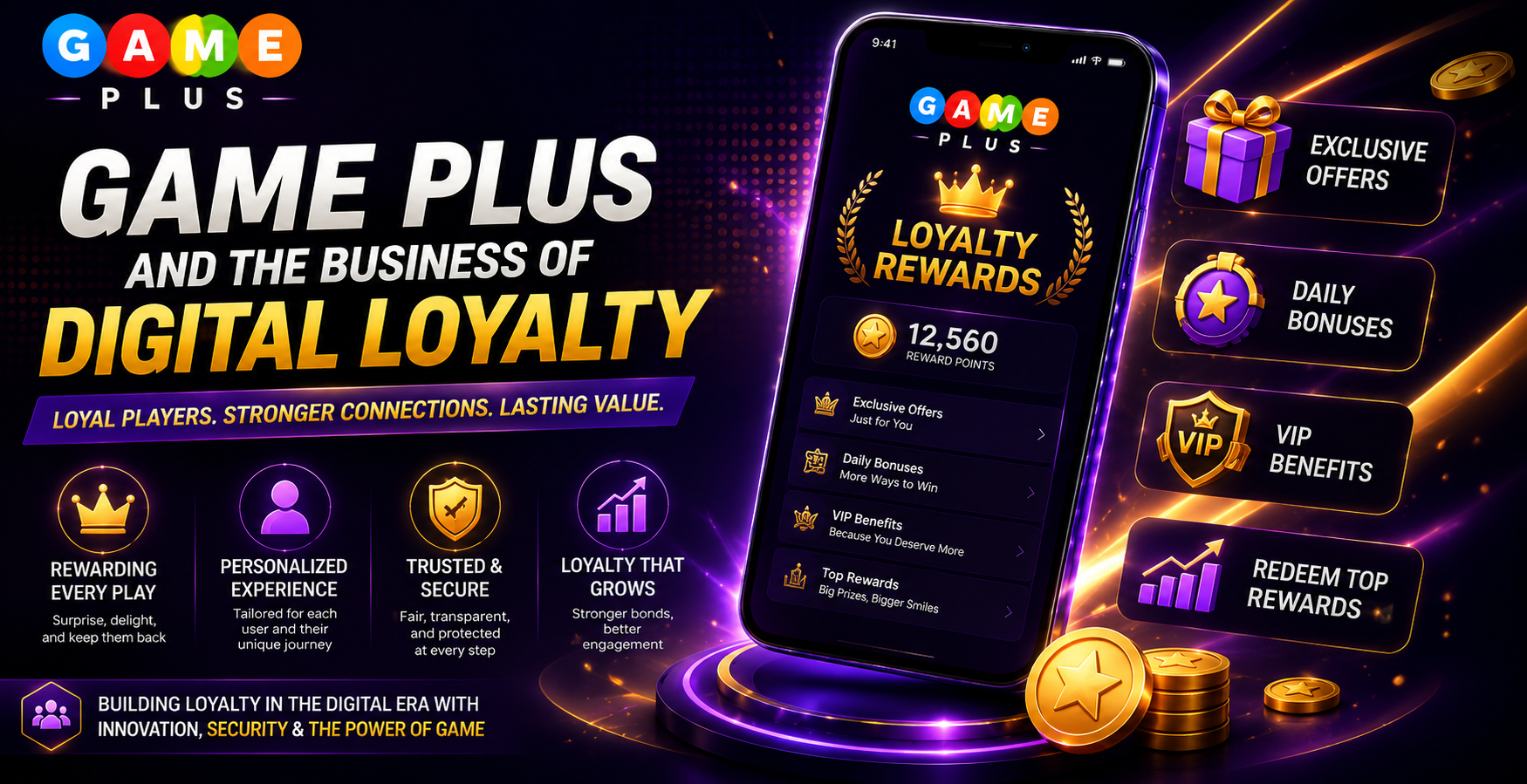
Explore how Casino Plus can build a clearer digital loyalty ecosystem through transparent rewards, useful personalization, and responsible engagement.
Digital loyalty is changing. Traditional programs were often built around a simple transaction: users completed an action, collected points, and later exchanged those points for a benefit. Modern mobile audiences expect something more useful, immediate, and transparent.
For gamePlus, a successful loyalty ecosystem should not rely only on the size of a reward. It should help users understand eligibility, progress, expiration dates, redemption procedures, and the practical value of participating. Every part of the experience must remain easy to verify.
This creates a broader business opportunity. A well-designed loyalty system can improve customer understanding, strengthen trust, reduce support requests, and encourage more sustainable relationships. The objective is not to generate the highest possible level of activity. It is to create a digital service that consistently delivers recognizable value without hiding important conditions.
Loyalty Is an Experience, Not a Single Promotion
A promotion is usually temporary. A loyalty ecosystem is an ongoing relationship between a platform and its users.
This distinction matters because users evaluate more than one offer. They also notice how clearly information is presented, whether progress is tracked accurately, and how easily they can manage their preferences.
Plus can approach digital loyalty as a complete journey that includes:
- Discovery
- Eligibility
- Enrollment
- Progress tracking
- Reward confirmation
- Redemption
- Expiration reminders
- Customer assistance
- Preference management
- Responsible participation controls
When these stages work together, users can understand both the potential benefit and the obligations attached to it.
Beginning With a Clear Value Exchange
Every loyalty feature asks something from the user. It may require registration, verification, a specific action, or permission to receive communications.
The value offered in return should be equally clear.
Before joining, users should understand what they may receive, what they need to do, and whether any important limitations apply. Key conditions should not be hidden in a lengthy document that is difficult to read on a smartphone.
A clear Plus value exchange should answer several questions immediately:
- Who is eligible?
- What action is required?
- What benefit may be available?
- Is there a time limit?
- Are there qualifying conditions?
- How is progress tracked?
- How is the reward claimed?
- Where can users get help?
Detailed terms can remain available, but the essential information should appear in a concise summary.
Designing an Understandable Loyalty Dashboard
A digital loyalty dashboard should help users understand their current status without requiring manual calculations.
Important information may include:
- Current progress
- Completed requirements
- Remaining steps
- Available rewards
- Pending rewards
- Redemption history
- Expiration dates
- Relevant terms
- Support options
The dashboard should distinguish clearly between available, pending, used, and expired items. Similar colors or ambiguous labels can make these states difficult to recognize.
Plus can improve clarity by combining written labels with visual indicators. A progress bar may provide a quick overview, while a numerical explanation shows the exact status.
Users should never need to guess whether an action was recorded successfully.
Making Terms Part of the Product
Terms and conditions are often treated as documents separate from the user experience. This approach creates friction because users must move between the offer, account interface, and policy page to understand one process.
A stronger design connects relevant conditions to the action they affect.
If an offer has an expiration date, that date should appear beside the offer. If only particular activities qualify, the eligibility explanation should be visible before participation. If redemption requires an additional step, the interface should explain it before the user reaches the final stage.
Plus can use layered disclosure:
- A short summary for immediate understanding
- Expandable details for additional conditions
- A complete terms page for formal information
- Contextual reminders during important steps
This structure supports transparency without overcrowding the main interface.
Using Plain Language
Loyalty programs can contain complex terminology. Internal business language may be familiar to product teams but confusing to users.
Plain language does not remove necessary detail. It presents that detail through shorter sentences, familiar terms, and logical sequencing.
Instead of saying that an item is “subject to fulfilment of all applicable qualifying criteria,” a clearer interface can state, “Complete all listed requirements before the deadline.”
Plus should also use terminology consistently. If the platform calls something a “reward” on one page, it should not unexpectedly call the same item a “benefit,” “credit,” or “gift” elsewhere.
Consistent language helps users understand that multiple screens refer to the same process.
Building Trust Through Accurate Progress Tracking
A loyalty system depends on accurate records. If users believe that completed actions are missing, confidence can decline quickly.
The interface should confirm when an eligible action has been recorded. If processing is not immediate, it should explain the expected delay rather than leaving the status unchanged without context.
Plus can use clear states such as:
- Recorded
- Processing
- Completed
- Available
- Redeemed
- Expired
- Not eligible
Each state should have a defined meaning. Support representatives should use the same definitions when responding to questions.
The platform should also retain enough history for users to understand how the current status was calculated.
Creating Fair Expiration Reminders
Expiration dates can help manage temporary offers, but users need a reasonable opportunity to act before a benefit disappears.
A fair reminder system may notify users at relevant intervals without creating excessive pressure. The timing should reflect the value of the information and the amount of action required.
Plus could allow users to choose whether optional reminders arrive through email, browser notification, or another supported channel.
Messages should identify the exact item and deadline. Vague statements such as “Act now before it is too late” create urgency without providing useful information.
A better message explains what will expire, when it will expire, and where the user can review the applicable conditions.
Personalizing Without Excluding Users
Personalization can make loyalty information more relevant. A platform may highlight categories selected by the user or prioritize information related to an active process.
However, personalization should not prevent users from viewing the complete set of generally available information. It should organize discovery rather than create an invisible barrier.
Plus can offer controls that allow users to:
- Select preferred categories
- Change communication frequency
- Hide irrelevant updates
- Review general information
- Reset recommendations
- Disable optional personalization
The platform should also explain why a personalized item appears. A short statement such as “Based on your selected preference” gives users a clearer understanding of the system.
Connecting Loyalty Across Devices
Users may discover an offer on a mobile phone and later review its terms on a desktop. Their status should remain consistent across authorized devices.
Account-wide progress, confirmed rewards, and important deadlines should synchronize reliably. Device-specific notification settings may remain separate, but the underlying loyalty record should not change according to the screen used.
Casino Plus should also manage simultaneous sessions carefully. If an item is redeemed on one device, another open session should update promptly to prevent duplicate attempts or confusing information.
Cross-device continuity makes the loyalty ecosystem feel like one service rather than several disconnected interfaces.
Improving Branded Information Discovery
Before joining any digital offer, users often search for explanations from different sources. They may want to understand the terminology, compare a claim with the published conditions, or find instructions that are easier to follow.
A strong content strategy should answer these questions directly. It should not repeat promotional language without explaining eligibility and limitations.
Readers researching current branded information can consult this contextual resource about Casino Plus, which belongs naturally within a discussion of offer discovery, clear terms, eligibility checks, and informed decision-making.
The reference gives readers a dedicated destination for further research while allowing the guest article to remain focused on the wider business and product principles behind digital loyalty.
Integrating Customer Support
Even the clearest loyalty system will generate occasional questions. Users may need help understanding eligibility, locating a recorded action, or confirming an expiration date.
Support representatives should have access to the same approved information displayed in the user interface. They should not provide different interpretations of the same rule.
Casino Plus can create support categories around common loyalty issues:
- Eligibility questions
- Missing progress
- Pending status
- Redemption instructions
- Expired items
- Account verification
- Technical errors
- Responsible participation
Automated assistance may answer routine questions, but unusual or account-specific cases should move easily to a trained person.
Users should not have to repeat the full history when the conversation changes channels.
Protecting Loyalty Accounts
Any account containing saved preferences, activity records, or available benefits requires appropriate security.
Casino Plus can support account protection through secure sessions, device management, suspicious-access detection, and additional verification for sensitive actions.
The platform should never ask users to reveal a password or complete verification code through ordinary chat. Security reminders should explain which information legitimate representatives will not request.
If unusual activity is detected, the notification should state what occurred and provide a secure path for reviewing the account.
Protection should be strong without making ordinary actions unnecessarily difficult.
Measuring Loyalty Quality
Enrollment numbers alone do not show whether a loyalty system is useful. A large number of sign-ups may be followed by low understanding, high abandonment, or repeated complaints.
More meaningful measurements include:
- Enrollment completion
- Terms-page engagement
- Progress accuracy
- Redemption completion
- Expiration without use
- Support-contact frequency
- User satisfaction
- Notification opt-outs
- Account-security incidents
- Responsible participation tool usage
Casino Plus can use these indicators to understand where the journey creates confusion.
A high rate of unused benefits, for example, may indicate that the value is weak, the requirements are unclear, or the redemption path is difficult. The solution should be based on the underlying cause rather than a single metric.
Avoiding Dark Patterns
A loyalty interface should not manipulate users through hidden conditions, false urgency, confusing buttons, or difficult cancellation procedures.
Important limitations should receive reasonable visual prominence. Accepting optional communication should not be easier than refusing it. A timer should represent a real deadline rather than restart when the page reloads.
Casino Plus can build greater trust by ensuring that:
- Offers use accurate descriptions
- Deadlines are genuine
- Terms are accessible
- Optional consent is clearly separated
- Users can leave a program easily
- Support routes remain visible
- Benefits are not presented as guaranteed income
Ethical design may reduce some short-term interactions, but it supports a more credible long-term relationship.
Responsible Participation Within Loyalty Design
Loyalty systems should reward informed participation without encouraging users to exceed personal limits.
Progress bars, reminders, and personalized messages must be reviewed carefully because they can create pressure to continue an activity. The interface should not imply that completing a target is more important than personal well-being.
Casino Plus should make age requirements, limit-management tools, account controls, and support resources easy to find.
Eligible adults should treat participation as entertainment, understand that outcomes involve risk, set personal time and spending limits, and never chase losses. Anyone who feels that participation is becoming difficult to control should pause and seek appropriate support.
Responsible design is not separate from loyalty. It defines whether the relationship is sustainable.
Loyalty Depends on Credibility
Digital loyalty succeeds when users understand the value exchange and trust the platform to apply its stated rules consistently.
For Plus, the strongest strategy is not to create the most complicated system. It is to build one that communicates clearly, records progress accurately, protects user information, and makes redemption understandable.
Transparent terms reduce uncertainty. Consistent language improves comprehension. Reliable progress tracking strengthens confidence. Responsible controls protect the long-term user relationship.
When these elements work together, loyalty becomes more than a collection of temporary offers. It becomes a service experience built around clarity, usefulness, and trust.
Frequently Asked Questions
1. What is a Plus loyalty ecosystem?
It is the complete system used to present eligibility, track progress, communicate conditions, confirm benefits, support redemption, and manage user preferences.
2. What information should users review before joining an offer?
Users should check eligibility, required actions, deadlines, qualifying conditions, redemption steps, expiration rules, and applicable limitations.
3. Why is progress tracking important?
Accurate progress tracking shows whether eligible actions were recorded and helps users understand what remains before a requirement is completed.
4. Should loyalty terms appear only on a separate policy page?
No. Essential conditions should also appear near the relevant offer and action, while the complete terms remain available for detailed review.
5. Can Casino Plus personalize loyalty information?
Personalization can organize relevant information when it is transparent and optional. Users should still be able to view generally available content.
6. Should loyalty information synchronize across devices?
Confirmed account-wide progress and available benefits should remain consistent across authorized devices, while some notification settings may remain device-specific.
7. How can users protect a loyalty account?
Users should create strong credentials, protect verification codes, review unfamiliar devices, use secure access routes, and contact support about suspicious activity.
8. How does responsible participation relate to digital loyalty?
Loyalty features should not pressure users to exceed personal limits. Participation should remain informed, voluntary, age-appropriate, and controlled.







Comment