
From SQL Scripts to AI Pipelines: How a Technology Innovator Transformed Mortgage Servicing From the Inside

As artificial intelligence moves from experimental applications into mission-critical enterprise systems, some of its most consequential implementations are taking place far from consumer-facing technology. In highly regulated industries such as mortgage servicing, introducing AI requires more than building an effective model. It requires integrating new technology with complex data environments, regulatory controls, legacy infrastructure, and operational systems where reliability is essential.
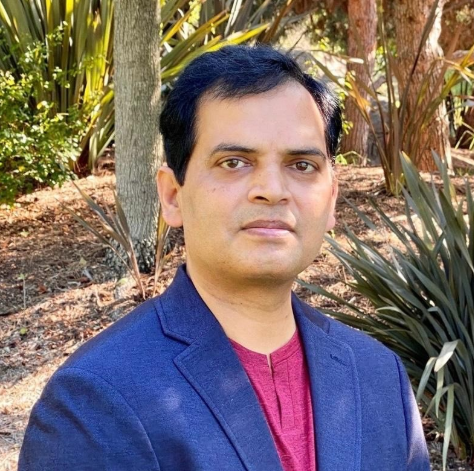
Sibaram Prasad Panda has spent much of his career working at that intersection.
Over more than two decades in enterprise technology, Panda has progressed from large-scale database engineering and infrastructure modernization to cloud data platforms, intelligent document processing, and generative AI. His work has spanned private-sector enterprises, city government systems, large technology environments, and mortgage servicing platforms, giving him an unusually broad perspective on how emerging technologies can be introduced into systems that must operate continuously and at scale.
Since joining Decision Ready Solutions, an Irvine, California-based mortgage technology company, in 2015, Panda has played a leading role in designing and modernizing technology platforms supporting mortgage servicing operations. His work has extended across vendor management, investor claim processing, bankruptcy case management, attorney oversight, data engineering, analytics, and artificial intelligence.
These systems support operational areas where the quality and availability of information can directly affect business decisions, regulatory obligations, and financial outcomes.
Modernizing Data Infrastructure for Mortgage Servicing
Mortgage servicing generates large volumes of transactional, legal, operational, and document-based information, making efficient and reliable data processing essential for managing claims, defaults, bankruptcy cases, vendor performance, and regulatory deadlines.
Panda played a leading role in modernizing the underlying data engineering and analytics architecture by introducing cloud-based technologies and redesigning large-scale processing workflows. His work transformed resource-intensive processes into more efficient systems capable of meeting defined service-level requirements and supporting time-sensitive business operations.
These improvements extended beyond technical performance. Faster and more reliable data processing enabled more timely claims evaluation, risk analysis, reporting, and operational decision-making. By establishing a scalable and modern data foundation, Panda also helped create the infrastructure necessary to support advanced analytics, automation, and artificial intelligence across mortgage servicing operations.
Extending Enterprise Platforms into Artificial Intelligence
After modernizing the data environment, Panda expanded his focus to artificial intelligence and intelligent automation. His work includes natural-language search, image-based retrieval, intelligent document processing, and LLM-powered loan summarization.
These technologies help mortgage servicers manage large volumes of unstructured information, including legal documents, servicing notes, claims, and correspondence. By integrating AI into enterprise workflows, Panda has focused on improving information retrieval and document analysis while maintaining scalability, security, governance, and operational reliability.
Building an Organizational Approach to Responsible AI
Panda also co-founded an internal AI Center of Excellence at Decision Ready Solutions, helping establish a more structured framework for evaluating and deploying artificial intelligence within the organization.
The initiative was designed to bring together technical experimentation, governance, cost management, architecture, and responsible AI practices.
That approach has become increasingly important as organizations encounter a rapidly expanding range of generative AI technologies. While individual teams can quickly experiment with new models and tools, enterprise deployment raises additional considerations involving data protection, model reliability, operational costs, security, monitoring, and governance.
An AI Center of Excellence provides a mechanism for evaluating those considerations systematically rather than treating AI adoption as a collection of isolated experiments.
For Panda, the evolution from data architecture to artificial intelligence represents a continuation of the same engineering principle that has shaped much of his career: emerging technology becomes valuable only when it can function dependably within real production environments.
A Career Built Around Enterprise-Scale Systems
Panda’s focus on reliability and large-scale technology systems predates his work in mortgage servicing.
Before joining Decision Ready Solutions, he served as a Senior Database Administrator for the City of Eugene, Oregon. In that role, he worked on SQL Server migrations and implemented high-availability and disaster-recovery technologies supporting municipal operations.
His responsibilities involved technologies such as clustering, replication, log shipping, and SQL Server Always On across systems serving areas including public safety, public works, finance, and human resources.
Government technology environments place a premium on availability and continuity. Systems supporting essential municipal functions must remain dependable even during infrastructure failures, maintenance events, or unexpected disruptions.
That experience helped establish a foundation in designing technology not simply for performance, but for resilience.
Earlier, during his tenure with Wipro Technologies, Panda worked on large enterprise technology engagements, including an assignment supporting NBC Universal. There, he contributed to an extensive infrastructure modernization initiative involving the migration of approximately 500 physical SQL Server and Oracle database servers into a VMware-based virtualized environment.
The project helped move traditional physical infrastructure toward a more flexible and scalable architecture, reflecting an earlier generation of the technology modernization that would later accelerate through cloud computing.
Panda also worked in a Tier 3 technical project management capacity supporting Microsoft production environments involving approximately 2,500 SQL Server instances. His responsibilities included supporting enterprise database operations and contributing to ITIL-based service-management practices intended to strengthen incident handling, change management, and operational discipline.
Across these roles, Panda developed experience with technology at increasingly large levels of scale, from municipal systems and enterprise infrastructure to cloud platforms and AI-enabled applications.
Contributions Beyond Enterprise Practice
Panda’s contributions extend beyond enterprise technology into academic research, technical publishing, and professional service. An IEEE Senior Member, he has authored numerous peer-reviewed papers in areas including data engineering, artificial intelligence, cybersecurity, cloud computing, and advanced database systems.
He has also reviewed more than 260 research papers for over 50 international and technical conferences, assessing the originality, technical quality, and relevance of work in AI, machine learning, data engineering, cybersecurity, and related fields. This extensive peer-review activity reflects his recognized expertise and continued contribution to the broader research community.
Panda is also the author of books including Mastering Microsoft Fabric: Unified Data Engineering, Governance, and Artificial Intelligence in the Cloud and Relational, NoSQL, and Artificial Intelligence Integrated Database Architectures. Together, his research, peer-review service, and technical authorship demonstrate contributions that extend beyond industry practice into the wider engineering and academic community.
Bridging Legacy Enterprise Systems and Generative AI
The transition from traditional database architecture to generative AI reflects a broader convergence across enterprise technology. AI systems depend on secure, accessible, and well-governed data, making strong infrastructure a critical foundation for successful deployment.
Panda’s career spans these interconnected layers, from database reliability, virtualization, high availability, and disaster recovery to cloud data engineering, analytics, intelligent document processing, natural-language interfaces, and large language models. This progression positions his work at the intersection of enterprise infrastructure and production-ready AI.
Bringing AI Into a Highly Regulated Industry
Mortgage servicing provides a demanding environment in which to make that transition.
Unlike experimental AI applications, technology deployed in financial operations must coexist with regulatory requirements, sensitive information, established business processes, security controls, and systems that may have been developed over many years.
Accuracy and reliability therefore matter as much as innovation.
The challenge is not simply whether an AI system can generate a useful result. Organizations must also determine whether the system can operate consistently, securely, economically, and transparently as part of a larger enterprise environment.
Panda’s work in mortgage technology illustrates one approach to that challenge: modernize the data foundation first, build scalable infrastructure around it, introduce AI where it can address specific operational problems, and establish governance mechanisms capable of supporting broader adoption.
It is an approach shaped by years of experience with systems where availability, data integrity, and operational discipline are fundamental requirements.
Engineering the Next Generation of Enterprise Systems
The evolution of Panda’s career mirrors the evolution of enterprise technology itself.
Physical database servers gave way to virtualization. Traditional data centers evolved toward cloud platforms. Business intelligence expanded into large-scale data engineering. Structured database queries are increasingly being supplemented by natural-language interfaces and generative AI.
Through those shifts, one challenge has remained constant: converting emerging technology into systems that organizations can trust.
From managing large SQL Server environments and designing high-availability architectures to building cloud data platforms and developing AI-enabled mortgage servicing applications, Panda has consistently worked on that problem.
His experience demonstrates that some of the most meaningful advances in artificial intelligence may not come from replacing established enterprise systems, but from carefully connecting AI to the data, infrastructure, and operational knowledge that already sustain them.
For industries such as mortgage servicing, that connection may ultimately determine whether generative AI remains an experimental technology or becomes part of the infrastructure on which critical financial operations depend.






Comment