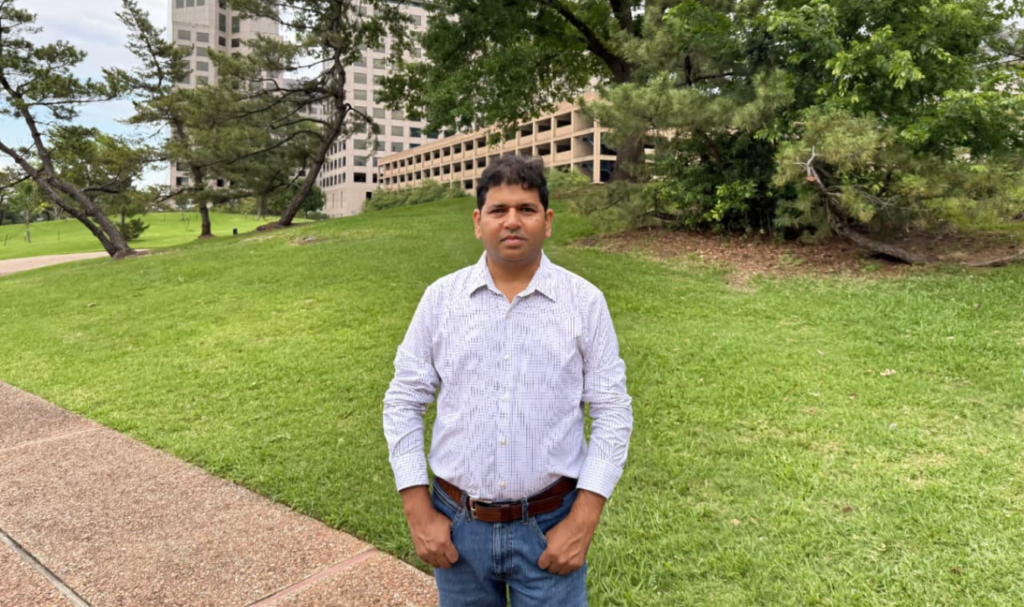
With nearly two decades of enterprise engineering behind him, a Senior Data Architect at Christus Health is quietly transforming the way critical healthcare information moves — and the implications reach far beyond Texas.
In hospitals and health systems across the United States, a remarkable amount of critical patient information still travels by fax. It is an irony of modern medicine: life-altering clinical data — referrals, prescriptions, prior authorizations — moving through technology invented in the nineteenth century. For organizations operating at scale, this bottleneck can cost patients hours, sometimes days. At Christus Health, a premier non-profit healthcare network spanning multiple countries, it costs exactly twenty-four hours per document cycle. Until Manas Kumar Mohanty changed it.
Today, that same process takes under two minutes.
A Career Built on Complexity
Mohanty’s path to the forefront of healthcare data innovation was not linear — it was deliberately layered. Born in Puri, Odisha, India, he completed his Master of Science in Computer Information Systems at the Regional College of Management in Bhubaneswar before building what would become a nineteen-year career across some of the world’s most demanding enterprise environments. His professional journey spans continents, industries, and technology generations: from engineering security applications for Citi Group’s lending platforms at Satyam Computer Services, to developing Optimus — a turbine sensor-monitoring tool for GE’s Power and Water division — to leading Electronic Health Record integrations across the United States and Africa at Chetu Inc.
Each role added a distinct layer of expertise. At Satyam and Citi Group, Mohanty developed a deep fluency in mission-critical migrations — transitioning legacy systems to modern Microsoft .NET and Oracle platforms without disrupting live financial operations. At Tech Mahindra and General Electric, he worked at the intersection of industrial engineering and enterprise software, using TIBCO Spotfire, GE Proficy Historian, and MATLAB to ensure the uninterrupted performance of hydro, wind, and gas turbines worldwide. At Chetu, he managed complex healthcare integrations for multi-client EHR platforms, navigating the labyrinthine compliance requirements of systems like Allscripts and medical claims-processing workflows.
The Architecture of a Two-Minute Breakthrough
When Mohanty joined Christus Health as a Data Analytics and Engineer II — effectively a Senior Data Architect — the organization faced a challenge common to large health systems: its document-ingestion infrastructure had not kept pace with its operational scale. Clinical referrals, administrative paperwork, and healthcare records were arriving via fax and being processed manually, creating a twenty-four-hour lag that carried real consequences for patient-care coordination.
Mohanty’s response was architectural in the truest sense. Rather than optimizing the existing workflow, he replaced it entirely — designing an advanced Generative AI and large language model-based ingestion pipeline that could read, classify, and route incoming documents automatically. The results were not incremental. Processing cycle times collapsed from twenty-four hours to under two minutes, a reduction of more than 99 percent. For a health system serving tens of thousands of patients, the downstream effects on care timeliness and operational efficiency have been significant.
“The real work of data architecture is not building systems that perform well under ideal conditions. It is building systems that hold together when everything around them is changing — and in healthcare, everything is always changing.”
— Manas Kumar Mohanty, Senior Data Architect, Christus Health
Orchestrating Mission-Critical Data Ecosystems
Beyond the AI ingestion pipeline, Mohanty serves as the cross-functional Master Data Management lead for a complex application ecosystem that few organizations can match in its breadth. His work involves engineering multi-system data integrations across platforms including Epic EHR, MDStaff, Kyruus, Sparkle, Merge, and Pieces — ensuring that patient, provider, and organizational data flows accurately and consistently across every system that depends on it.
The stakes of this work are measurable. Mohanty has achieved 99.9 percent uptime for the critical registries he manages — a standard that, in healthcare, is not a benchmark but a baseline requirement. His portfolio also includes the development of robust Master Data Management monitoring tools across some of the most compliance-sensitive domains in the industry:
- Federal healthcare debarment and sanctions monitoring
- Fraudulent TRICARE sanctions detection and enforcement
- Clinical and National Provider Registry management
- Pharmacy claims and prescription data governance
- Cross-platform provider credentialing via MDStaff and Kyruus
- Real-time patient-data synchronization across Epic EHR and affiliated systems
Each of these domains carries regulatory weight. Errors are not merely technical failures — they are compliance events with legal and financial consequences. Mohanty’s frameworks are designed to prevent them at the architectural level, not catch them after the fact.
Credentials That Speak to Breadth
Mohanty’s technical authority is backed by a credential portfolio that reflects the full scope of his work. He holds Microsoft’s DevOps Engineer Expert certification alongside Azure Administrator and Technology Specialist designations, as well as the ITIL 4 Foundation Certificate — a credential that speaks to his fluency in service management and operational governance. He has also completed Stanford University’s Internet of Things program, a recognition of his interest in the convergence of connected infrastructure and enterprise data systems.
His intellectual contributions extend beyond the enterprise. Mohanty is a published technical author on CodeProject, where his work on secure data protocols earned him the Best Article of May 2023, Second Prize — a peer-recognized distinction in one of the industry’s most established developer communities. It is a detail that reveals something important about how he operates: even at the senior architect level, he remains a practitioner who builds, tests, writes, and shares.
The Quiet Force Behind Healthcare’s Digital Infrastructure
It is tempting, in profiles of technology leaders, to reach for the language of disruption. But Mohanty’s contribution to healthcare data infrastructure is better described by a different word: reliability. The systems he builds do not make headlines when they work — they make headlines when systems like them fail. His achievement is the sustained, invisible performance of critical infrastructure that patients and clinicians depend on without ever knowing it exists.
That commitment to quiet excellence extends into his personal life. Outside of work, Mohanty volunteers with local road-cleaning services and supports Our Daily Bread, an organization that assists homeless and at-risk individuals. He practices meditation, tends a garden, and prioritizes unhurried time with his spouse and son — visiting libraries, exploring parks, and biking together. These are not incidental details. They reflect the same orientation that defines his professional work: an understanding that the most important systems are the ones that sustain life, steadily and without interruption.
What Comes Next
As artificial intelligence accelerates its integration into clinical workflows, the role of the healthcare data architect is becoming one of the most consequential in the industry. The decisions made at the architectural level — about how data is ingested, governed, validated, and shared — will shape the quality and safety of care for millions of patients. Mohanty’s work at Christus Health positions him at the leading edge of that transformation, with a track record that combines deep technical execution, cross-functional leadership, and a clear-eyed understanding of what is actually at stake.
In an industry where the gap between data and decisions can cost lives, the work of building trustworthy infrastructure has never mattered more. Manas Kumar Mohanty is among the architects making that infrastructure real.
Manas Kumar Mohanty is a Senior Data Architect and Data Analytics & Engineer II at Christus Health, Irving, Texas. He holds Microsoft DevOps Engineer Expert, Azure Administrator, and ITIL 4 Foundation certifications and is a Stanford IoT program alumnus.