
From Daytime Venue to Nighttime Attraction: The Systems Behind a Modern Lantern Festival

Theme parks, zoos, botanical gardens and scenic destinations already possess many of the assets needed for a successful evening attraction: recognizable entrances, established visitor routes, landscaped environments, parking, food service and an audience that understands the venue. The challenge is turning those assets into a coherent nighttime experience without disrupting normal operations.
That challenge is often misunderstood as a simple lighting decision. In practice, a night attraction functions more like a temporary operating system. Creative design, visitor movement, electrical planning, installation access, ticketing, food and retail opportunities, maintenance and removal all have to work together. Technology supports this process, but it cannot replace a clear operating concept.
Begin With the Business and Visitor Objective
Before choosing individual displays, venue teams need to define what the evening program is expected to do. One property may want to extend operating hours during a slower season. Another may want to create a ticketed event, strengthen a holiday campaign or give local residents a reason to return. A zoo may need the nighttime experience to remain connected to wildlife and conservation themes, while a resort may want an evening activity that complements dining and overnight stays.
These objectives affect almost every later decision. A photo-led event needs recognizable landmarks and enough space for guests to stop without blocking circulation. A ticketed route needs a clear beginning, progression and finale. A free public event may put more emphasis on sponsor visibility, food service and manageable crowd distribution.
The initial brief should record the venue type, usable area, expected operating period, target audience, access restrictions, proposed route, local installation resources and budget range. It should also separate confirmed information from open questions. A beautiful rendering is not yet an operating plan.
Treat the Visitor Route as the Core Interface
Digital products are often designed around a user journey. A nighttime attraction should be approached in a similar way. Guests need to understand where the experience begins, what direction to follow, where they can pause and how they move toward the next visual moment.
The route should alternate between high-impact landmarks, immersive passages, smaller scenes and quieter transition areas. If every section competes for maximum brightness and scale, the experience becomes visually flat. By contrast, deliberate changes in density, color, height and viewing distance give the journey rhythm.
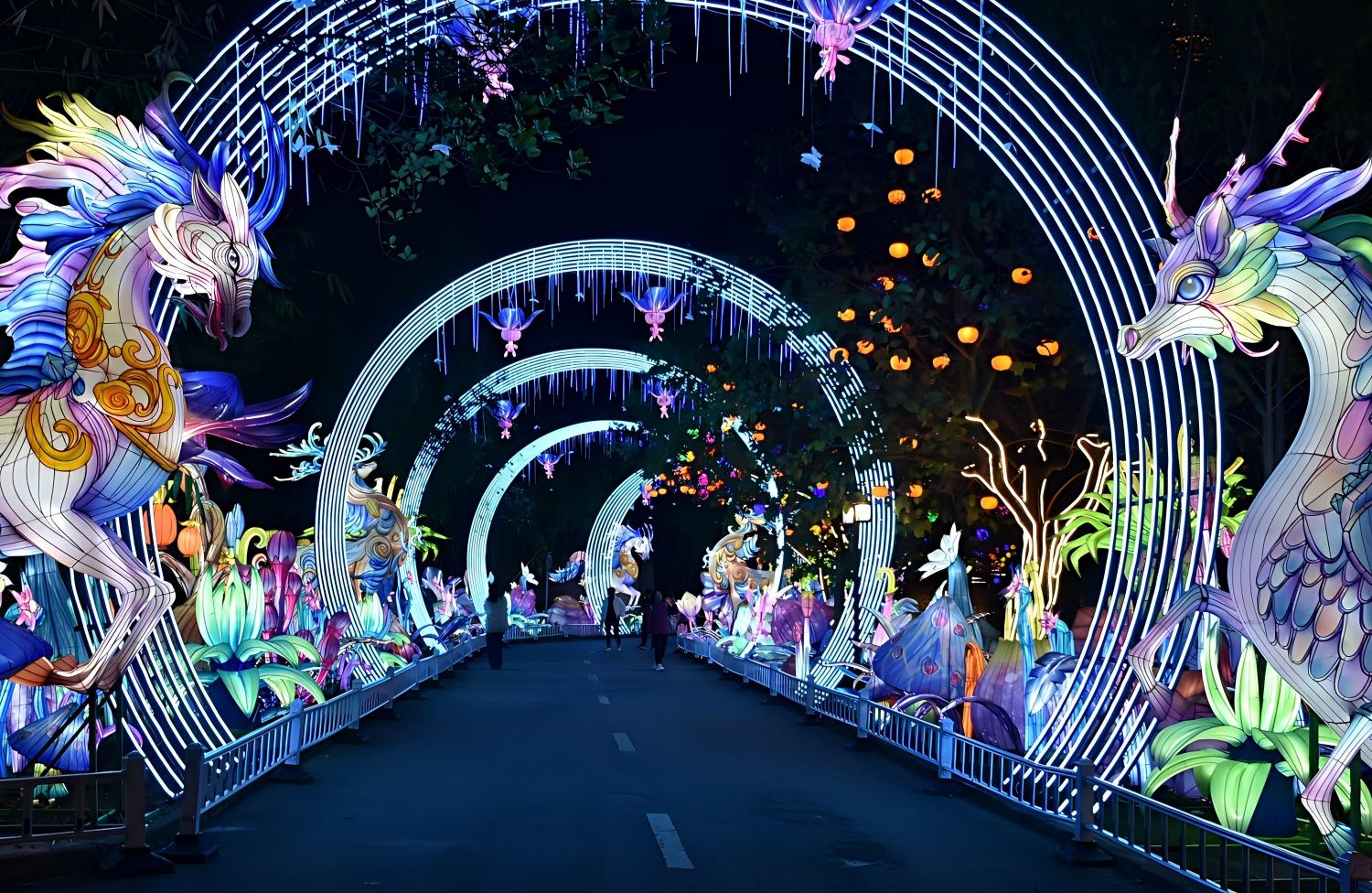
One useful model is a commercial lantern festival designed as a complete visitor route rather than a collection of unrelated illuminated objects. Entrance identity, themed zones, photo locations, crowd movement, commercial areas and the final scene are planned as connected parts of the same experience.
An immersive illuminated route uses repeated forms and clear sightlines to guide visitors between festival zones. Image supplied by ParkLightShow.
Use Technology to Support Operations, Not Distract From Them
Modern lighting controls can help teams coordinate zones, operating times and visual sequences. Digital site plans can align creative design with access roads, power locations, guest facilities and emergency routes. Project-management tools can keep drawings, approval records, packing lists and installation responsibilities synchronized.
The useful question is not whether a project includes the newest technology. It is whether each system reduces uncertainty for the operator. Controls should be understandable to the staff responsible for daily operation. Electrical layouts should make it possible to isolate a problem without taking the entire attraction offline. Drawings and labels should help installation teams identify each module and connection.
Technology also improves planning when it is used before production. Route drawings, sightline reviews and visual concepts allow teams to spot congestion risks, weak transitions or blocked views early. Version control matters because marketing, operations, facilities and external contractors may otherwise work from different revisions of the same plan.
Design for Real Visitor Behavior
Guests do not experience a nighttime attraction from one perfect camera angle. They approach from parking areas, queue at entrances, walk in groups, stop unexpectedly, take photographs and look for food, restrooms or the next landmark. Families with children move differently from couples, tour groups or guests with limited mobility.
Photo locations deserve specific planning. The feature, the people posing and the person taking the photograph all require space. If the photographer must stand in the main circulation path, congestion is almost guaranteed. Backgrounds also matter: service doors, temporary fencing and bright competing elements can weaken an otherwise strong scene.
Large landmarks should be visible early enough to create anticipation, but not so continuously visible that the route loses surprise. Walk-through features need a clear entrance and exit, adequate capacity and a natural onward path. Rest areas and commercial zones work best where guests already slow down instead of where the plan simply has leftover space.
Connect Creative Design to Production and Logistics
A concept becomes useful only when it can be manufactured, transported, installed, operated and removed under real site conditions. Large illuminated displays may need to be divided into transportable modules. The division points affect appearance, structural planning, packing and assembly. Labels, drawings and connection records reduce confusion on site.
Factory pre-assembly or pre-installation can identify fit, lighting and connection issues before shipment when it is included in the confirmed scope. It also gives the project team an opportunity to review the relationship between major components. However, factory checks do not replace local review of foundations, wind conditions, electrical standards, emergency access or other destination-specific requirements.
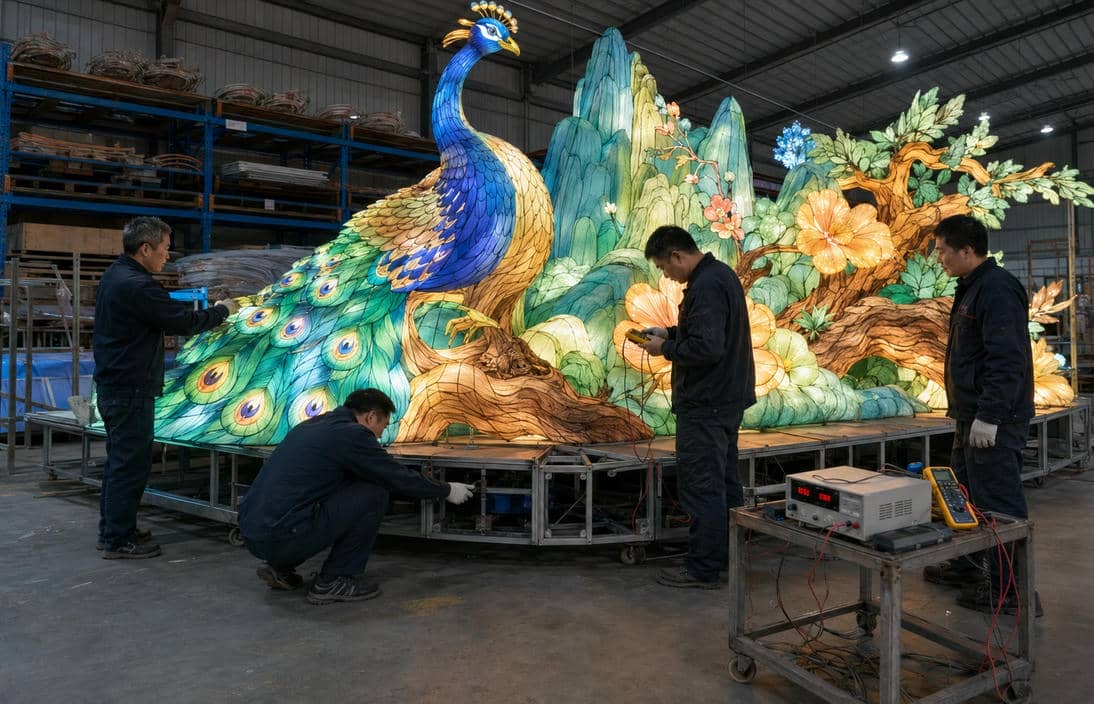
Pre-installation can help project teams check large modules, lighting and assembly details before international delivery. Image supplied by ParkLightShow.
Responsibility boundaries should be explicit. The venue, supplier, local contractor and specialist reviewers need to know who provides site dimensions, lifting equipment, temporary barriers, foundations, power distribution, inspections and daily maintenance. Assumptions become expensive when they are discovered during a short installation window.
Plan for the Full Operating Period
Opening night is only one moment in the project lifecycle. A display may run for weeks or months, so maintenance access, daily visual checks, weather response and replacement components should be considered from the beginning.
Operators need a practical process for identifying and reporting issues. A minor lighting fault should be traceable to a defined section. Maintenance teams should be able to reach service points without dismantling major scenes or blocking the visitor route. After severe weather, responsible personnel may need to conduct additional checks based on the actual project plan and local requirements.
Removal and storage are part of the same system. Components should be labeled and packed in a way that supports future identification and reuse. Storage conditions, surface protection and documentation can influence whether the venue retains usable assets or faces avoidable repair work before the next season.
Measure What the Attraction Is Supposed to Change
The right measurement plan follows the original business objective. A venue may track ticket sales, attendance by time slot, route congestion, food or retail activity, guest feedback, social engagement, maintenance incidents or repeat visitation. No single measure proves the success of every event.
Teams should establish what data is available before opening and avoid making promises that the design alone can guarantee attendance or revenue. Weather, local marketing, pricing, accessibility, competing events and operating quality all influence results. The most useful review compares actual outcomes with the assumptions used during planning and records what should change in a future season.
A Better Framework for Supplier Evaluation
Product photographs are useful for discussing style, but they do not show how a supplier manages a complex venue project. Buyers should ask how the supplier translates a site plan into a route, what drawings and production information will be available, how modules are labeled and packed, what installation guidance is included and which responsibilities remain local.
Good answers distinguish general capability from confirmed project scope. They also identify missing inputs instead of hiding them behind a fixed package or an early guarantee. For a public-facing nighttime attraction, clarity about process and responsibility is as important as the visual concept.
Final Perspective
The strongest nighttime attractions combine creative impact with operational discipline. They start with a clear purpose, organize the visitor route as a connected journey, use technology to reduce uncertainty and link design decisions to production, logistics, maintenance and measurement.
When these systems are planned together, an existing daytime venue can support a distinctive evening experience without treating the project as a random collection of lights. The result is easier for visitors to understand and more practical for the teams responsible for bringing it to life.






Comment