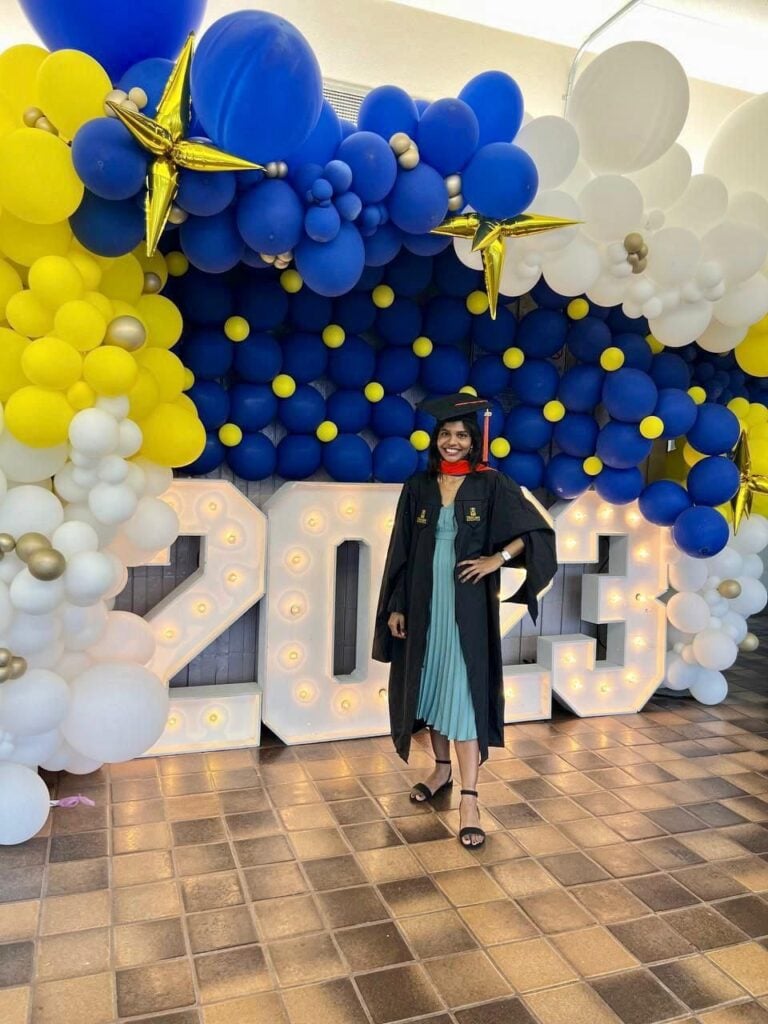
For many engineers, the journey into their chosen field begins with curiosity. For Sukanya Puthalapattu, that curiosity started in childhood, watching airplanes cross the sky and wondering how such massive machines could remain airborne. What began as a simple fascination gradually evolved into a focused pursuit of engineering, eventually leading her to contribute to aerospace projects supporting Boeing commercial aircraft programs.
Her journey reflects a combination of early inspiration, academic dedication, and professional growth, shaped across different regions, disciplines, and global opportunities.
Early Life and the Origins of an Engineering Mindset
Sukanya Puthalapattu was born in Chandimandir, Haryana, in northern India. Although her roots trace back to Tirupati in Andhra Pradesh, her early years involved exposure to different parts of the country. This upbringing provided her with a broader perspective and adaptability from a young age.
As a child, she was particularly drawn to airplanes. Watching them fly sparked questions about their size, weight, and mechanics. She often tried to relate their movement to simpler objects like kites, attempting to understand how something made of metal could glide through the air with stability.
These early observations, though simple, laid the foundation for a deeper interest in engineering and mechanics.
Choosing Mechanical Engineering Against the Odds
After completing her schooling in Tirupati, Sukanya made a clear decision to pursue Mechanical Engineering. At the time, this was not a common choice among female students in her environment.
During her undergraduate studies, she found herself as the only woman in her Mechanical Engineering class, studying alongside more than sixty male peers. This presented both social and academic challenges, as she navigated an environment where representation was limited.
Many people around her encouraged her to switch to other fields such as Computer Science, which were perceived to be more accessible. However, she chose to stay committed to her interest in mechanical systems and engineering design.
Her undergraduate curriculum included core subjects such as thermodynamics, fluid mechanics, strength of materials, dynamics of machinery, material science, and machine design. These subjects provided a strong theoretical and analytical foundation, essential for understanding complex mechanical systems.
Her persistence during this phase reflects a broader theme in her journey: a willingness to pursue long-term goals despite external pressures.
Advancing Technical Expertise Through Graduate Education
To further strengthen her technical capabilities, Sukanya pursued a Master of Science in Mechanical Engineering at Texas A&M University–Kingsville in the United States.
Graduate studies introduced her to advanced concepts in mechanical design, engineering analysis, and computational methods used in modern engineering systems. This phase allowed her to deepen her understanding of how theoretical principles are applied in real-world engineering scenarios.
Her coursework and academic training focused on design methodologies, structural analysis, and simulation-based approaches, all of which are essential in industries such as aerospace and advanced manufacturing.
Studying in an international academic environment also exposed her to new perspectives, collaborative learning, and industry-oriented problem-solving approaches.

Transitioning into the Aerospace Industry
After completing her master’s degree, Sukanya began pursuing opportunities in the aerospace sector, a field that had long aligned with her interests.
She eventually secured a design engineering role supporting projects related to Boeing commercial aircraft programs. This marked a significant milestone in her career, transitioning from academic training to contributing to real-world aerospace systems.
Her technical background in engineering fundamentals, combined with practical skills in computer-aided design tools such as CATIA V5 and SolidWorks, played a key role in her selection for this position.
In her current role, she works on developing and supporting 3D design models for aircraft fuselage components. These components are critical to the structural integrity and performance of commercial airplanes.
Working in aerospace engineering requires a high level of precision, as even minor design variations can impact safety, performance, and efficiency. Her responsibilities involve ensuring that design models align with engineering standards, manufacturing requirements, and performance specifications.
This role represents a direct connection between her early curiosity about airplanes and her current contributions to the aerospace industry.
Contributing to Engineering Research and Global Knowledge Exchange
In addition to her industry work, Sukanya has remained actively engaged in research and academic activities.
She has presented multiple technical papers at international IEEE conferences, contributing to discussions on engineering topics within the global research community. These conferences provide a platform for sharing knowledge, exploring new ideas, and engaging with advancements in technology.
Her involvement extends beyond presenting research. She has reviewed 24 technical papers for international conferences, participating in the peer-review process that helps maintain the quality and integrity of published research.
Serving as a session chair at an international conference further reflects her engagement with the academic community. In this role, she was responsible for facilitating technical sessions and evaluating research presentations.
These contributions highlight her role not only as an engineer but also as an active participant in the advancement of engineering knowledge.
Professional Memberships and Industry Engagement
Sukanya is also involved in several professional and academic organizations, where she holds senior and fellow-level memberships.
She is a Senior Member of the International Association for Engineering and Technology, a Senior Member at Femington, and an Eminent Fellow Member of the Scholars Academic and Scientific Society.
These affiliations provide opportunities for collaboration, networking, and continued learning. Engaging with professional communities allows engineers to stay updated with industry trends and contribute to broader discussions in science and technology.
Her involvement in these organizations reflects a commitment to continuous professional development and active participation in the engineering ecosystem.
Encouraging the Next Generation of Engineers
Beyond her technical work, Sukanya emphasizes the importance of continuous learning for aspiring engineers.
She highlights the value of building a strong foundation in engineering principles, particularly in areas such as engineering drawing, mechanics, and material behavior. Familiarity with computer-aided design tools such as AutoCAD and CATIA is also essential for students interested in mechanical and aerospace engineering.
She encourages students to engage in practical learning through projects, research, and participation in technical communities. Activities such as hackathons, conferences, and collaborative projects can help develop problem-solving skills and provide exposure to real-world challenges.
Equally important is maintaining curiosity and a willingness to learn. In fields such as aerospace engineering, where technology evolves rapidly, continuous learning is essential for long-term growth.
A Journey Defined by Curiosity and Commitment
Sukanya Puthalapattu’s journey from a child fascinated by airplanes to an engineer contributing to aerospace projects reflects a progression shaped by curiosity, determination, and continuous learning.
Her career path illustrates how early interests, when combined with disciplined effort and technical development, can lead to meaningful contributions in complex and high-impact industries.
By working across academic research, professional engineering, and global collaboration platforms, she represents a generation of engineers engaged in both innovation and knowledge sharing.
As the aerospace industry continues to evolve, professionals who combine technical expertise with a commitment to learning and collaboration will play an important role in shaping its future.