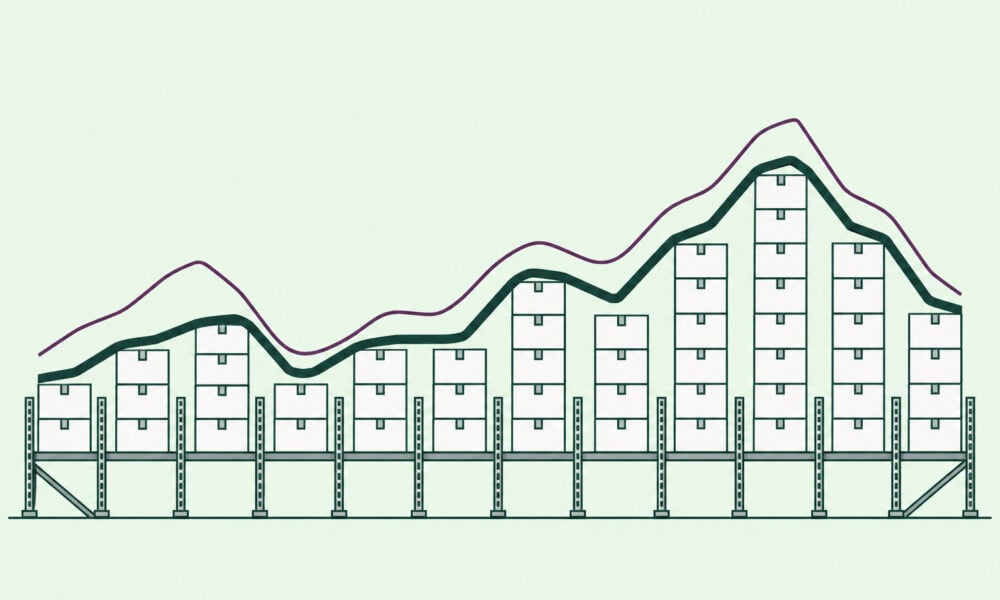
Every early-warning system a company has is pointed at output. In founders and senior executives, output is the last thing to go. The first thing to go is the quality of the decisions producing it, and nobody is measuring that.
By Martha Fernandez, LCSW, Licensed Clinical Social Worker and Co-Founder of CEREVITY
A founder sits down for a board meeting. Revenue is up. Burn is where it was forecast. The team shipped. Nobody in the room has a single metric that looks wrong.
What none of those numbers show is that the last six meaningful decisions this person made were worse than the ones they were making eighteen months ago. Not catastrophic. Slower on the things that should have been fast. Faster on the things that should have been slow. Narrower in the options considered.
That gap, between how good the numbers look and how good the judgment producing them has become, is what we see most often in the executives and founders CEREVITY treats. It is also why the standard advice fails at this level. “Notice when you are struggling and take a break” assumes struggling shows up somewhere legible. At the top it does not.
What executive burnout actually costs, and why the numbers hide it
An engineer produces code. A salesperson produces closed deals. Both are countable, and both degrade where a manager can see it inside a quarter. A senior leader produces decisions: what to build, who to hire, when to raise, what to kill. That output is counted nowhere. It has no dashboard. Its quality only becomes legible in hindsight, two or three quarters later, by which point it has been absorbed into the noise of a hard year.
So the warning system has a design flaw. Every metric a board watches sits downstream of judgment and lags it badly. Chronic workplace stress, exhaustion and depletion arrive long before revenue notices, which is why structured executive burnout therapy for senior leaders starts from a different question than general outpatient care does: not whether the person is coping, but what the coping is costing in the one currency the company runs on.
The decision signature
Tiredness is a useless screening question here. Every founder is tired and most are proud of it. What we look at instead is a pattern in how decisions get made. At CEREVITY we call it the decision signature, and it has four parts.
- The option set shrinks.Ask a well-resourced leader about a hard call and you get three or four genuinely different options, including one that is slightly mad. Ask a depleted one and you get two: the thing we are already doing, and the obvious alternative. In my experience this is the earliest signal and the hardest to see from inside, because a smaller option set feels like decisiveness rather than a narrowed aperture.
- Reversible decisions slow down, irreversible ones speed up.This is the inversion that costs the most money. Amazon’s 2015 shareholder letter distinguishes one-way doors from two-way doors: what is hard to undo deserves deliberation, what is easily reversed should be quick and cheap. Under strain, leaders often get this backwards. A pricing experiment sits in the queue for weeks because it now feels heavy, while a senior hire or a term sheet gets signed fast, at night, with visible relief afterwards. The relief is worth noticing. It usually means the decision closed an open loop rather than that it was right.
- Commitment to the existing plan hardens.From the outside, conviction and depletion look identical. The difference is what happens when disconfirming information arrives. A leader with capacity argues, then updates within a fortnight. A leader without capacity cannot afford the update, because reopening the question means rebuilding a plan they no longer have the resources to rebuild. The tell is the disappearance of the “what would have to be true for me to be wrong” conversation.
- Delegation collapses exactly when load peaks.Past a certain point the leader starts pulling work back in rather than pushing it out, and the reason given is always that it is faster to do it myself. In a depleted executive it is more often that tolerance ran out rather than time. This is the one co-founders and chiefs of staff spot first.
What to measure instead
Because output is a broken warning light, we open with a different one at intake. It takes about ninety seconds.
Two numbers. How much genuine time away does it now take before you feel like yourself, with nothing owed to anyone before Monday? And once you get there, how long does it hold? Then the same two questions about eighteen months ago, and three years ago. The slope matters far more than the figures.
A leader in trouble will say that three years ago a Saturday did it and it held most of the week; that eighteen months ago it took a long weekend and was gone by Thursday; and that a two-week break last year bought four good days. Nothing in that is a complaint, which is why it gets past the defences. It is a clinical heuristic rather than a validated instrument, but it moves the conversation off the question a high performer always wins, which is whether they are still performing.
Why executives wait
Two reasons, and neither is stigma.
The first is that the symptoms arrive with a professional alibi. Hypervigilance files as attention to detail. Catastrophizing files as contingency planning. Every one of those reframes contains something true, which is why telling an ambitious person their greatest asset is a symptom gets you nowhere. The useful move is to separate the trait from its cost. Ambition and high standards are stable characteristics and no treatment removes them, which is the single most common misconception we correct in therapy for high performers and high-pressure professionals. What is treatable is the bill for running those traits in a threat state: the four a.m. waking, the dread before a board call, the good quarter that produces relief rather than satisfaction.
The second is the record, and it deserves precision rather than reassurance. Confidentiality is the whole reason therapy for CEOs and chief executives tends to be arranged privately: paying privately means the therapy generates no insurance claim, no diagnosis code submitted to a carrier and no claims-database entry, and your record sits with your licensed clinician under state confidentiality law and psychotherapist-patient privilege, subject to the usual legal exceptions. Two things sit outside that. Medication is recorded at the pharmacy whoever paid for the therapy, as is any superbill you choose to file with your own plan. And genuine disclosure obligations, FAA medical certification, security clearances, insurance applications, turn on what the specific form asks rather than on how care was paid for. Those are questions for your counsel, not your therapist.
What actually helps
Sleep usually has to come first, as sequencing rather than wellness, because every cognitive symptom above is amplified by sleep debt. If insomnia has run at least three nights a week for three months and is causing real daytime impairment, it may meet the threshold for chronic insomnia disorder, which a clinician rather than a checklist should determine. Where it does, cognitive behavioral therapy for insomnia is what the American College of Physicians recommends as initial treatment, not sedatives.
The load itself usually has to change too. The World Health Organization classifies burn-out as an occupational phenomenon rather than a medical condition, so resilience work with the conditions left untouched tends to buy a few months. What gets treated is what has grown alongside it, most often a depressive episode, an anxiety disorder or insomnia. Identifying which is the first job of an assessment, and it gets measured: validated instruments at intake, re-run over treatment, and if the numbers are not moving, the approach changes.
Most executives do not need to step back from the company to do any of this. CEREVITY sessions run 8am to 8pm Pacific, seven days a week, in 50-minute, 90-minute and 3-hour formats, delivered by secure video nationwide through a network of independent licensed clinicians, with a first session typically inside 48 hours.
One exception. Thoughts of death or of harming yourself are not a point on the burnout spectrum. In the United States, 988 reaches the Suicide and Crisis Lifeline at any hour.
The leaders who come out of this well are rarely the ones who took the longest sabbatical. They are the ones who stopped treating depletion as a character test and got their judgment back while there was still a company to point it at.
This article is general information and is not individual medical or mental health advice. If you are concerned about your own symptoms, speak with a licensed clinician.
About the author
Martha Fernandez, LCSW is a Licensed Clinical Social Worker, licensed in California, and Co-Founder of CEREVITY, a nationwide private-pay network of independent licensed clinicians treating executives, founders, attorneys and commercial pilots. USC-trained and bilingual in English and Spanish, she works on burnout, anxiety and depression in high performers, as well as trauma, grief and high-stakes transitions.