
Enterprise eCommerce Solutions: Platforms, Features & Benefits

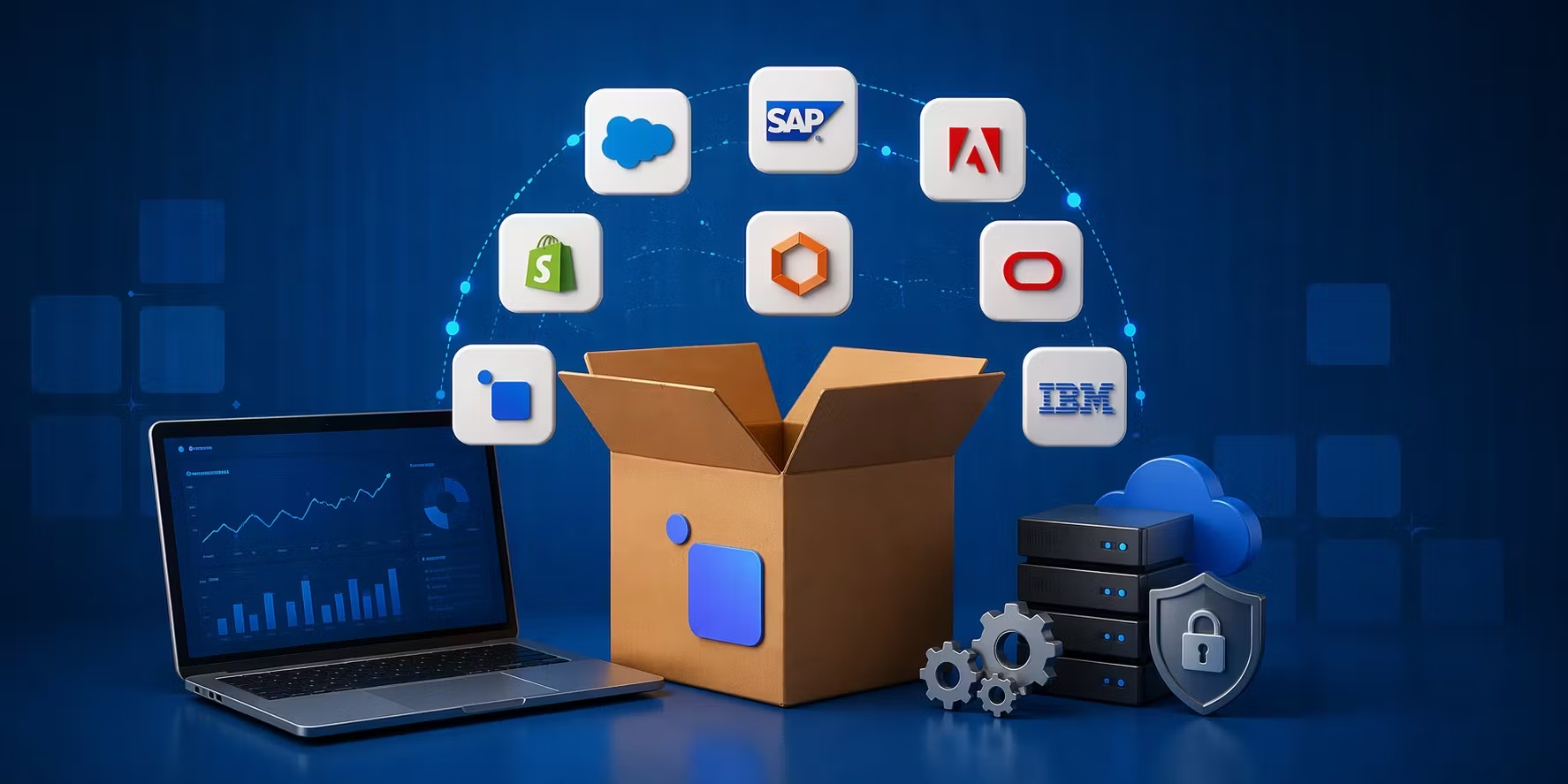
Enterprise eCommerce is about more than launching an online store. It’s about building a digital commerce system that can carry large product catalogs, different kinds of buyers, multiple sales channels, integrations, and long-term business growth.
For enterprise businesses, the right eCommerce solution should simplify selling, enhance the customer experience, reduce manual effort, and support future expansion. So, platform selection, features, integrations, performance, and scalability all matter more than many teams expect.
In this guide, we’ll look into what enterprise eCommerce solutions include. We also cover which platforms companies commonly evaluate, the key features to watch for, and how these options can benefit growing organizations.
What Are Enterprise eCommerce Solutions?
Enterprise eCommerce development solutions are more advanced online commerce platforms crafted for companies with bigger, more complex requirements. Usually, these organizations sell across multiple regions, handle thousands of products, and respond to distinct customer segments. They can also run both B2B plus B2C approaches, at the same time, in other cases, they operate through multiple storefronts with varied catalogs and rules.
Unlike basic eCommerce websites, enterprise platforms are designed to handle:
- Large product catalogs
- High website traffic
- Multi-store or multi-brand operations
- B2B and B2C selling
- Custom pricing and discounts
- ERP, CRM, PIM, OMS, and payment integrations
- Advanced security and compliance
- Complex checkout and order workflows
In simple terms, enterprise eCommerce is not just a website. It is a connected business system that helps companies sell, manage, and scale online.
Why Enterprise eCommerce Needs a Different Approach
A small online store may only need a simple product page, cart, and checkout. Enterprise businesses usually need much more.
For instance, a manufacturer may require buyer-specific pricing, bulk ordering, approval flows, plus ERP integration. A retail brand might prioritize mobile-first layout, customer personalization, loyalty programs, and a quick checkout experience. Meanwhile, a distributor could need inventory visibility, faster reorder options, and catalogs that match each customer.
So, enterprise businesses should not pick a platform only because it is popular or because everyone is using it. The right solution hinges on business objectives, customer expectations, the back-end operations, and the growth roadmap.
Common Enterprise eCommerce Platforms
There are many platforms available today. Each has its own strengths, and the best choice depends on how the business operates.
Here are some commonly used enterprise eCommerce platforms:
| Platform | Best Suited For |
| Shopify Plus | Fast-growing D2C, B2C, and selected B2B brands |
| Adobe Commerce | Complex B2B, B2C, and enterprise commerce needs |
| Magento Open Source | Custom eCommerce projects with flexible development needs |
| BigCommerce | Scalable SaaS commerce with B2B and multi-channel features |
| Salesforce Commerce Cloud | Large enterprises focused on CRM-driven commerce |
| WooCommerce | Content-led businesses and flexible WordPress-based stores |
| Headless Commerce | Brands needing custom frontend experiences across channels |
| Custom eCommerce Platforms | Businesses with very specific workflows or unique models |
A business does not always need the most expensive platform. It needs a platform that fits its operations, customers, team, and future plans.
Shopify Plus for Enterprise Growth
Shopify Plus is popular among businesses that want a stable, hosted, and easy-to-manage platform. It helps brands launch faster and reduce the technical burden of managing infrastructure.
With the right Shopify development services, businesses can create custom storefronts, improve checkout, connect third-party tools, and manage growing online sales more efficiently.
Shopify Plus can work well for:
- D2C brands
- Retail businesses
- Fast-growing online stores
- Businesses needing faster implementation
- Brands that want lower platform maintenance
However, businesses with highly complex B2B workflows or advanced backend logic should carefully review customization limits before choosing Shopify Plus.
Adobe Commerce for Complex Commerce Needs
Adobe Commerce is often preferred by enterprises that need flexibility, customization, and strong B2B capabilities. It supports complex catalogs, customer groups, custom pricing, multi-store operations, and advanced commerce workflows.
Businesses investing in Adobe Commerce development usually need a platform that can be shaped around their operations. This makes it suitable for manufacturers, distributors, wholesalers, and large retailers with detailed business rules.
Adobe Commerce can be a strong fit for:
- Enterprise B2B commerce
- Multi-brand businesses
- Large catalogs
- Custom pricing models
- Complex integrations
- Businesses needing strong control over commerce experience
The main strength of Adobe Commerce is flexibility. It gives businesses more control over how their commerce system works.
Magento for Custom eCommerce Requirements
Magento is still a strong choice for businesses that need open-source flexibility and deeper customization. Many companies look for Magento development services when they want more control over store architecture, custom modules, user experience, and third-party integrations.
Magento can be useful for businesses that:
- Need custom checkout flows
- Have unique product logic
- Want flexible development control
- Need advanced integrations
- Already have a Magento store and want to modernize it
For existing Magento users, improving performance, upgrading the frontend, optimizing security, or moving to Adobe Commerce can also be part of a long-term growth strategy.
Headless and Composable Commerce
Enterprise businesses are also exploring headless and composable commerce. In a headless setup, the frontend is separated from the backend. This allows businesses to create faster, more flexible customer experiences across websites, mobile apps, marketplaces, kiosks, and other channels.
Composable commerce goes one step further. It allows businesses to use different best-fit tools for different needs, such as search, checkout, CMS, payments, personalization, and product management.
This approach can be useful for businesses that need:
- Highly customized frontend experiences
- Faster site performance
- Multi-channel selling
- Flexible technology architecture
- Better control over customer journeys
However, headless and composable commerce require proper planning. They can offer great flexibility, but they also need strong technical execution and long-term management.
Key Features of Enterprise eCommerce Solutions
A good enterprise eCommerce solution should support both customer experience and business operations. Here are the most important features to look for.
1. Scalable Product Catalog Management
Enterprise businesses often manage thousands of SKUs, product variations, categories, attributes, and bundles. The platform should make product management easy and organized.
2. B2B Commerce Features
For B2B businesses, features like custom pricing, bulk ordering, quote requests, company accounts, approval workflows, and quick reorder options are very important.
3. Personalization
Customers expect relevant products, offers, and content. Personalization helps businesses show the right recommendations, pricing, and promotions based on customer behavior or buyer type.
4. Integration Capabilities
Enterprise eCommerce platforms should connect smoothly with tools like:
- ERP
- CRM
- PIM
- OMS
- CMS
- Payment gateways
- Shipping providers
- Marketing automation tools
Good integrations reduce manual work and improve data accuracy.
5. Fast and Secure Checkout
Checkout should be simple, fast, and secure. A complicated checkout process can lead to abandoned carts and lost revenue.
6. Mobile-Friendly Experience
Many buyers research and order from mobile devices. A responsive, fast, and easy-to-use mobile experience is now essential.
7. Security and Compliance
Enterprise businesses must protect customer data, payment information, and internal business data. Security features, role-based access, compliance support, and regular updates are important.
8. Analytics and Reporting
Strong reporting helps businesses understand customer behavior, sales trends, product performance, conversion issues, and marketing effectiveness.
Benefits of Enterprise eCommerce Solutions
The right e-commerce development solutions can improve how a business sells, operates, and grows.
Better Customer Experience
Customers can find products faster, view accurate information, place orders easily, and manage their accounts without unnecessary delays.
Improved Operational Efficiency
When systems are connected, teams spend less time on manual tasks. Orders, inventory, pricing, invoices, and customer data can flow more smoothly between platforms.
Higher Sales Opportunities
Features like personalized recommendations, smart search, bulk ordering, promotions, and cross-selling can help increase order value and repeat purchases.
Easier Business Expansion
A scalable platform makes it easier to add new regions, brands, languages, currencies, product lines, or sales channels.
Stronger Data Visibility
Enterprise commerce platforms give businesses better insight into what customers want, which products perform well, and where the buying journey can be improved.
How to Choose the Right Enterprise eCommerce Solution
Before selecting a platform, businesses should ask practical questions:
- Are we selling B2B, B2C, D2C, or all three?
- How large and complex is our product catalog?
- Do we need customer-specific pricing?
- Which systems need to be integrated?
- Do we need multi-store or multi-region support?
- How much customization do we require?
- What are our current performance challenges?
- Can the platform support our growth for the next 3 to 5 years?
- Will our internal team be able to manage it easily?
The answers to these questions can help narrow down the right platform and development approach.
Wrapping Up
Enterprise eCommerce solutions help businesses build a stronger, more scalable digital commerce foundation. They support better customer experiences, smoother operations, stronger integrations, and long-term growth.
There is no single platform that works for every business. Shopify Plus, Adobe Commerce, Magento, BigCommerce, Salesforce Commerce Cloud, headless commerce, and custom platforms all have their own strengths.
The right choice depends on your whole business model, what customers expect, how hard the operations get, and where you want to end up later on. When the right approach, the proper platform, and the right partner finally click together, eCommerce doesn’t stay just a sales channel; it turns into a real growth engine.
Magneto IT Solutions has a key role in helping businesses bring these enterprise eCommerce strategies to life. With experience across platforms like Shopify Plus, Adobe Commerce, Magento, and headless ecosystems, the team works closely with brands to build scalable future-ready commerce solutions that fit real business needs. They combine technical expertise with a solid grasp of B2B, B2C, and D2C commerce so organizations can turn complicated requirements into a smooth, growth-focused digital experience that actually moves the needle.





Comment