
Electric Bike vs. Electric Trike: Which Format Truly Fits Your Home, Budget, and Lifestyle?

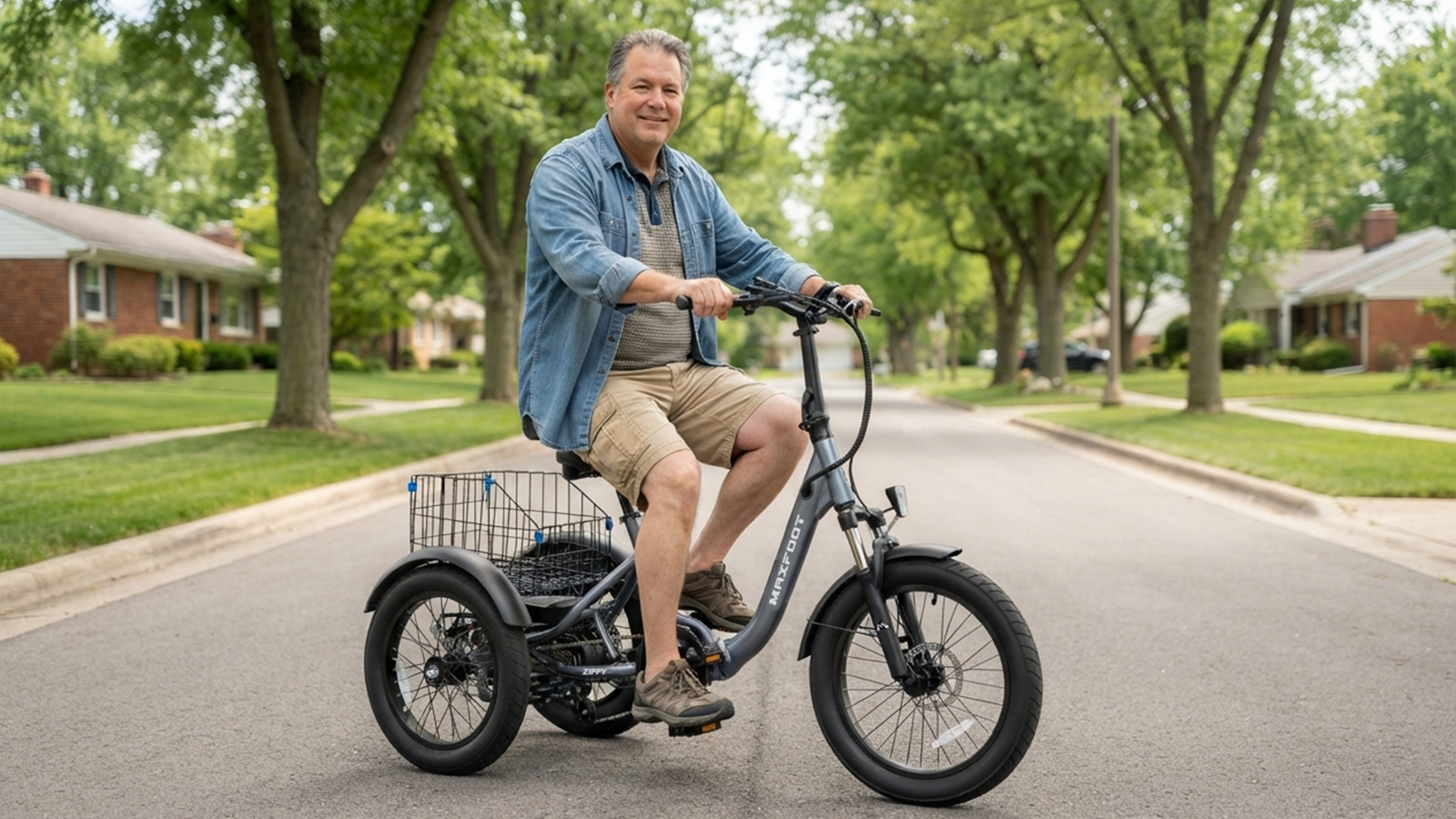
Picking between two wheels and three is one of the first choices new electric mobility buyers face. Two-wheel e-bikes feel quick and nimble, and they slide easily into a hallway. The rider, though, has to balance the bike at every stop and in every slow turn.
Traditional three-wheel trikes remove that balancing act at a standstill. Many of them are long and wide, however, and storing one can take over a garage.
A folding electric trike tries to close that gap with a frame that shrinks when parked. This guide compares both formats on balance, steering, storage, and daily routine, so buyers can choose based on their body, their home, and their routes.
1. Balance and Handling: Leaning Agility vs. Upright Stability
Two-wheel e-bikes
A two-wheel bike stays upright through motion and rider balance. At a stoplight, the rider puts a foot down. In slow turns, leaning and steering work together.
Many riders enjoy this feel. Others, including beginners, riders returning after years away, and smaller-framed adults, may find it less comfortable at low speed, especially on a heavy bike.
Three-wheel e-trikes
A trike stands on its own. Riders can stop and sit with both feet planted, without worrying about tipping while stationary.
Important: that does not make a trike tip-proof. A sharp turn at speed can lift a wheel, and slopes or uneven edges can unsettle the ride. Slow down before corners and take them wide.
Anyone trying a folding electric trike for adults for the first time should practice slow turns and braking in an empty parking lot. Frame and step-over heights vary by model, so it is worth checking published measurements before assuming a trike is easy to mount. The same advice applies to folding electric trikes for seniors and every other rider.
Steering dynamics
A trike turns by steering the handlebars directly, with no leaning into the corner. This suits relaxed, low-speed neighborhood cruising, but it feels different from a bicycle. A few quiet-street rides usually help riders adjust.
Controls add to the learning curve:
- Pedal assist: adds electric help while pedaling.
- Throttle: adds power without pedaling.
- Gears: mechanical, and they change how hard the pedals feel to turn.
A model with five assist levels and Shimano 7-speed gearing, like the MF-35, gives a new rider several ways to keep starts gentle.
2. Storage: Solving the Traditional Trike Drawback
Garage bulk
The classic complaint about trikes is simple: they take up the whole garage. That is why many people searching for a folding etrike start with storage, not speed.
A folding frame reduces the footprint. For example, the MF-35 folds to 47″ L × 27.5″ W × 35.3″ H, which gives buyers real numbers to hold up against a closet, a garage corner, or a utility room.
Folding does not mean light, though. It does not promise easy lifting or a fit in every vehicle, so every buyer should measure first.
Format vs. space
- A two-wheel e-bike is slimmer, which helps in narrow hallways.
- An electric folding trike is wider, but it can collapse when parked.
- Many electric folding trikes publish their folded size, so the numbers are easy to check against a real space.
- Neither wins in every home. A tape measure settles the question.
Judging value without chasing one number
Value comes from the whole package, and no single best folding electric trike exists for every buyer. A useful checklist includes:
- What is included, such as the display, lighting, battery, and charger
- Rider and cargo limits listed separately, as with the MF-35’s 230 lbs and 80 lbs, since two clear figures are easier to plan around than one combined number
- Warranty length and the maker’s official terms
- Test-ride or return options
- Listed weight, since both formats can be heavy once the battery is counted
Buyers comparing folding electric trikes can run the same checklist on a two-wheel e-bike, which keeps the comparison fair. Fit and adjustment ranges still need to be confirmed for each rider.
Everyday handling
Moving the machine matters as much as riding it. A battery that comes off the frame can make charging easier, and the person who will lift or roll the bike or trike should be part of the decision. Riders who mostly ride from a garage and rarely lift may care less about weight than riders who plan to move a folding etrike in and out of a car.
Shoppers weighing folding electric trikes for adults should ask for the listed weight and the folded size together. One number without the other gives only half the picture. If the seller cannot provide both, that is worth noting before buying.
3. Decision Matrix: Which Vehicle Fits Your Routine?
Choose a 2-wheel e-bike if:
- You enjoy leaning into turns and a nimble feel
- You plan to ride at higher speeds or on singletrack trails
- Your storage corridors are very narrow
Choose a folding electric trike if:
- You want stability at stops and less balancing at low speed
- Your rides are relaxed neighborhood trips, errands, or grocery runs
- You need compact storage and have measured the space
- You are exploring folding electric trikes for seniors or other riders who value steadiness at stops
Both formats have real strengths. A test ride is the best way to compare how each feels, and it matters most before buying a folding electric trike for adults.
Summary
The right format is the one that removes fear and storage headaches for that particular rider. For many households, the best folding electric trike is simply the one that fits both the rider and the space.
Before deciding, check your comfort on two wheels and three, and measure your garage footprint. Those comparing folding electric trikes for adults can then use the official folded dimensions as a starting point, and a short test ride helps confirm that an electric folding trike feels comfortable before any decision is final.
With a bit of measuring and practice, riders of any build can enjoy a steady, confident start to outdoor mobility.







Comment