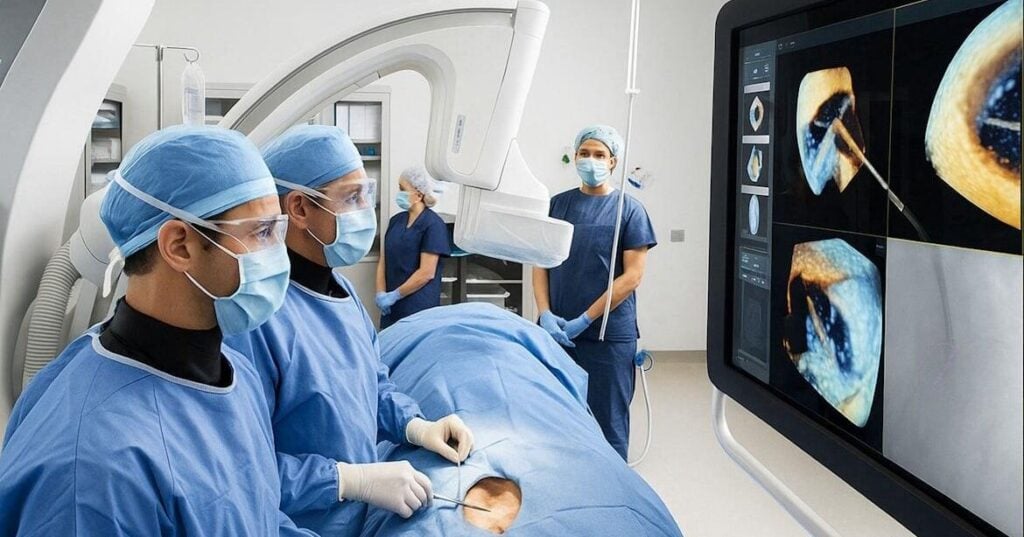
Artificial intelligence is changing healthcare in remarkable ways, from helping doctors examine medical images to organizing information and supporting clinical decisions. Dr. Barbara L Robinson offers a useful perspective on why technological progress should complement, rather than replace, the human connection at the center of medicine. Even as AI becomes more capable, patients still need compassion, communication, judgment, and someone who understands that treating a person involves much more than identifying a diagnosis.
Medicine Is About People, Not Just Data
An AI medical system is particularly good at processing enormous amounts of information. It can compare patterns, identify relationships in data, and assist professionals with tasks that might take humans considerably longer. These capabilities can be valuable in healthcare, where doctors regularly work with medical records, laboratory results, scans, and other complex information.
However, a patient’s health cannot always be reduced to numbers on a screen. Two people with the same diagnosis may have very different concerns, lifestyles, family circumstances, and expectations. A computer can help identify information about a condition, but a doctor still needs to understand what that information means for the individual sitting in front of them.
This human element is especially important when a diagnosis is frightening or uncertain. Patients may need reassurance, patience, and an opportunity to ask questions that do not have straightforward answers. A machine can provide information, but the relationship between a patient and physician involves trust and understanding.
Empathy Cannot Be Automated
A serious medical diagnosis can affect every part of a person’s life. Patients may worry about their families, finances, work, independence, or future. They may need someone who can acknowledge those fears rather than simply explain a test result.
Empathy allows doctors to recognize that emotional needs are part of healthcare. A compassionate physician may slow down, explain something again, or simply give a patient space to process difficult news. Those actions may not change the diagnosis, but they can change how the patient experiences treatment.
This is one area where technology has an obvious limitation. AI can generate sympathetic language, but genuine human relationships involve shared understanding and responsibility. Patients often want to know that the person caring for them sees them as an individual rather than as a collection of medical data.
AI Can Give Doctors More Time for Patients
Rather than viewing AI as an enemy of human medicine, it may be more useful to consider how technology can give doctors more time to focus on patients. Administrative work, documentation, information retrieval, and certain repetitive tasks can consume significant portions of a healthcare professional’s day. If AI can safely reduce some of that workload, physicians may have more time for conversations and direct patient care. That could make technology a tool for strengthening the human side of medicine rather than weakening it.
The key is how the technology is introduced. AI should be implemented with appropriate safeguards, professional oversight, privacy protections, and clear understanding of its limitations. It should support clinicians without encouraging healthcare systems to remove meaningful human interaction simply because technology appears more efficient.
Patients Still Need Someone Who Can Explain
Medical information can be complicated even when it is technically accurate. A patient may receive a report containing unfamiliar terminology but still not understand what it means for their everyday life. A physician can translate complicated information into language that makes sense within the patient’s particular circumstances.
This communication becomes especially important when patients have to make choices. They may need to understand the difference between treatment options, possible side effects, expected outcomes, and uncertainties. The doctor can help put those factors into context.
Barbara Robinson MD can be viewed within this broader discussion of how medical expertise combines technical knowledge with communication and patient-centered care. Technology can provide additional information, but patients still benefit from having a qualified professional explain what that information means and how it relates to their situation.
Human Judgment Helps Handle Uncertainty
AI systems often work by identifying patterns based on existing data. But real patients do not always fit neatly into established patterns. A physician may encounter unusual symptoms, conflicting test results, or circumstances that do not resemble a typical case.
This is where experience and judgment become particularly important. Doctors can consider information that may not be easily represented in a database, including a patient’s preferences, concerns, history, and changing condition. They can also recognize when the available information is insufficient and further investigation is needed. Uncertainty is not necessarily a failure of medicine. Sometimes the responsible response is to say that more information is needed. A good physician can explain that uncertainty honestly while helping the patient determine the next appropriate step.
Compassion Matters During Difficult Decisions
Some medical decisions involve difficult choices that cannot be solved by technology alone. A patient may have to weigh the potential benefits and risks of a procedure or decide how aggressively to pursue treatment. These choices can involve personal values as much as medical facts. A physician can help patients understand the medical side while allowing them to express what matters most to them. For one person, extending life may be the highest priority. For another, preserving independence or quality of life may carry greater weight.
That conversation requires sensitivity. Patients should not feel pressured into making decisions simply because an algorithm suggests a particular path. Technology can provide evidence, but human professionals can help patients understand that evidence within the context of their own lives.
AI Needs Ethical Human Oversight
As AI becomes more common in healthcare, questions about privacy, bias, accountability, and safety become increasingly important. An AI system can produce an impressive answer and still make an error. Healthcare professionals need to understand these limitations before relying on technology in clinical settings.
Human oversight is particularly important because medical decisions can have serious consequences. Clinicians must be able to question AI-generated recommendations rather than accepting them automatically. Healthcare organizations also need appropriate policies governing how patient information is collected, stored, and used.
Technology Should Strengthen the Doctor-Patient Relationship
The most promising future may not be one where AI replaces doctors. It may be one where technology handles certain tasks while physicians have more opportunity to focus on the parts of medicine that require human connection. A doctor could use AI to organize information and then spend more time discussing the patient’s concerns. Another physician might use an AI-supported tool to identify something that deserves further investigation and then apply clinical judgment to determine what should happen next.
The balance is important. Technology should make healthcare more effective without making it feel less personal. Patients should still have access to professionals who can listen, explain, reassure, challenge assumptions, and recognize the individual behind the medical record.
The Future of Medicine Needs Both
AI will almost certainly continue to influence the way doctors diagnose, treat, and monitor patients. Its ability to process information quickly and identify patterns may provide meaningful benefits across many areas of healthcare. But increased technological capability does not remove the need for human professionals.
Dr. Barbara L Robinson can be part of a wider conversation about the importance of maintaining the human side of medicine as healthcare becomes more technologically advanced. The future should not require patients to choose between sophisticated technology and compassionate care. Ideally, technology will give physicians better tools while allowing the doctor-patient relationship to remain at the heart of healthcare.
Conclusion
Artificial intelligence can make healthcare faster, more informed, and potentially more effective, but it cannot replace the human qualities that make medicine personal. Patients still need doctors who can listen carefully, understand individual circumstances, explain difficult information, exercise judgment, show compassion, and take responsibility for important decisions. The strongest future for healthcare is therefore not one where AI replaces physicians, but one where responsible technology gives medical professionals better tools while preserving the trust and human connection patients depend on.