Key Highlights
- Investing in high-quality ratchet straps is essential for preventing load shifting and potential accidents on the road.
- Understanding the working load limit (WLL) of your straps ensures you choose the right equipment for your cargo’s weight.
- Properly using anchor points and the ratchet mechanism guarantees your gear stays secure throughout your journey.
- Choosing a strong strap avoids strap failure, providing peace of mind whether you’re on a worksite or an off-road adventure.
- Different types of straps, from standard to heavy-duty, are available for various applications, so select the one that best suits your needs.
Introduction
When you’re heading out with a ute full of gear, a loaded-up trailer, or a van packed to the brim, the last thing you want is to worry about your cargo. Securing your load properly is not just about convenience; it’s about safety for yourself and others on the road. Using the right equipment is non-negotiable. That’s where high-quality ratchet straps come in, providing the strength and reliability you need to ensure everything stays exactly where it should, from the start of your trip to the end.
Thinking about how to keep your gear locked down? The first step is to buy a ratchet strap that you can trust. Inferior straps can stretch, fray, or fail, putting your valuable cargo—and everyone around you—at risk. A dependable, heavy-duty strap offers maximum tension and zero movement, giving you the confidence to tackle any road, no matter how rough. It’s about doing the job once and doing it right, so you can focus on the journey ahead.
Understanding Ratchet Straps for Load Security
Ratchet straps are fundamental tools for anyone hauling gear in Australia. They work using a simple but effective ratchet mechanism that allows you to tighten the webbing around your cargo with incredible force, ensuring it doesn’t shift. The end fittings securely connect to anchor points on your vehicle or trailer, creating a stable and reliable tie-down system. One of the most critical factors to consider is the working load limit (WLL). This tells you the maximum weight a strap can safely handle. Choosing a strap with a load limit appropriate for your cargo is crucial for preventing accidents and ensuring everything arrives in one piece. If you’re looking to secure your load effectively, buy a ratchet strap that meets these safety standards.
The Essential Role of Ratchet Straps in Australia
Across Australia, from city job sites to rugged outback tracks, securing your load is a legal and safety requirement. Ratchet straps play an essential role in meeting these standards. They are designed to hold gear firmly in place on utes, trailers, and roof racks, preventing items from becoming dangerous projectiles during transit.
When selecting a strap, it’s vital to know the weight of your cargo. A good rule of thumb is to choose straps where the combined working load limit is at least double the weight of the load you are securing. This creates a necessary safety margin, accounting for bumps, sudden stops, and the dynamic forces your load will experience on the move.
Always check that your anchor points are strong enough to handle the tension. Using a high-quality ratchet strap means you can apply significant force, and your tie-down points must be up to the task. This ensures the entire system works together to keep your load secure.
Why You Should Buy a Ratchet Strap That Holds Strong
Choosing a cheap, low-quality ratchet strap might seem like a way to save a few dollars, but it’s a risk that isn’t worth taking. A flimsy strap is prone to strap failure, which can happen at the worst possible moment—on a busy highway or a challenging off-road trail. You should buy a ratchet strap that is built to last.
High-quality straps, like those from Tiegear, are designed for durability and performance. They are made with superior materials and construction, giving you the peace of mind that your load is secure. Investing in the right equipment means you can trust your gear will stay put, no matter the conditions.
Here’s why a strong strap matters:
- Prevents Accidents: Secure loads are safe loads. A strong strap prevents items from falling off your vehicle and causing accidents.
- Protects Your Gear: Your equipment is valuable. A reliable strap ensures it arrives at your destination without damage.
- Meets Safety Standards: Using straps with an appropriate working load limit ensures you comply with road safety regulations.
How Ratchet Straps Work: Mechanics and Functionality
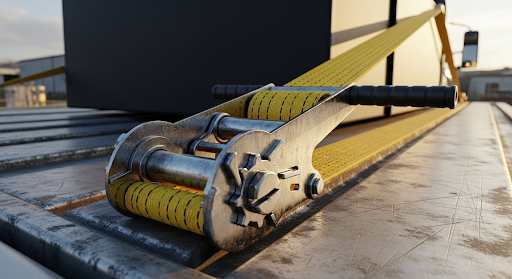
The effectiveness of a ratchet strap lies in its simple yet powerful mechanics. The core component is the ratchet mechanism, a metal crank system that you use to tighten the webbing. You feed the loose end of the strap through the spool in the ratchet and then pump the ratchet handle back and forth.
Each pump of the handle pulls the webbing tighter in small, controlled increments, allowing you to achieve a much higher tension than you could with a simple rope or cam buckle strap. This system locks the strap in place, preventing any give or slackening under pressure, which is especially important when navigating bumpy roads.
To release the tension, you simply pull and hold the release mechanism, which allows the spool to spin freely, and pull the webbing out. This straightforward functionality makes ratchet straps incredibly effective for securing heavy or awkward loads that demand a firm hold without the fuss of re-tightening.
Types of Ratchet Straps and Their Applications
Not all loads are the same, and neither are ratchet straps. Different types of straps are available, each designed for specific applications and load requirements. From lighter-duty cam buckle straps suitable for securing a swag to your roof rack, to heavy-duty industrial straps for commercial haulage, there’s a solution for every need.
Understanding the different types of straps, their working load limit, and their end fittings will help you select the right tool for the job. Choosing correctly ensures your cargo is secured safely and efficiently, whether you’re moving furniture across town or hauling equipment to a remote worksite.
Standard Ratchet Straps
Standard ratchet straps are the versatile workhorses of the tie-down world. They are perfect for a wide range of everyday tasks, from securing equipment in the back of a ute to tying down furniture during a move. These straps typically feature durable polyester webbing, which offers low stretch and high strength.
The working load limit of a standard ratchet strap is suitable for most general-purpose applications. They often come with common end fittings like flat hooks, which easily attach to the side rails of a trailer or truck bed. This makes them a popular choice for tradies, weekend adventurers, and homeowners alike.
When you buy a standard ratchet strap, you’re getting a reliable and easy-to-use tool that provides excellent tension and security for common loads. Tiegear’s straps, for example, are built tough with high-quality components to ensure they do the job properly, every single time.
Heavy-Duty and Industrial Ratchet Straps
When you’re dealing with serious weight, a standard strap just won’t cut it. Heavy-duty and industrial ratchet straps are engineered for maximum strength and durability, designed to secure the heaviest and most demanding loads. These straps feature thicker, wider webbing and robust ratchet mechanisms capable of handling immense tension.
The hardware on a heavy-duty ratchet strap is also upgraded, often featuring reinforced stitching and strong end fittings like wire hooks or chain anchors that meet industry standard requirements. These are the go-to straps for commercial transport, agriculture, and construction, where securing machinery or large materials is a daily task. The maximum weight these straps can handle is significantly higher than standard versions.
Choosing the right strap for your load is critical. Here’s a general guide:
| Strap Type | Common Applications | Typical Working Load Limit (WLL) |
| Standard Ratchet Strap | Securing furniture, camping gear, and small equipment | Up to 1,000 kg |
| Heavy-Duty Ratchet Strap | Tying down vehicles, large machinery, and building materials | 1,000 kg to 5,000 kg |
| Industrial Ratchet Strap | Securing oversized loads, commercial freight | 5,000 kg and above |
Custom Ratchet Straps for Unique Loads
Sometimes, a standard strap just doesn’t fit the bill. You might have a unique load with awkward dimensions or specific attachment requirements. In these cases, custom straps offer a tailored solution to ensure your cargo is secured safely and effectively.
Customization allows you to specify the exact length, width, and color of the webbing. More importantly, you can choose the ideal end fittings to match your vehicle’s anchor points or the load itself. This eliminates compatibility issues and ensures a perfect, secure fit every time.
Consider custom straps if you need:
- Specific Lengths: To avoid excess webbing when tying down smaller or unusually shaped items.
- Specialized End Fittings: Such as snap hooks, D-rings, or other hardware for non-standard anchor points.
This level of personalization ensures that you have the right equipment for your unique load, providing maximum security and peace of mind.
Conclusion
In conclusion, the importance of investing in a reliable ratchet strap cannot be overstated. These essential tools provide peace of mind by ensuring that your loads are secured effectively, preventing potential accidents and damage during transport. By understanding how ratchet straps function and recognizing the various types available, you are better equipped to make informed choices tailored to your specific needs. Remember, whether you’re hauling equipment across town or transporting goods a longer distance, durability and strength are paramount. Don’t take chances with your load; buy a ratchet strap that holds strong to ensure safety and reliability every time you hit the road.
Frequently Asked Questions
How can I tell if a ratchet strap is strong enough for my cargo?
Check the tag or label on the strap for its working load limit (WLL). This indicates the maximum weight the strap is designed to secure safely. As a rule, the combined WLL of all straps used should be at least double the weight of your cargo to provide an adequate safety factor.
What should I do if my ratchet strap shows signs of wear?
If you notice any signs of wear, such as cuts, frays, burns, or UV damage, you must replace the strap immediately. A damaged strap can lead to strap failure, which is extremely dangerous. Always inspect your straps before each use and store them in a dry place away from direct sunlight.
Are there official safety guidelines for securing loads with ratchet straps in Australia?
Yes, Australia has national cargo securement guidelines that all drivers must follow. These regulations outline requirements for restraint systems, including the need for an adequate safety margin. Using ratchet straps that meet the industry standard and have a sufficient safety factor helps ensure you comply with these important rules.