
Dimensional Logo Signs: Design for the Wall Behind Them

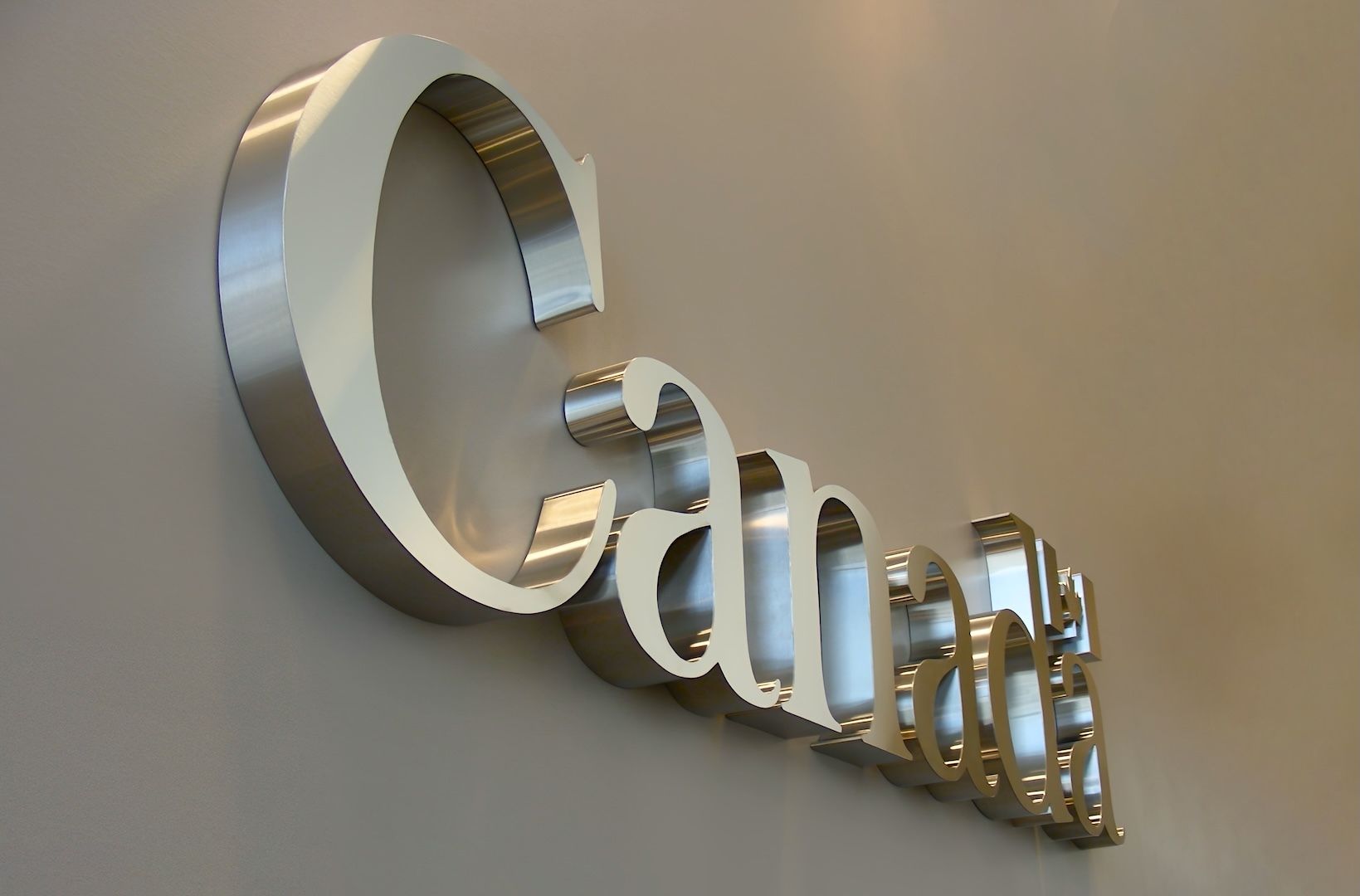
Before approving a dimensional logo sign, look at the spaces inside the letters. On the finished installation, those openings reveal the wall behind them. A mortar joint running through a small letter can make a neat design look much busier.
That is one reason a logo that reads clearly on a white PDF needs another review on the building. Dimensional logo signs project from their mounting surface, so the background and the light become part of what people see.
For a Milwaukee storefront or office, the useful starting point is a photograph of the actual location. It gives the designer something a brand file cannot: the setting where the logo has to work.
Size the name from the customer’s approach
Choose the main viewing position before deciding how wide the sign should be. A customer approaching along the sidewalk sees a different shape from someone standing directly in front of the entrance.
Take photographs from both positions. Include the surrounding windows and architectural details, then identify the area available for signage. A tightly cropped wall photograph can hide the features that compete with the business name.
If the logo includes a small tagline, review that line separately. Ask for a proof at the proposed dimensions and discuss what should remain readable from the intended approach. Any change to the logo arrangement should use an approved brand variation or receive the brand owner’s approval.
Signarama Milwaukee’s custom dimensional letters and logos include acrylic and metal options, including aluminum and stainless steel. Reviewing the layout first gives the material discussion a clear purpose: producing the approved design for that particular site.
Treat letter depth and wall spacing separately
“Make it more dimensional” leaves two decisions unresolved: how thick the letters should be and how far they should sit from the wall.
| Measurement | What it describes | What to review |
| Overall width and height | The space occupied by the complete logo | Its scale within the available wall area |
| Letter depth | The thickness of each letter or shape | How the edges appear from an angled view |
| Standoff distance | The gap between the sign and its mounting surface | The mounting arrangement and separation from the background |
Spacers can create a gap behind the letters and help accommodate an uneven mounting surface. That spacing is also relevant to halo lighting, where light reflects onto the wall behind the sign.
Ask for a side-view detail when projection matters. Two signs with similar front views can look different from the sidewalk because their depth and mounting arrangements differ.
Approve the finish against the actual wall
A material name does not settle the appearance. “Metal letters” could mean a painted brand color, brushed metal or a polished surface.
Ask to review available finish samples against the intended background. For an exterior sign, look at the location in daylight and shade. For a lobby logo, use the lighting that will be in place when the business opens.
Consider a pale logo on light-colored masonry. Adding thickness may leave the face difficult to distinguish from the background. A brand-approved darker version or a contrasting backing panel may be worth discussing.
Signarama Milwaukee offers custom paint matching on selected materials, including acrylic and aluminum. Supply the specified Pantone reference when your brand guidelines include one, and confirm the finish during approval.
If the wall is being repainted, tell the designer which color will be used. Approving the sign against the old wall color leaves an avoidable gap in the review.
Decide what happens behind the letters
The finished face of the sign is only part of the installation.
An existing wall may have uneven masonry, old fixing holes or repairs from a previous tenant’s sign. Photograph those areas before requesting a replacement design. Ask who will assess the surface and arrange any repairs before the new sign is installed.
For a leased property, confirm the owner’s requirements for attachments and eventual removal. A backing panel may be an option to discuss where the background needs to be visually simplified, but its attachment still needs a suitable installation plan.
Lighting adds another decision. Halo-lit lettering sends light behind the letters to create a glow on the surrounding surface. Because the wall receives that light, review its texture and color as part of the proposed effect.
For an illuminated installation, ask where power will enter and how lighting components will be reached for servicing. Include those questions while the design is being developed.
Put the installation conditions in the quote
A useful quote describes the sign and the work required to put it in place.
Include the proposed location and approximate dimensions, along with photographs showing the approach and wall condition. Explain if an existing sign must be removed or if building work will affect access.
Keep the lettering specification clear enough to compare proposals. The quote should identify the material and finish, with mounting and illumination described where applicable. Confirm which preparation and installation tasks are included.
Signarama Milwaukee offers digital mockups that place proposed lettering on a photograph of the building. Use that review to check alignment with windows, the entrance and surrounding architecture. Ask for measurements alongside the image so the approved scale is recorded.
Businesses planning a project in Milwaukee or southeastern Wisconsin can bring these details to Signarama Milwaukee, whose services cover sign design, production and installation. Request a quote for the complete installation and confirm what needs approval before fabrication begins.
Frequently Asked Questions
Do dimensional logo signs have to be illuminated?
No. Raised letters and logos can be unlit. If customers need to identify the business after dark, discuss the existing lighting and whether an illuminated sign would suit the location.
Can the same logo be used outside and in a reception area?
The brand artwork can be the starting point for both. Each installation needs its own review of size, material and mounting conditions. A detailed version intended for close viewing may need an approved alternative for a distant exterior location.
What artwork should I provide?
Send the original vector logo if available, together with brand guidelines and color references. Include any approved horizontal or stacked versions. Ask the designer to confirm that the supplied artwork is suitable for the proposed fabrication method.
Will a new dimensional sign cover marks from an old sign?
That needs checking before the layout is approved. Individual letters leave parts of the wall exposed, so old holes or discoloration may remain visible. Discuss wall repairs and any suitable backing-panel option during the site review.
What affects the price of a dimensional logo sign?
Size and artwork complexity affect fabrication, while material, finish and lighting influence the specification. Installation access and wall preparation also matter. Ask for a quote that identifies these items so you can compare the same scope of work.






Comment