In modern corporate asset management, office furniture has evolved far beyond mere functional objects; it is now a strategic investment in “human productivity.” As work models shift toward flexibility and collaboration, decision-makers are moving away from individual item procurement toward systemic space configuration.
According to research by Harvard Health, improper workstation setups—particularly those lacking lumbar support—lead to musculoskeletal injuries and significantly diminish a team’s decision-making efficiency and creativity due to physiological fatigue. Therefore, when constructing a modern executive workspace, understanding how to select the right leather executive chair and desk combination based on team size, work models, and budget is a core challenge for administrative procurement.
I. Materials & Design: Configuration Logic Based on Functional Zones
Material choice defines both the “professional tone” of a space and its long-term maintenance costs.
Executive Management Zones: Equipping executives with a leather executive chair serves as a visual extension of corporate identity. Genuine leather combined with an all-aluminum chassis projects stability.
Pairing Suggestion: These areas should feature large-scale executive desks with dark tones or walnut textures. Premium brands like Herman Miller often pair leather seating with solid wood surfaces to convey trust and authority.
Open-Plan Workspaces: When deploying commercial office chairs at scale, balance texture with breathability.
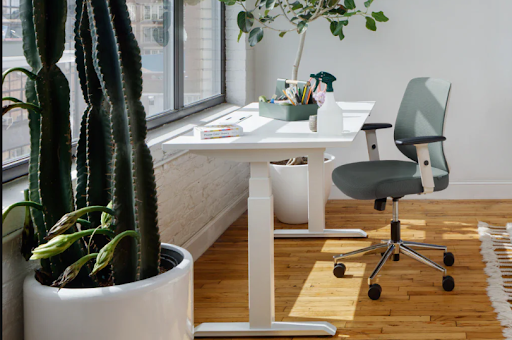
Pairing Suggestion: Modern enterprises tend to choose high-performance mesh chairs with leather accents, paired with minimalist white or light-colored desks to create a transparent, bright, and modern atmosphere.
II. Four Key Dimensions for Corporate Decision-Making
When planning office furniture systems, enterprises should follow these four core logic pillars:
1. Team Scale & Space Efficiency
- Startups/Small Teams: When floor-area ratio (yield per square foot) is the priority, enterprises should opt for compact, flexible furniture sets with high storage capabilities.
- Strategic Choice: Use the Branch Daily Chair. Specifically designed for smaller footprints, its clean lines and breathable mesh allow it to fit seamlessly into high-density workstation layouts without creating visual clutter. This ensures that even in a compact modern executive workspace, team members enjoy professional-grade support without sacrificing precious floor space.
- Large Enterprises: Emphasis moves toward visual unity and bulk maintenance. Establishing a standardized procurement catalog ensures aesthetic harmony across different departments while simplifying the long-term management of commercial office chair inventory.
2. Work Mode
Fixed Focus Model: For employees at their desks all day, provide high-support office chairs and expansive desk systems.
Agile/Shared Model: Focus on “instant adaptation.” Self-adjusting weight-sensing technologies championed by Steelcase or Humanscale are ideal for “hot-desking” environments.
Sit-to-Stand Trend: Mayo Clinic suggests dynamic posture switching to reduce health risks. Enterprises should prioritize the systemic pairing of standing desks and ergonomic chairs.
3. Spatial Layout & Psychological Boundaries
Logical layouts define functional boundaries without physical walls. In open spaces, pairing a high-back luxury office chair with a large executive desk creates a psychological “administrative boundary” for managers without the need for heavy partitions.
4. Budget Allocation
Strategy: Follow the “Body Contact Point First” principle. Opt for standard modular desks to save costs while allocating the core budget toward high-quality commercial office chairs. Investing in superior seating significantly reduces turnover costs associated with physical strain.
III. Corporate Implementation: Cross-Brand Scenario Matching
How do you translate a guide into a specific spatial system? Here are precision-matched solutions blending industry leaders with Eureka Ergonomic products:
Scenario A: Agile Creative Studio
Demand: Fresh aesthetics, high space efficiency, and a seamless transition between collaborative and focused work.
Brand Mix: Eureka Ergonomic (Integrated Smart Design).
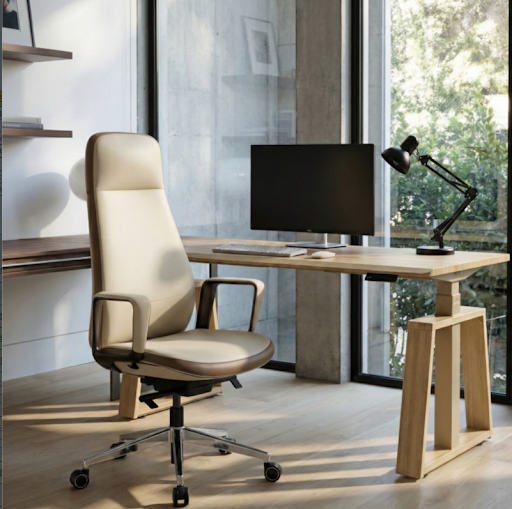
Logic: For studios that prioritize both a collaborative vibe and high-density efficiency, we recommend the integrated pairing of the Ark Lite 63×29 Standing Desk and the Alto Chair.
As illustrated in the minimalist studio setup, the Ark Lite’s clean wood-grain finish and structural elegance provide a stable, inspiring platform for creative flow. The desk’s slim-profile frame is perfectly calibrated to work with the Alto Chair.
Scenario B: Dynamic R&D Lab
Demand: Maximum sit-to-stand flexibility and multi-device support for technical precision.
Brand Mix: Uplift Desk (Ergonomic Standing Specialists)
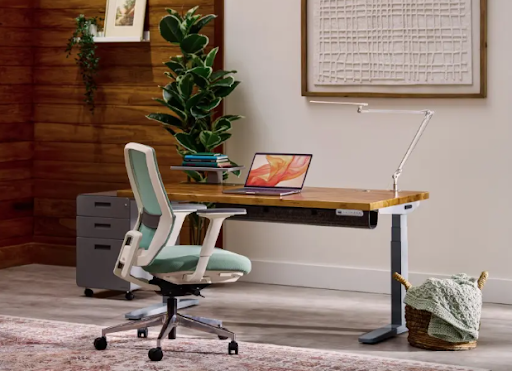
Logic: For high-intensity R&D environments that require frequent posture transitions, we recommend the Uplift Desk V2 Standing Desk. As showcased in the workspace visual, its heavy-duty electric frame and expansive, clean-lined work surface provide the stability needed for multi-monitor setups.
Scenario C: Executive Suite
Demand: Premium texture, brand prestige, and long-term health support.
Brand Mix: Eureka Ergonomic (High-Performance Executive Seating).
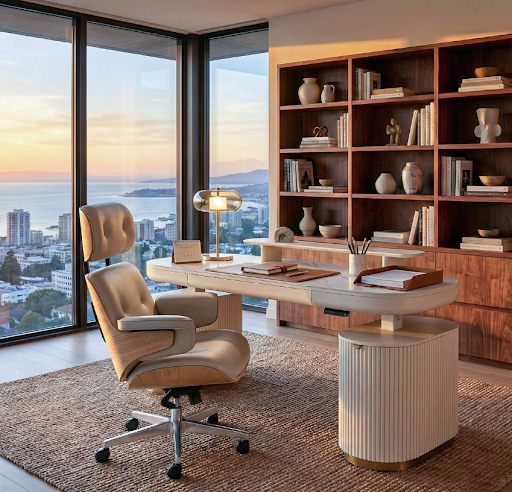
Logic: Elevate the leadership environment by integrating the warm, curated aesthetic of Hulala Home decorative elements with a primary workstation centered around the Eureka Ergonomic Mathias Genuine Leather Executive Chair.
The chair’s Its ergonomic engineering, including high-back neck support and integrated lumbar contouring, meets the dual demands of a modern executive workspace: commanding visual authority and maintaining peak physical comfort during intense decision-making.
Scenario D: The President’s Executive Suite
Demand: Absolute visual authority, bespoke material quality, and unparalleled ergonomic support for top-tier leadership.
Brand Mix: Eureka Ergonomic (Elite Executive Collection).
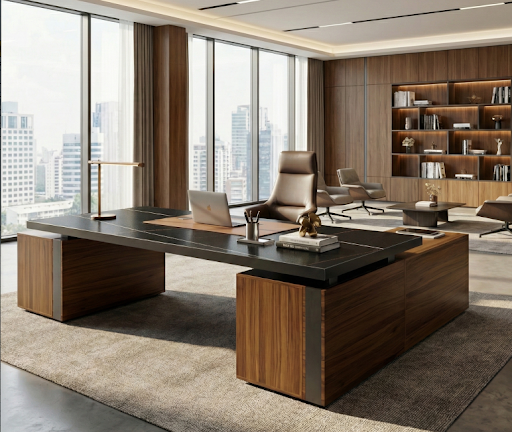
Logic: For the cornerstone of corporate leadership—the President’s Office—the furniture serves as a silent statement of success and vision. As captured in the grand skyline view, this “Executive Command Center” is engineered for more than just seated focus. The centerpiece of this layout is an architectural-grade Executive Desk, a masterpiece that seamlessly combines massive walnut-integrated storage with a sophisticated stone-textured surface.
IV. Common Pitfalls & Industry Summary
When procuring commercial office chairs and desk systems, administrators should avoid these traps:
Ignoring Dimensional Compatibility: Ensure desk height and chair armrest travel are compatible to avoid “armrest-to-desk” collisions.
Overlooking Commercial Ratings: Ensure all furniture meets BIFMA commercial durability standards rather than just residential grades.
Neglecting After-Sales Support: Brand warranty length is a vital metric of true value.
Conclusion: Building a complete office space system is an art of balance. By utilizing scenario-based, ergonomic-driven furniture combinations from Eureka Ergonomic alongside specialists like Uplift or Flexispot, enterprises can achieve a leap in both employee health and efficiency while controlling costs. Choosing the right integrated office system is not just a capital expenditure—it is an investment in the core creative potential of the company.