
Choosing a Fire Pump Controller for a New Commercial Building

Why the Controller Deserves Early Attention
When a new commercial building is in design, the fire pump often gets plenty of attention. Engineers size it for flow and pressure, pick a driver, and lay out the pump room. The controller, by comparison, can end up treated as a line item that gets filled in late in the process. That is a mistake.
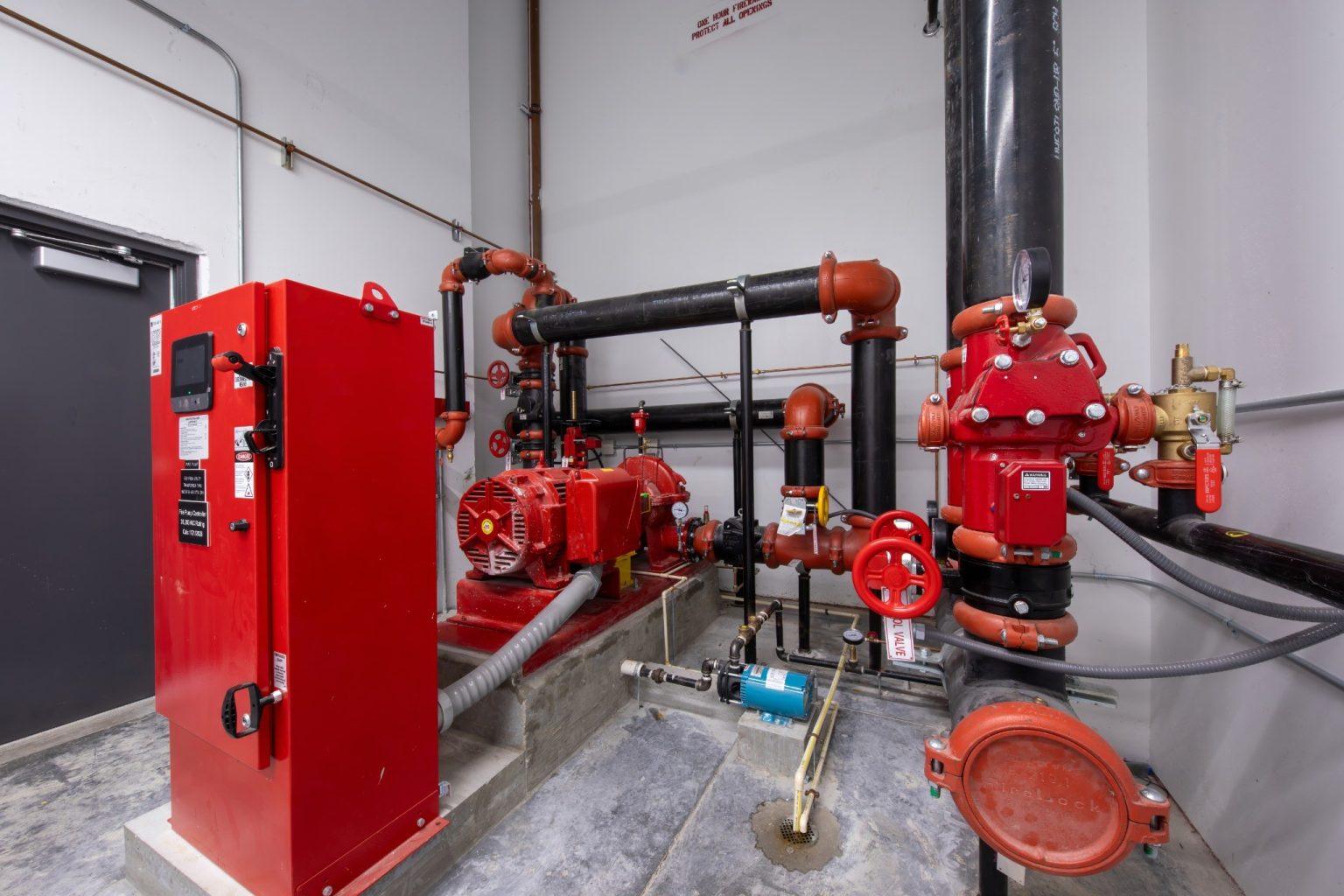
The fire pump controller is the brain of the entire pump system. It monitors system pressure, decides when the pump should start, manages the motor or engine, and reports alarms to the building’s fire alarm system. If the controller is the wrong type, is poorly matched to the power supply, or lacks the features the building owner needs, the pump may not perform the way the design intended.
Choosing the right controller early helps avoid change orders, failed acceptance tests, and long-term maintenance headaches. This guide walks through what a fire pump controller does, the main types available, the factors that should drive your decision, and the questions owners, engineers, and contractors ask most often.
What a Fire Pump Controller Does
A fire pump controller is a specialized piece of equipment designed for one job: getting the fire pump running when it is needed and keeping it running. Unlike a standard motor starter, a fire pump controller is built to prioritize pump operation over protecting the motor or engine. In a fire, losing a motor is acceptable. Losing water pressure is not.
Core functions include:
- Pressure sensing: The controller continuously monitors system pressure through a pressure transducer or switch and starts the pump automatically when pressure drops below the set point.
- Starting and running the driver: It manages the electric motor or diesel engine through its starting sequence and keeps it running.
- Manual and emergency operation: Controllers provide manual start options, including an emergency run mechanism on electric units that can start the motor even if the control circuits fail.
- Alarm and supervisory signals: The controller reports conditions such as pump running, power failure, phase reversal, engine trouble, and battery failure to the fire alarm system and building staff.
- Event logging: Modern controllers record pressure history, start events, and alarms, which is valuable during inspections and troubleshooting.
The Codes That Govern Controllers
Fire pump controllers are governed primarily by NFPA 20, the Standard for the Installation of Stationary Pumps for Fire Protection. NFPA 20 requires controllers to be specifically listed for fire pump service and sets requirements for their construction, location, wiring, and operation. NFPA 70, the National Electrical Code, covers the power supply and wiring, particularly in Article 695. Ongoing inspection and testing fall under NFPA 25.
Your local authority having jurisdiction (AHJ) and the building owner’s insurer may add their own requirements. Confirm early which code editions have been adopted, because requirements change from one edition to the next.
Electric or Diesel: Matching the Controller to the Driver
The first and most fundamental decision is the type of driver. The controller must match it, so this choice shapes everything that follows.
Electric Fire Pump Controllers
Electric drivers are the most common choice in commercial buildings where reliable utility power is available. They are generally simpler to maintain, take up less space, and do not require fuel storage or exhaust systems. Electric controllers may be a good fit when:
- The utility service is reliable, or a second source such as an on-site generator is available
- Pump room space is limited
- The owner wants to minimize routine engine maintenance
- Local regulations make fuel storage or engine emissions difficult
Diesel Fire Pump Controllers
Diesel drivers operate independently of the building’s electrical service, which makes them attractive where power reliability is a concern. A diesel controller manages engine starting using two battery banks, monitors engine conditions, and runs the weekly test cycle. Diesel controllers may be the better choice when:
- Utility power is unreliable or a single source would not meet code
- Adding a generator or second utility feed would be costly
- The building is in a remote area or a region prone to outages
- The owner or insurer prefers a driver that is fully independent of electrical power
The tradeoff is maintenance. Diesel systems require fuel management, battery care, cooling and exhaust systems, and more frequent attention than electric systems. Factor these ongoing costs into the decision, not just the upfront price.
Electric Starting Methods and Transfer Switches
If you choose an electric driver, the next decision is how the controller will start the motor. Fire pump motors draw a large inrush current at startup, and the starting method determines how much stress that places on the building’s electrical system.
Common Starting Methods
- Full voltage (across the line): The simplest and most robust option. The motor receives full voltage immediately, which produces the highest inrush current. It works well when the utility service or generator can handle the starting load.
- Reduced voltage, such as part-winding, wye-delta, primary resistor, or autotransformer: These methods lower the inrush current during startup, which reduces voltage dips on the building’s distribution system.
- Solid-state soft start: Electronic components ramp the motor up gradually, producing a smooth start with lower inrush and less mechanical stress.
- Variable speed: Variable speed controllers adjust motor speed to maintain a target pressure. They can reduce overpressure in the system and, in some designs, eliminate the need for pressure relief valves.
The right method depends on the motor horsepower, the available fault current, utility company requirements, and whether a generator will serve as a backup source. A reduced voltage or soft start controller can sometimes allow a smaller generator, which may offset its higher cost.
Automatic Transfer Switches
When an electric fire pump has both a normal and an alternate power source, a fire pump automatic transfer switch (ATS) moves the load between them. NFPA 20 requires this switch to be listed for fire pump service, and it is commonly supplied as a combined unit with the controller. Specifying a combination controller and transfer switch from the same manufacturer simplifies coordination, wiring, and acceptance testing.
Key Factors to Weigh Before You Specify
Once the driver and starting method are settled, several other factors will narrow your options.
Listings and Approvals
Every fire pump controller must be listed for fire pump service. Many owners and insurers also require FM approval. Confirm which listings the project needs before evaluating products, since this can immediately rule some options in or out.
Voltage, Horsepower, and Short Circuit Rating
The controller must match the motor’s voltage and horsepower, and its withstand rating must meet or exceed the available fault current at the point of installation. Get the fault current figure from the electrical engineer or utility early, because an undersized rating can force a late redesign.
Enclosure Type and Environment
Pump rooms can be hot, humid, or exposed to water spray. Consider:
- NEMA enclosure ratings suited to the room conditions, such as Type 2 for drip protection or Type 4 or 4X for washdown or corrosive areas
- Ambient temperature limits and whether the room will be heated and ventilated
- Seismic certification for buildings in seismic zones
- Physical clearances required by NFPA 70 and the manufacturer
Monitoring and Communication
Today’s controllers offer far more than basic alarm contacts. Look for:
- A clear operator interface with pressure readings, status, and alarm history
- Data logging that captures pressure and event records for inspections
- Communication options such as Modbus, BACnet, or Ethernet for building management system integration
- Remote notification of alarms and trouble conditions
- USB or network access for downloading reports
Serviceability and Support
A controller will likely serve the building for decades. Consider the availability of local service technicians, replacement parts, training for maintenance staff, and the manufacturer’s track record in fire pump applications.
Choosing a Manufacturer
The manufacturer you choose affects not only the controller itself but also the support you receive during submittals, startup, acceptance testing, and the decades of service that follow. Established manufacturers with a dedicated fire pump product line tend to offer the broadest range of options and the deepest application knowledge.
Eaton electric and diesel fire pump controllers are a common choice for commercial projects because a single manufacturer can cover both driver types. That consistency offers practical advantages:
- Consistent operator interface: Maintenance staff work with a familiar layout whether they are servicing an electric or a diesel unit.
- Broad range of starting methods: Electric options typically span full voltage, reduced voltage, soft start, and variable speed designs, which helps match the controller to the building’s power system.
- Combination units: Controllers paired with listed automatic transfer switches simplify projects that use a generator or second utility feed.
- Documentation and support: Submittal data, wiring diagrams, and startup assistance from one source can streamline coordination among the engineer, electrical contractor, and fire protection contractor.
When comparing Eaton electric and diesel fire pump controllers with other brands, ask each manufacturer or distributor for current listing information, available options for your voltage and horsepower, lead times, and the location of the nearest qualified service provider. Product lines and features change, so always verify specifications against the latest manufacturer literature before finalizing the design.
Questions to Ask Any Supplier
- Is the controller listed and approved for the project’s requirements?
- What is the short-circuit withstand rating at our voltage?
- What monitoring and communication options are included or available?
- Who performs startup and acceptance testing support?
- What is the typical lead time for this configuration?
- What warranty and long-term parts support do you provide?
Frequently Asked Questions
Can I use a standard motor starter instead of a fire pump controller?
No. NFPA 20 requires a controller specifically listed for fire pump service. Standard starters are designed to protect the motor, while fire pump controllers prioritize keeping the pump running.
Is an electric or diesel fire pump better for a commercial building?
Neither is better in every case. Electric is simpler to maintain when reliable power is available. Diesel is preferred when power reliability is a concern or a second electrical source is impractical.
Do I need an automatic transfer switch?
You need one when an electric fire pump has both a normal and an alternate power source. It must be listed for fire pump service.
What is the advantage of a soft start or reduced voltage controller?
These controllers lower the current drawn at startup. That reduces voltage dips on the building’s electrical system and can allow a smaller generator.
Where should the fire pump controller be located?
NFPA 20 generally requires the controller to be located as close as practical to the motor or engine it controls and within sight of it. Check the adopted code edition for specifics.
Can a fire pump controller connect to the building management system?
Yes. Many modern controllers offer communication options such as Modbus, BACnet, or Ethernet, along with dry contacts for the fire alarm system.
Do Eaton electric and diesel fire pump controllers share a similar interface?
Manufacturers that build both types often use a consistent interface and layout across their lines. Confirm details for the specific models you are considering.
How long does a fire pump controller last?
With proper maintenance, controllers commonly serve for 20 years or more. Electronics, displays, and components may need updates or replacement over that time.
Making the Right Choice for Your Building
Selecting a fire pump controller is not just a procurement step. It is a design decision that affects electrical infrastructure, pump room layout, code compliance, and how easily the building’s staff can keep the system ready for decades.
To keep the process on track:
- Decide on the driver type early, based on power reliability, space, and long-term maintenance.
- Coordinate with the electrical engineer on starting method, fault current, and alternate power sources.
- Confirm required listings, approvals, and adopted code editions with the AHJ and insurer.
- Choose an enclosure and accessories that suit the pump room environment.
- Specify the monitoring and communication features the owner will actually use.
- Work with a manufacturer that offers strong documentation and local service support, whether you choose Eaton electric and diesel fire pump controllers or another listed product line.
When the controller is chosen thoughtfully and early, startup goes smoother, acceptance testing is less stressful, and the building gets a fire pump system it can rely on when it matters most.







Comment