
Choose an AI Interview Assistant Around Your Preparation Gap

A job seeker can spend an evening comparing interview tools and still avoid the question that would make the choice easier: where does the interview actually break down? One person cannot find a relevant example. Another knows the example but gives a tangled answer. A third explains familiar work clearly until a technical follow-up exposes a gap.
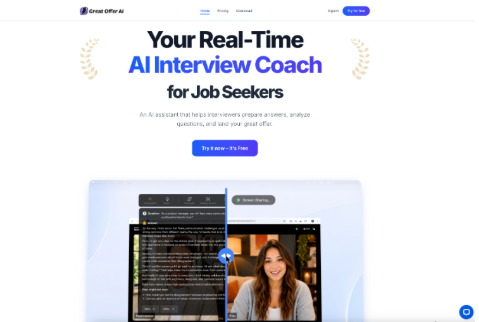
Choosing an AI Interview Assistant should start with that distinction. Great Offer AI combines structured practice and real-time guidance, but those capabilities serve different moments. Before paying for assistance, identify the part of the conversation you need to improve and decide what evidence would show that the preparation is helping.
Identify the Failure You Can Actually Observe
Recall a recent interview or run a short rehearsal. Write down one question, the answer you gave, and the point where it became difficult. Avoid a diagnosis as broad as “I lack confidence.” It does not tell you whether to study, organize your experience, or practice speaking.
If you could not produce an example, look at the material you prepared. Perhaps you brought only your largest project, while the interviewer asked about a disagreement or a small operational mistake. The immediate task is to find relevant experience. More elegant wording cannot supply an event that never happened.
If you had an example but took too long to explain it, the task is different. The interviewer may need the decision and your contribution before the background. Rehearsal can help you change that order. You can assess progress by whether a listener understands the point without interrupting to ask what you actually did.
If the answer falls apart at a technical follow-up, investigate the missing knowledge. An answer framework may organize the explanation, but it cannot make an unfamiliar method familiar. Work through an example, inspect the result, and return to the question. Buying another tool before doing that work can make the preparation process more elaborate without making the answer stronger.
Match the Preparation Method to the Missing Piece
Different preparation methods can complement each other. The choice is about what to do next, rather than declaring one method universally better. Use the observed failure to decide which kind of feedback would be useful.
| Observed gap | Useful next activity | Evidence of progress |
| No relevant example | Review actual projects and responsibilities | A specific example answers the question |
| Relevant but disorganized answer | Rehearse a shorter explanation | A listener can identify your contribution |
| Weak technical follow-up | Study and work through the missing concept | You can explain a changed example |
| Difficulty responding to interruptions | Practice with another person | You answer the new question directly |
Great Offer AI supports resume uploads for tailored replies. That can be relevant when your preparation needs better context about your experience. Review the resume first: an assistant has little useful material to draw on if every project is summarized as a broad responsibility. Add specificity only where it is accurate and appropriate to share.
A human practice partner offers a different kind of friction. They can stop you when a term is unclear, ask a question you did not anticipate, or explain which part of your answer they found unconvincing. You do not need to choose between every form of assistance. You need to know which one addresses the current gap.

Test Preparation Before Buying More Interview Support
Give any preparation method a small, concrete job. Choose a question you struggled with and answer it once without help. Then use the method to revise the explanation. Finally, answer a related question that changes one detail. This is a personal comparison exercise, not a standardized test or a prediction of hiring success.
Suppose you prepared a story about delivering a project late. After practice, ask yourself what you would say if the interviewer instead asked when you warned the team that the date was at risk. The second question needs a different part of the experience. A memorized summary may still sound smooth while missing it.
Use an interview guide to broaden the questions you consider, then select the ones relevant to your experience and target role. Reading dozens of sample answers can feel productive. The harder check is whether you can respond to a follow-up without borrowing someone else’s achievements or inventing a cleaner project history.
Keep a brief note of what changed after practice. Did you reach the decision earlier? Did you remove an unexplained acronym? Did you discover that the example was unsuitable? The last result is useful too. Rejecting a weak story can improve preparation more than polishing it for another hour.
Do not use an offer or rejection as the only measure of whether a tool helped. A hiring outcome combines many factors you cannot isolate from one interview. A narrower observation, such as explaining your contribution more clearly, is easier to evaluate honestly.
Check Whether the Payment Model Fits Your Schedule
Payment structure becomes relevant after you know the task. Great Offer AI offers Time Packs with a one-time payment, no automatic renewal, and minutes that do not expire. It also presents a subscription option. The distinction matters for a person with occasional interviews compared with someone planning frequent preparation sessions.
Do not assume the more flexible option is automatically cheaper. Compare the current price and included usage with the sessions you realistically expect to complete. A useful budget starts with your own plan: how often you will practice, what you will practice, and when you will review whether it is helping.
For an irregular search, unused minutes that remain available may suit the schedule. For a concentrated period of activity, another arrangement may be more appropriate. The comparison depends on current terms and actual use. There is no reason to buy a large allowance solely because the next interview feels important.
Write a small usage estimate before checkout. For example, two planned 20-minute sessions total 40 minutes of activity; that is your schedule, not a claim about how a particular plan meters usage. Check the plan against that schedule and verify what counts toward its allowance. Include time for revising an answer and trying it again if that consumes the same allowance. The exercise may show that your immediate need is smaller than the package you first considered.
Choose the Next Practice Session Before the Next Tool
An interview assistant is a reasonable option when you need repeated practice explaining experience you can already substantiate. When the problem is missing knowledge, start with the subject itself. When the problem is responding to another person, include a live rehearsal. Follow the employer’s rules on assistance during the actual assessment.
Make one preparation decision now: choose a question, identify the gap, and pick the activity that addresses it. Afterward, try a changed question without help. That gives you a firmer basis for spending time or money than another comparison of feature lists.





Comment