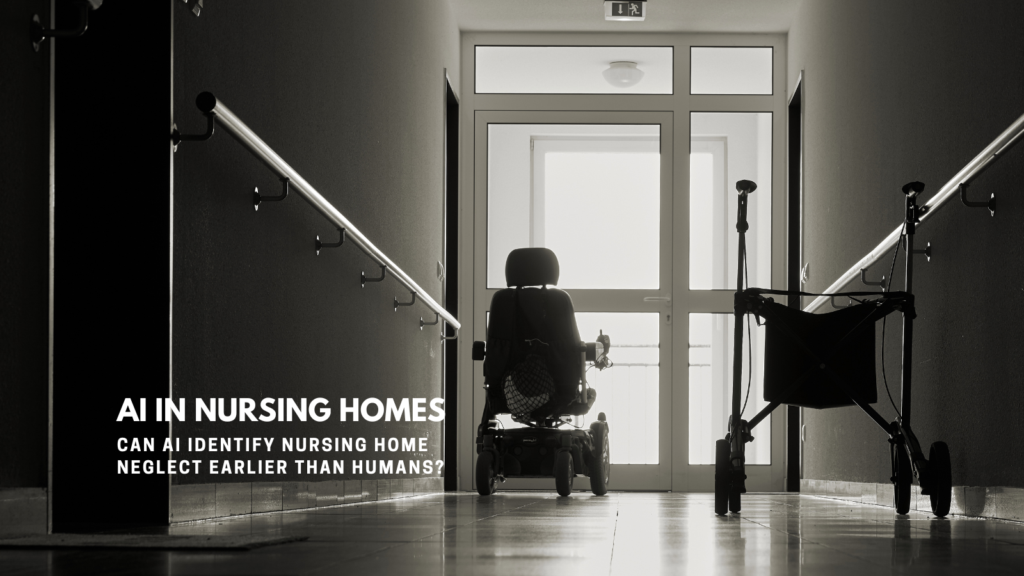
Traditionally, identifying nursing home neglect depended on the staff performing routine observations, medical evaluations, and inspections. It would also depend on a family member visiting their loved one and witnessing the signs of neglect for themselves. Unfortunately, these were not sufficient methods for detecting neglect since humans often skip the observations or don’t conduct thorough enough inspections.
Nursing home neglect is often too difficult for the average human to detect unless the facility has caused significant harm to someone. When a family member sees their loved one appearing frail or cognitively impaired, they will usually assume it is a natural symptom of their age or health condition. But in some cases, it is a sign of neglect that must be addressed before a resident’s health condition worsens.
AI Supports Early Detection of Nursing Home Neglect
Artificial intelligence (AI) technology has transformed many different industries by improving safety, speed, and efficiency. Now it can transform the safety level in nursing homes by automatically identifying nursing home neglect before humans do.
How is this possible? Since AI has the ability to analyze an enormous amount of data within seconds, it can quickly recognize hidden patterns of neglect within the data that a human might overlook. The AI could potentially detect unusual changes or abnormalities in the following nursing home resident data:
- Blood pressure
- Respiratory rate
- Blood glucose
- Weight
- Missed medication
- Laboratory test results
- Diagnoses
- Hospital admissions
- Physical accidents or injuries
- Cognition
- Sleep quality
- Nurse notes
- Doctor notes
AI does not replace human nurses, doctors, and caregivers. Instead, it offers assistance to the human staff by notifying them of any unusual health problems or concerns found in a resident. That way, the healthcare professionals will know to take the necessary actions to help the resident before their condition worsens.
According to Art Gharibian, owner of Gharibian Law, “Artificial intelligence has the potential to identify patterns of neglect much earlier than traditional methods, but technology is only valuable when caregivers and facilities act on those warnings. If they don’t, family members have a right to take legal action against the facility for willful neglect that resulted in harm to their loved one.”
Computer Vision for Monitoring Resident Safety
One of the most effective AI technologies used in nursing homes is computer vision, which is a combination of surveillance cameras and machine learning algorithms. As the cameras generate real-time visual data, the AI actively analyzes and interprets the visuals to detect potentially neglectful situations.
Computer vision can identify the following types of situations in nursing homes:
- Residents on the floor after a fall
- Residents struggling to get up out of their beds
- Residents wandering around the facility for extended periods
- Residents remaining in isolation for too long
- Residents expressing unusual mobility patterns
For example, if a resident lips or walks extra slowly for several days, the AI computer vision software will detect it through the cameras. Once the nursing home staff is alerted to the situation, they can conduct the necessary health evaluations to determine the cause of the problem.
Electronic Health Records Reveal Hidden Health Issues
Electronic health records can contain much more clinical data about a resident’s health than traditional paper-based health records. Most nursing homes and medical facilities use electronic health records to store information about a resident’s medical history, such as their lab results, medications, diagnoses, treatments, and so on.
Of course, nearly every resident will develop health conditions or symptoms not necessarily caused by neglect. That is why AI systems will quickly scan through thousands of electronic health records to identify patterns and relationships between them that a human would not have seen. These patterns are the key to identifying neglect over an extended time period.
For example, an elderly resident suffering from mild dehydration may not show any noticeable symptoms initially. As time goes on, the resident could gradually experience weight loss, elevated heart rate, declined fluid intake, and reduced urine output. AI can detect all these different symptoms together in the electronic health records and attribute them to dehydration.
AI Improves Fall Detection Time
Falls are one of the most common causes of injury among nursing home residents. Since many of them are elderly or disabled, they can easily fall on the floor and injure themselves.
Nursing homes previously detected falls by supplying residents with remote alarm devices to signal that they need help. They also scheduled bed checks and facility walkthroughs to ensure all residents were safe and unharmed. Sadly, these traditional fall detection methods cannot observe every resident continuously.
On the other hand, AI systems can immediately recognize when a resident has fallen and then automatically send an alert to the nearest staff member to assist them. Some of the most modern and advanced AI systems can even predict falls before they occur based on the following resident data:
- Walking speed
- Fall history
- Sleep quality
- Medications
- Number of bathroom visits
Rather than reacting after an accident occurs, nursing homes can remain proactive by taking the necessary preventative actions to help ensure no resident ever falls again. These actions can include increased supervision of residents, physical therapy, mobility aids, and medication reviews.
AI Can Predict Pressure Ulcers
Pressure ulcers, which are better known as bedsores, are injuries that develop when a person remains in one position in bed for extended time periods. The injuries start as mild skin irritation and then can progress into deep wounds. If not treated fast enough, the wounds can become infected and potentially threaten the person’s life.
AI has proven itself to be able to predict which residents are more likely to develop pressure ulcers by detecting and analyzing all visible skin damage on them. These AI-based prediction models are proficient in evaluating a resident’s mobility range, blood circulation, skin quality, laboratory results, and chronic illnesses.
If the AI identifies any risk, it will send alerts and recommendations to the healthcare professionals regarding how to proceed. Maybe the resident needs frequent manual repositioning, while others might benefit more from specialized mattresses or nutritional support.
Staffing Analytics Can Help Identify Systemic Neglect
Many people like to think that neglect is caused by individual nurses, doctors, or caregivers. However, sometimes the neglect is the result of poor organizational policies and performance over a long-term period. Maybe the facility is regularly understaffed, or there are too many scheduling gaps between work shifts.
In any case, AI-powered staffing analytics can examine staffing data to see if there is a staff shortage impacting the health of the residents in the nursing home. The AI can detect shifts with low staffing due to staff resigning from the job or calling out sick.
For instance, if too many patterns of staff shortages are detected over several months or years, the AI will assume it is systemic rather than a one-time occurrence. From there, the facility can take the appropriate action to put an end to this systemic problem before it impacts any more residents.
Take Legal Action Against the Negligent Nursing Home
You’re probably wondering, what is the next step after discovering nursing home neglect?
The best next step is to consult a qualified attorney specializing in nursing home and elder abuse cases. They can help your family reconcile the situation by seeking compensatory damages on your behalf for the elder abuse, wrongful death, or personal injury stemming from the neglect.