
California Teens Found Locksy — and the Way They Are Sharing It With Each Other Is Exactly How the Best Social Apps Have Always Spread

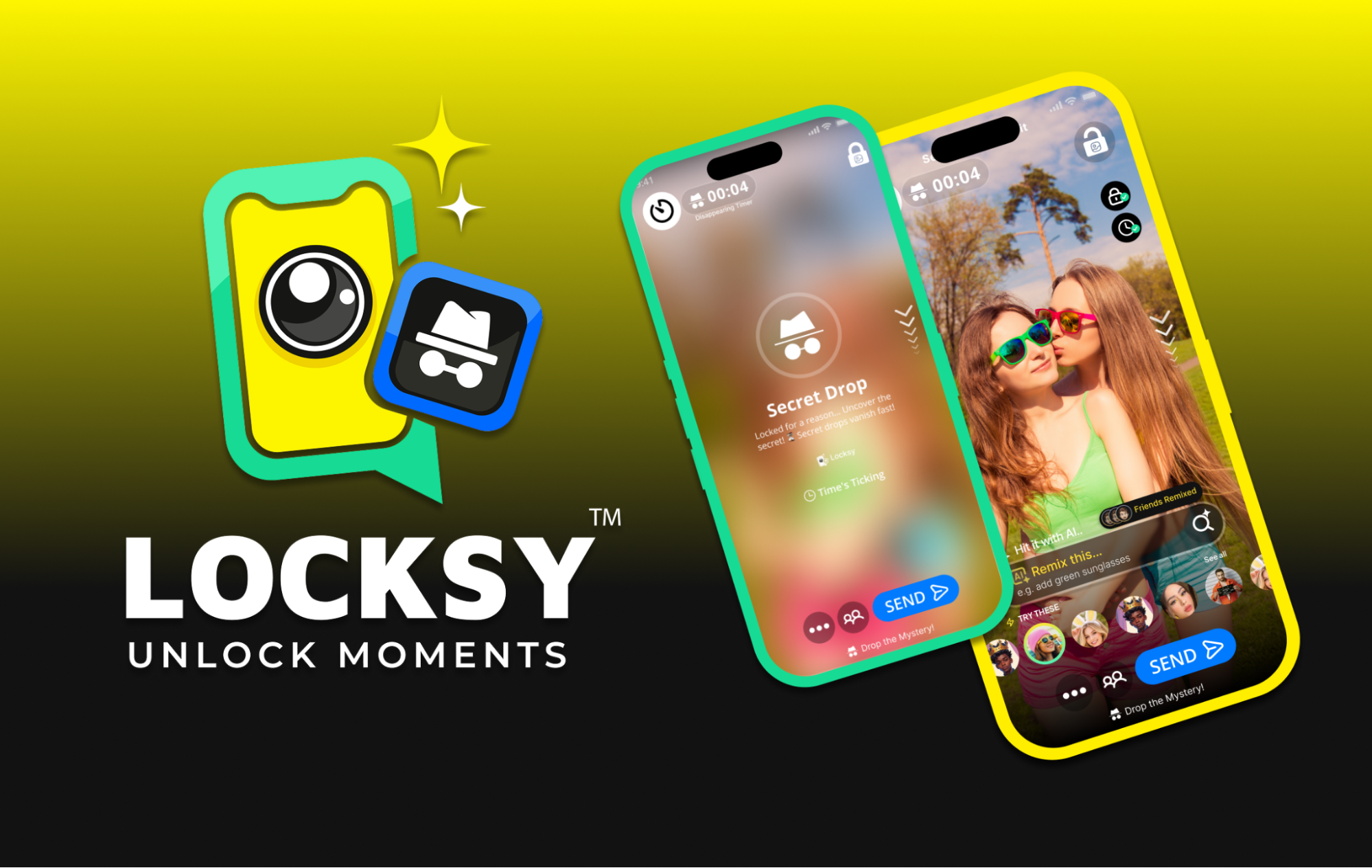
There is a specific way that the best social apps spread among teenagers in California. It does not start with an advertisement. It does not start with an influencer posting about it. It starts with one person — in a high school hallway, or a group chat, or the backseat of a car on the way home from school — showing another person something they have never seen before. Something that makes the second person say: what is that? And before the conversation is over, the second person has found it.
This is how Locksy is spreading across California right now. Teen by teen. High school by high school. Drop by Drop. And the teenagers who are discovering it are not describing it as a new app they are trying. They are describing it the way you describe something that was already obvious — something that should have existed before now and somehow did not.
California has always been the place where social technology finds its first real audience. The state has the largest teen population in the United States, the most tech-native culture, and the most connected high school social networks in the country. When something spreads here — genuinely, organically, from person to person without a marketing budget — it tends to keep spreading. And Locksy is spreading.
California has always been where social technology finds its first real audience. Teen by teen. High school by high school. Drop by Drop. Locksy is spreading — and the teens driving it are not promoting it. They are just using it.
Teen Social App, California Style — Why Locksy Fits the Way California Teens Actually Communicate
California teenagers have a specific relationship with social media that is different from the rest of the country. They are more aware of how apps work. More aware of what apps want from them. More aware of the difference between a social experience that was designed for them and one that was designed to monetise them. This awareness — born from growing up in the state where most of these platforms were built — makes California teens sophisticated consumers of social apps in a way that is hard to replicate elsewhere.
Locksy fits California teens precisely because it does not ask anything of them that other social apps ask. No follower count to maintain. No public feed to perform for. No algorithm deciding what they see. No advertising converting their attention into someone else’s revenue. Just direct, urgent, creative communication between real friends — and everything disappears when the moment is over.
California high schoolers who have found Locksy describe the experience with a consistency that crosses every part of the state. From the Bay Area to Los Angeles, from San Diego to Sacramento, the same words appear: real, fast, private, different. The app feels like it was built for the way they actually want to talk to their friends — not the way the platform needs them to talk to keep the algorithm fed.
Silicon Valley Teens Were First — and the Ripple Is Moving
The story of Locksy in California begins, appropriately, in Silicon Valley. The teenagers who live in the shadow of the technology industry — who grow up hearing about apps, who have parents and older siblings who work on the platforms that define social media globally — these are the teens who noticed Locksy first. They recognised something in its architecture that felt honest in a way that most social apps do not. The camera that never stops. The AI that executes whatever you describe. The countdown that starts the moment you send. They recognised these as design decisions made by people who were building for the experience rather than for the engagement measure.
Silicon Valley teens are not easy to impress. They have seen too much. They know too much. And when something impresses them anyway — when something makes them say that is genuinely different — the word travels fast through networks that are connected, informed, and deeply intertwined with the technology industry itself. The Locksy ripple that started in Silicon Valley is now moving outward through California. It is moving through the Bay Area. It is moving south toward Los Angeles. It is moving through every high school social network that connects to someone who discovered it first in the Valley.
Silicon Valley teens are not easy to impress. They have seen too much. They know too much. When something impresses them anyway — when it makes them say that is genuinely different — the word travels fast.
The High School Social Network Effect — How Locksy Spreads Through California Schools
High schools are the most powerful social distribution networks in the world. The density of relationships within a single school — hundreds of teens who see each other every day, who are in each other’s group chats, who share physical space and social context — creates the conditions for faster, more genuine viral spread than any platform marketing budget can replicate.
The way Locksy spreads through a California high school follows a pattern that is starting to become familiar. A student discovers Locksy — typically through a Drop link that arrived in their messages from a friend who was already using it. They experience the countdown already running before they even have the app. They feel something they have not felt from a social interaction before — the urgency of a clock they did not start, the discovery of content that was created for them and is disappearing in real time. They get Locksy. They send a Drop to someone in their social circle. That person experiences the same thing. The circle expands.
Within a California high school, this pattern can move through an entire social network in days. Not because anyone is promoting it. Because the Drop sharing mechanic is itself the promotion. The person who receives a Drop link does not need to be convinced to try something new. They have already experienced what makes Locksy different — the countdown was running from the moment the link arrived. They convert because the product experience converts them.
What California Teens Are Saying About Locksy
California teens who have discovered Locksy describe a social experience that feels qualitatively different from every other app they have used. Not different in the way that apps always describe themselves as different. Different in a way they can feel in the moment of receiving a Drop — the specific quality of a notification that arrives with a clock already running, content already disappearing, a window already closing that they did not choose to open.
California high school students who use Locksy describe the after-school ritual that has formed around it as one of the most socially alive experiences their phones have given them. The first wave of Drops that arrives as school ends. The friend who always catches them in the first five seconds. The group that races the same countdown from different parts of town simultaneously. The Backroom that exists for their specific friend group and nowhere else — private, ephemeral, belonging to exactly the people it was made for.
This is not a feature set. This is a social culture forming around an app that was built for exactly this kind of formation. California teens are not adapting themselves to fit Locksy’s architecture. Locksy’s architecture fits the way they already want to communicate. That is the rarest possible thing in consumer social. And it is what makes the spread happening across California feel different from the spread of any app that came before it.
California teens are not adapting themselves to fit Locksy’s architecture. Locksy’s architecture fits the way they already want to communicate. That is the rarest possible thing in consumer social.
Teen Social App, AI Social App, High School Social App — Locksy Is All Three in California in 2026
What makes Locksy particularly suited to the California teen market in 2026 is the combination of what it is simultaneously. It is a teen social app with mechanics that were designed specifically for the way teenagers communicate — urgently, privately, creatively, ephemerally. It is an AI social app with a generative AI creative layer built natively into the send flow — the first of its kind in any social product. And it is a high school social app whose School Map feature, Backroom group spaces, and Drop sharing mechanic are perfectly calibrated for the social dynamics of a physical school community.
In California — a state that is simultaneously the most tech-native and the most teen-dense in the country — the combination of these three identities makes Locksy the social app that fits more dimensions of teen life simultaneously than any other product currently available. Tech-savvy California teens recognise the AI architecture. Social California teens respond to the urgency mechanic. High school California teens build communities in Backroom. After-school California teens race Drop countdowns the moment the bell rings.
Locksy is available exclusively in the United States on the iOS App Store. Free always. And across California right now — in high school hallways and after-school group chats and Silicon Valley bedrooms where teens know more about social technology than most adults — it is spreading the way the best social apps always spread. One Drop at a time.
→ Download Locksy on the App Store
BEST NEW TEEN SOCISL APP USA 2026
Teen AI social app in the United States
locksy.app · [email protected] · © 2026 Locksy LLC · US only · AI Social app loved by teens in California · After School App · Teens AI App · AI · Generative AI Social app · Teens





Comment