
Blind Keyway Broaching: Where Should the Cut Stop?

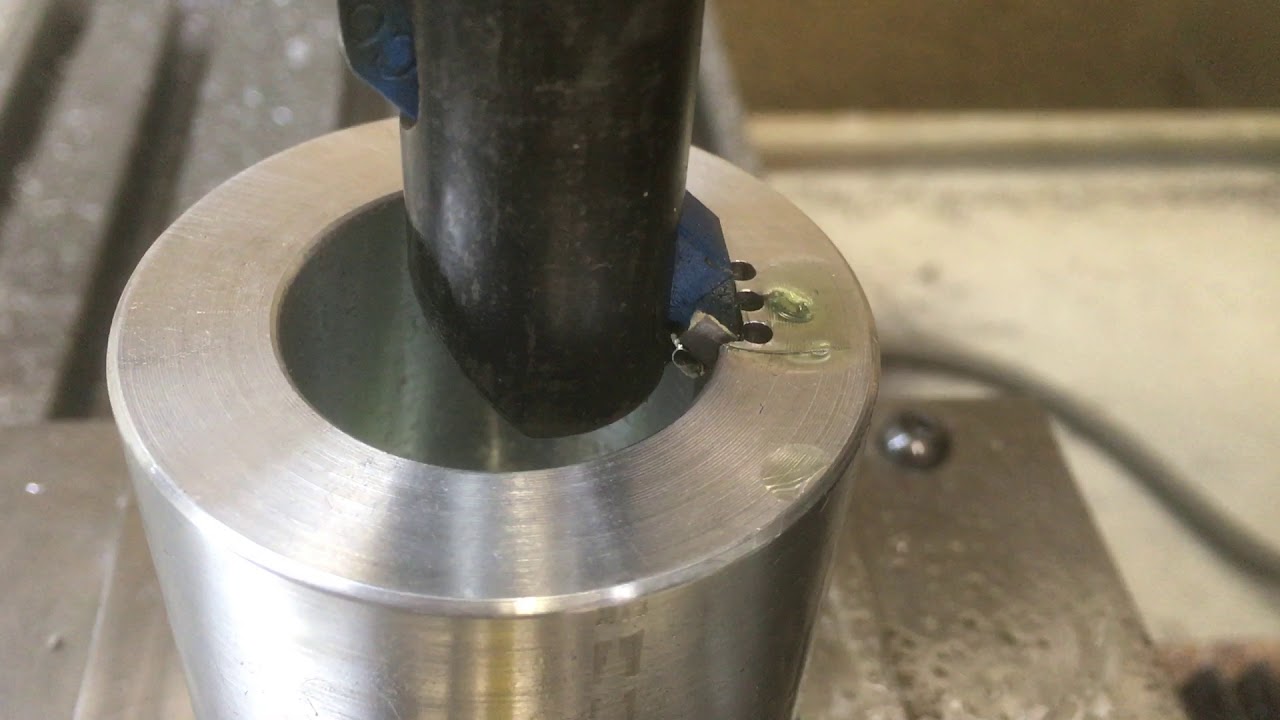
A keyway can measure correctly at the mouth of a bore and still fall short of the length the assembly needs. In blind keyway broaching, the drawing has to define how far the finished slot must continue and what geometry is allowed beyond it.
That last portion of the feature deserves attention before the blank is machined. The designer needs sufficient engagement for the mating key. The shop needs to establish how the cutting tool will finish its stroke and how the chips will be removed.
A section view showing both requirements gives purchasing a firmer basis for requesting a quote.
Put the working length on the drawing
Identify the length over which the keyway must have its specified width and radial depth. This is the finished profile the assembly requires.
A relief pocket beyond that section serves a different purpose. Its length should be identified separately, so nobody counts it as part of the required key engagement.
The word “depth” can also cause confusion in an email inquiry. It might refer to the distance into the bore or to how far the keyway extends radially into the hub. Use the drawing’s dimensions and references when discussing either.
| Drawing detail | What the shop needs to establish |
| Bore size and allowable variation | Specify the opening the tool must enter and the bore condition required when the blank is delivered. |
| Keyway width and radial depth | The cross-section to be produced, including its dimensional references. |
| Full-profile keyway length | Where the specified slot geometry must begin and end. |
| Bore bottom or internal shoulder | The boundary beyond which the tool cannot continue. |
| Permitted relief | The location and dimensions of any approved space beyond the finished keyway. |
Note any later machining of the reference face in the process plan, since it will change the surface from which keyway length is measured. The machining setup and final inspection need to account for the same finished-part requirement.
Broaching Technologies provides keyway broaching and keyseating services, including review of part geometry and tooling suited to the required feature. A drawing with a defined end condition makes that review more useful than a request containing only a nominal keyway size.
Check the keyway’s exit separately from the bore
An opening at the far end of a component does not, by itself, establish a through keyway. The slot may still stop inside the bore.
Review the actual path of the cutting edge. A shoulder, a smaller bore section or the specified end of the keyway can limit that path even when another opening exists farther inside the part.
For a through keyway, the selected process can use the available exit. A blind keyway needs a process that accommodates the internal stopping point.
Relief requirements belong to that process choice. Depending on the tooling, a groove or cross-hole may provide space for the cutter to clear the finished feature and for chips to collect or leave the cutting area. The supplier must assess the proposed geometry with its actual tool and setup.
A clearance dimension published for one tooling system should therefore remain a reference for that system. Ask the shop to confirm what the proposed operation needs before adding a generic relief allowance to the drawing.
Get approval for the material the tool needs removed
A relief feature changes the component. It needs the same drawing control as the keyway itself.
Mark surfaces that must remain intact. If an internal shoulder supports another component, identify its required seating area. If additional holes are prohibited, state that restriction in the inquiry. The shop can then assess the part with those boundaries in place.
A useful review separates two decisions: whether the feature can be manufactured as drawn, and whether engineering will permit a change that makes the operation practical. Purchasing should know which decision remains open.
Broaching Technologies’ blind-hole broaching services cover internal features with restricted tool travel. The company describes custom tooling work that considers chip relief and surface finish. That is a relevant starting point for reviewing a keyway that ends inside the component.
If a relief is approved, record who will machine it and when. A quote based on receiving a prepared blank describes different work from a quote that includes making the relief. Resolve that difference before comparing totals.
Decide how the internal feature will be accepted
A measurement at the entrance describes that location. It does not establish the geometry throughout a blind keyway.
Discuss how the required length will be checked, along with the width and radial depth. Where the keyway must align with another feature, identify the drawing reference that controls its angular position. A bolt pattern or an external flat may matter to the assembly even when the key fits the slot.
Agree on access for inspection while the manufacturing sequence is still being planned. Ask the supplier which checks are practical with the proposed bore geometry and what records will accompany the parts.
A trial fit with the mating key can be useful. Treat it as an agreed functional check alongside the specified dimensional inspection. Include any requirements for removing burrs and residual chips from the internal feature.
Send the condition of the blank with the drawing
Broaching Technologies is based in Menomonee Falls, Wisconsin. Its published keyway capabilities include work in carbon and alloy steels, stainless steel, aluminum, bronze and brass.
For a particular job, identify the material grade and the condition in which it will be supplied. Include hardness information when available, together with any heat treatment planned before or after keyway machining. Identify the alloy and its supplied condition rather than writing only “steel” on the inquiry.
Send the current drawing revision and a section view of the bore. State the quantity being quoted and the date completed parts are needed. If the blanks already exist, explain which operations have been completed and which surfaces can still be changed.
Request a manufacturability review and quote from Broaching Technologies. Ask the proposal to state its assumptions about the incoming blank, relief preparation and inspection. Resolve any proposed drawing change before releasing the rest of the lot.
Frequently Asked Questions
Can a part with a through bore still have a blind keyway?
Yes. The bore may pass through the component while the keyway stops before the opposite face. Identify the slot’s endpoint separately so the supplier can assess the cutting path.
How much relief does a blind keyway need?
The required space depends on the selected tool, its movement and the chip-removal arrangement. Have the machining supplier confirm the relief dimensions for the proposed process. A value taken from an unrelated tooling guide may not suit the part.
What if the design does not allow a relief groove or cross-hole?
State that restriction before requesting a firm machining price. The supplier needs to review whether the feature can be made within the permitted geometry or whether another process is required. Any proposed modification needs the design owner’s approval.
Can an already hardened component be quoted?
Submit the actual material grade, hardness and drawing for review. Those details allow the supplier to assess tooling and process suitability. A previous quote for the same geometry in a different material condition should not be assumed to cover the hardened part.
Is a successful trial fit enough to approve the keyway?
A trial fit checks assembly with the particular mating item used. Agree separately how the drawing’s dimensions, position and required full-profile length will be verified. Include the functional fit test in the inspection plan if it is part of acceptance.






Comment