Automation Comes for the Trading Desk: What Workflow Technology Means for Capital Markets

Ask anyone who has worked on a trading desk where the real work happens, and the answer is rarely the dramatic moment of execution. It is the long tail of processes around the trade: capturing terms, confirming details, calculating risk, reconciling positions and reporting to regulators. For decades much of this has run on spreadsheets, email and manual reconciliation. That is now changing, and the change is reaching corners of the market that automation had long ignored.
The unglamorous engine of finance
Liquid, exchange-traded markets automated their workflows years ago because standardization made it straightforward. The harder frontier has always been less liquid, more bespoke assets — private loans, structured credit and over-the-counter instruments — where every deal can have unique terms. Those assets resisted automation precisely because they did not fit neatly into a template.
That resistance is breaking down. Technology vendors expanding trading platforms into loans and private credit are a clear signal that the industry now believes even complex, illiquid assets can be brought onto modern, data-driven systems. The motivation is partly the sheer growth of private markets, which have swelled into a major asset class and now demand the kind of operational rigor that public markets take for granted.
Why this matters beyond the back office
Automating workflows is not just about cutting costs, though it does that. It is about data. When a trade’s full lifecycle runs through connected systems, the firm gains a single, timely view of its positions, exposures and risk. That view is the foundation for everything from intraday risk management to regulatory reporting. Without it, firms are forced to assemble a picture from fragments, often after the fact.
The stakes are rising as private credit grows. The International Monetary Fund’s Global Financial Stability Report has repeatedly flagged the rapid expansion of private credit and the relative opacity of parts of the market, urging better data and monitoring. Automation that captures consistent, structured information about these instruments is part of the answer, giving both firms and supervisors a clearer view of where risk actually sits.
The shape of the modern desk
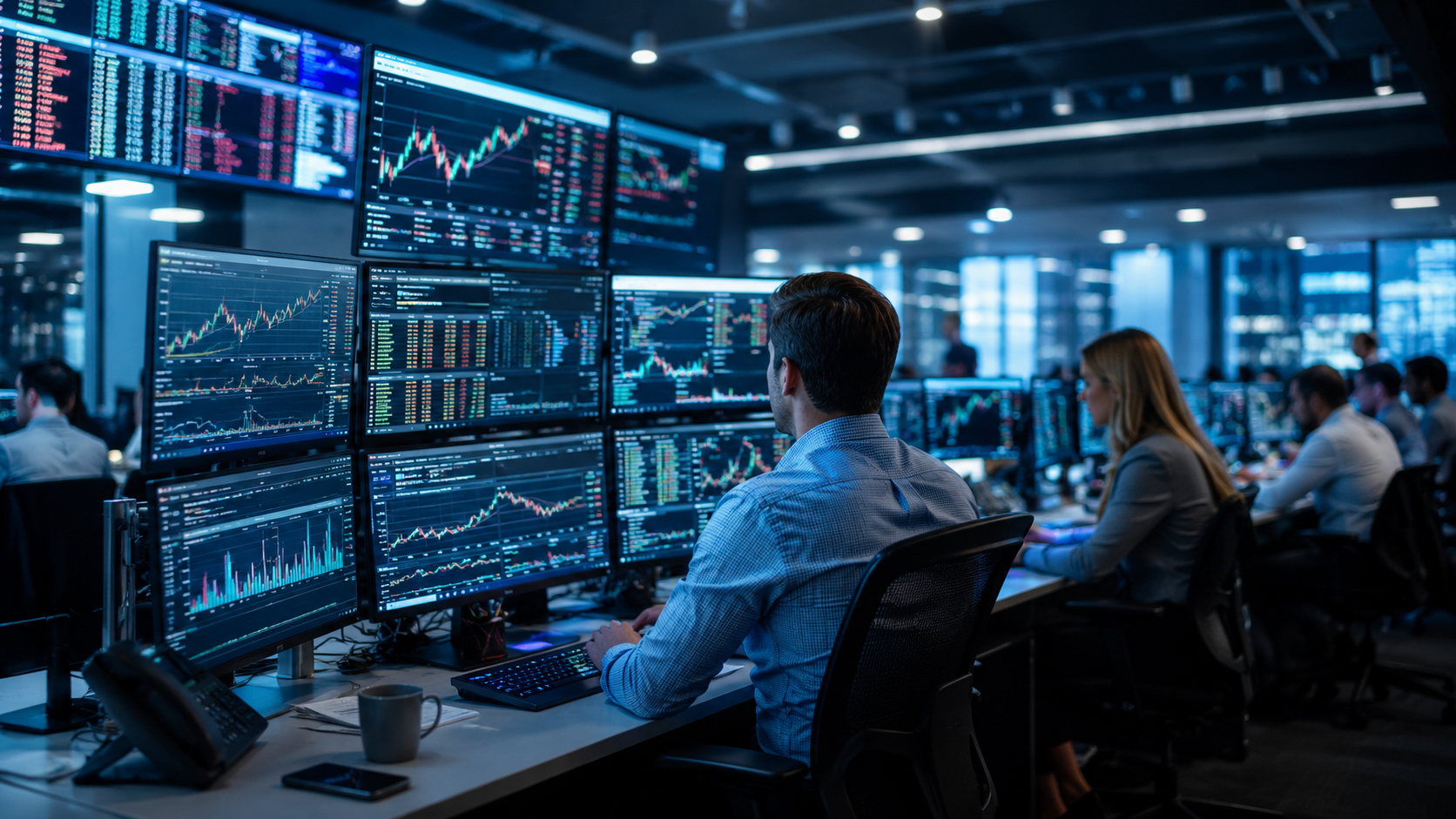
The trading desk of the near future looks less like a room of people manually shepherding deals and more like a control center overseeing automated flows. Order and execution management systems, risk engines and reporting tools increasingly share a common data layer, so information entered once propagates everywhere it is needed. People shift from data entry to exception handling and judgment calls — the tasks where human expertise genuinely adds value.
None of this is frictionless. Bespoke assets still require careful modeling, and forcing them into rigid systems can introduce errors of its own. Integration with legacy infrastructure is slow and expensive. And firms must guard against the false comfort of automation, ensuring that someone still understands what the systems are doing and can step in when they behave unexpectedly.
The broader lesson is that capital markets technology is no longer just about faster execution. It is about building an operational backbone that can handle complexity, generate trustworthy data and scale into new asset classes. The firms investing in that backbone now are positioning themselves not only to be more efficient, but to move confidently into markets that were once too messy to touch.