
Auspicious Wedding Dates in Singapore 2026 and 2027: A Complete Guide for Couples

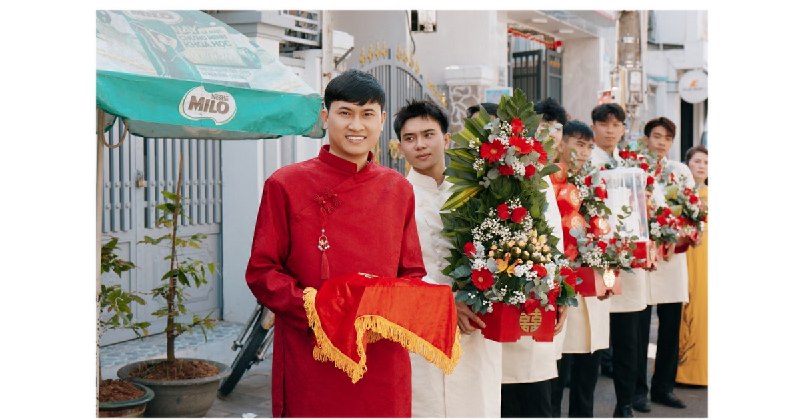
Dates available for weddings in 2026 have expired; people are now planning towards 2027. There is a catch, though. Despite two couples looking at their almanacs, the selection of dates varies as something that suits one couple might not be compatible with another.
There are other peculiarities of Singapore as well. For instance, there were 24,688 marriages registered in Singapore in 2025 which was a fall of 6.2% from 26,328 in 2024. Public holidays, Ghost Month, and registry are still relevant to you.
What Are Auspicious Wedding Dates?
Definition of an Auspicious Date in Chinese Weddings
An Auspicious Date is the most favorable day (as well as time) for an important life event. Within the tradition of Chinese weddings, couples look into the almanac and check their birth information. There are various customs depending on the dialect groups (Hokkien, Teochew, Cantonese, Hakka). Thus, do not consider any universal list of Chinese wedding dates on Singapore websites.
Reasons to Pick an Auspicious Wedding Date
- Family peace:It is often expected from the elders.
- Inner peace:No need to wonder about something when you start your married life.
- Connection to your cultural heritage.
Some do not observe this custom, but it is okay. The main thing is to discuss it in advance with the families of both couples.
Singapore Wedding Trends: What the Latest Numbers Show
| Year | Number of Marriages Registered | Change |
| 2023 | 28,310 | n/a |
| 2024 | 26,328 | −7.0% |
| 2025 | 24,688 | −6.2% |
In 2024, there was a decrease of 7.0% from the number in 2023. The number of civil marriages went down from 21,144 in 2023 to 19,682 in 2025. The number of Muslim marriages decreased from 5,184 to 5,006. Most marriages are civil marriages, and thus, the laws of ROM apply to all.
How to Choose an Auspicious Wedding Date in Singapore
Chinese Almanac (Tong Shu) and Its Importance
The Chinese almanac (Tong Shu) determines the significance of a day based on factors like marriage and relocation, among others, including:
-
- Day Officials (建除十二神): Most organizations do not hold weddings on the Po (破) day.
- Zodiac clashes (冲): There are specific days that clash with animals.
- Hour of luck (吉时): the particular hour for either tea or wedding ceremony.
Since different schools of thought have differing viewpoints on these aspects, it is very possible for two Feng Shui masters to disagree.
TIP: Protect your ROM slot before reserving any premises.
Using Birth Dates to Select a Wedding Date
Feng Shui Wedding Date Selection also uses the BaZi (八字), which is made up of one’s Birth Year, Month, Day, and Hour of both partners.Here’s something interesting which often goes unnoticed. Under some astrological systems, people born after the Chinese New Year and before Li Chun have the zodiac sign of the previous year.
Chinese Zodiac wedding dates are based on conflict pairs. In general, a Horse day conflicts with Rat Births and Goats with Ox Births. And this becomes relevant because 2026 is the Year of the Horse while 2027 is the Year of the Goat.
Tip: Give your Birth Time; otherwise, you won’t have an Hour in your chart.
The Role of Feng Shui Masters in Wedding Date Selection
The professional cross references the two graphs and gives you the date to pick, along with time, and even alternative dates. There is no licensing done in Singapore for such services, so beware of them.
Comparison: Almanac, Online Calculator, or Practitioner?
This is how you can make use of these tools to check for auspicious dates for 2026 and 2027 weddings.
| Options | Suitable for | Benefit | Disadvantage |
| Checking the almanac yourself | Inquisitive couples | Free | Hard to understand |
| Calculator of Chinese Wedding Date | Creating fast lists | Quick | Sometimes neglects hours and schools |
| Expert in Feng Shui | Couples wanting reassurance | Cross reference by charts | Inconsistent quality |
Thinking wisely together: First, do the test on the computer and calculator, and then ask the practitioner to check your top three.
Auspicious Wedding Dates in Singapore for 2026
How to Determine Auspicious Wedding Dates 2026
The auspicious wedding date 2026 now means December only. Notice to ROM should be at least 21 days prior to the date and that means if I file it now, the earliest date will be 14 December (according to my calculation; check from the portal). Notice should be made within 21 days and 6 months prior to solemnization. Moreover, Christmas Day 2026 will fall on 25 December.
Important Considerations When Selecting a 2026 Date
- The Booking Policy of ROM is “First Come: First Served”.
- End of Ghost Month: End of Ghost Month would be any date between 13 August to 10 September 2026.
- Year End Rush: Select from the days that are free during December.
TIP: The importance of looking at the Ghost Month is that it eliminates an entire month.
Auspicious Wedding Dates in Singapore for 2027
How to Check Suitable Wedding Dates in 2027
Good days for the wedding ceremonies for the year 2027 would be from the good days but ROM will be closed during the festivities.The above is followed by the dates in the Government Gazette that include 1st January, 6th to 7th February, 10th March, and 26th March. The extra holiday will be on 8th February.
| Date (2027) | Event | Importance |
| Fri, 1 Jan | New Year’s Day | Closed ROM |
| Sat–Mon, 6–8 Feb | Chinese New Year | Family vacation period |
| Wed, 10 Mar | Hari Raya Puasa | Closed ROM |
| Fri, 26 Mar | Good Friday | Long weekend |
| Mon, 9 Aug | National Day | Long weekend |
| Mon, 16 Aug | Hungry Ghost Festival | Mid-Ghost Month |
The National Day will take place on Monday, 9th of August.For the year 2027, there will be five weekends where there might be difficulty at the venue, but which also pose some advantages for your guests. Would you be able to confirm the dates for Hari Raya by MOM?
Important Considerations When Selecting a 2027 Date
Ghost Month: The chosen day falls on Monday, 16 August 2027, and therefore, the Ghost Month begins at the beginning of the month of August. This can be ascertained with the help of your almanac.
No-spring Year: The chosen year is referred to as a no-spring, widow, or blind year due to the absence of Li Chun in the year. According to the Chinese calendar, the year beginning from 6 February 2027 is a no-spring year. “Nevertheless, as the old saying goes “一年之计在于春”.” Nevertheless, CCTV denied any connection between such years and disasters.Consult with your practitioner and parents.
Chinese Wedding Traditions Related to Auspicious Dates
Guo Da Li (过大礼) Ceremony
That is why the tradition of giving gifts before the engagement takes place. The dates for the Guo Da Li which are said to be auspicious are fixed long before the marriage.
An Chuang (安床) Bed-Setting Ceremony
This ceremony should sanctify the marital bed. The ceremony is conducted at some other time and date, but the chance cannot be ruled out that the bed may never move again after this ceremony.
Choosing Auspicious Dates for ROM and Wedding Ceremonies
Two processes need to take place, including the ceremony process and the dinner process. Therefore, two different dates would be needed.
- Booking for Appointment: For ROM to be done, there is a need to book an appointment six months prior to the event.
- Weekends and Public Holidays: A solemnizer is needed at the external place.
- Those who follow the Muslim religion: ROMM appointment for Muslims couples.
- Saturday Appointments: There is one government site which has Saturday appointments.
Real-Life Scenarios
Just an example, no real life couple shown.
Saturday dream: The clairvoyant was able to arrange for the ceremony on Saturday morning. ROM Ceremony on Monday is hard, which compels the couple to look for someone who can officiate the ceremony at the hotel.The lucky dates of the Singaporean couples are weekends.
Year 2026 rush year: There was a couple that decided to get married on one of the lucky dates of 2026. This couple ensured that they got themselves licensed and planned for another date in case something happened. This couple has been able to plan successfully due to their contingency plan.
What have we learned: Timing is better than luck. Check the almanac, ROM calendar, and then call.
Advantages and Disadvantages in Considering Almanac Dates Only
Advantages: Family support, no conflict, and significance from the cultural perspective.
Disadvantages: Limited choices, ceremonies taking place on weekdays therefore fewer number of participants, and various perspectives from the experts.
Common Mistakes to Avoid When Choosing an Auspicious Wedding Date
Neglecting the Birthdays of Both the Partners While Choosing the Auspicious Date
An auspicious date for one person can become an inauspicious date for the other.
Selecting the Venue Without Choosing the Date
Selecting the venue might lead you to select an inauspicious date.
Avoiding to Consult Your Relatives
Your relatives might follow other forms of astrology. It is better to take their opinion before choosing any date.
Not Booking Other Service Providers
An auspicious date doesn’t last for long.
What to Consider Besides Auspiciousness When Choosing Your Wedding Date
Venue & Availability of the Services
Availability of various days, week, lunch and dinner venues would need to be considered. All the questions would require certain conditions.
Seasonality / Costing Factors
Check out the costing for weekdays, weekends and festivals. Monsoon season could cause problems for outdoor activities.
Availability of Family Members / Guests
A long weekend could be useful in getting family members from other cities involved in the wedding. School holidays could also be considered.
Frequently Asked Questions
How are auspicious wedding dates calculated?
The lucky days are identified from the matching of features of the chosen day in the almanac to clash in relation to BaZi and zodiac of the couple.
Can couples choose their own auspicious wedding date?
Yes, this is done using the calculator and almanac and consultation of the experts.
Are auspicious wedding dates 2026 still available?
Yes, but only in December at this time.Also, ROM requires 21 days advance booking. All dates can be found out.
Can Guo Da Li and the wedding ceremony happen on different dates?
Yes, both can be done on separate days and on different lucky days.
What if the venue is unavailable on an auspicious date?
Provide us with another day/time. Separation of ROM and banqueting days is also advisable.
Final Thoughts
It is very easy to select lucky days since one has to consider the natal chart, almanac and ROM days. The lucky wedding dates 2026 are fast diminishing, especially for those in December. Couples have to rush. Next year, holidays and ghost months should be booked first and then the dates reserved by the practitioners.dvising Requires Information and Human Judgment
Academic advising illustrates the relationship between technology and human support.
Software can help advisors review degree progress, identify remaining requirements, schedule appointments, and maintain appropriate records.
Analytics may also help institutions identify patterns that deserve attention.
Technology, however, cannot fully understand every student’s circumstances.
A student considering changing majors may have academic, financial, career, family, and personal factors influencing the decision. An automated recommendation can provide information, but meaningful advising often requires conversation and professional judgment.
Institutions should therefore consider technology a support system rather than a replacement for relationships.
Automation can handle repetitive administrative work so advisors have more time for complicated conversations.
For example, scheduling tools can reduce back-and-forth communication, while degree-planning systems can organize information before a meeting.
When technology handles routine tasks effectively, human expertise can be concentrated where it provides the most value.
Student Services Depend on Cross-Department Coordination
Students may need help from several offices to resolve a single problem.
A registration issue could involve an academic department, registrar, advising office, or another administrative team. Financial questions may connect with enrollment status or other records.
From the student’s perspective, these internal boundaries may not be obvious.
Case management and workflow systems can help institutions route requests to the appropriate people and track progress.
Rather than asking students to determine the university’s organizational structure themselves, an institution can create clearer entry points for assistance.
This requires departments to agree on responsibilities.
Technology cannot fix a process when nobody knows who owns the next step.
Institutions can map common student requests and identify where handoffs occur. If students repeatedly get transferred between offices, that may indicate an operational problem worth addressing.
Improving the workflow can be more valuable than simply adding another digital form.
Cybersecurity Is an Institution-Wide Responsibility
Higher education environments present distinctive technology challenges.
Universities may support large numbers of students, faculty members, researchers, employees, guests, devices, and online services. People regularly join and leave the institution, and academic environments often value broad access to information and collaboration.
At the same time, institutions maintain data and systems that require protection.
Cybersecurity programs may include identity and access management, multifactor authentication, system updates, monitoring, backups, employee education, incident response planning, and other measures appropriate to institutional risks.
User awareness is important because technology alone cannot prevent every problem.
Students and employees may encounter phishing attempts, fraudulent login pages, suspicious messages, or other threats.
Training can help people recognize risks and understand how to report concerns.
Institutions also need plans for maintaining critical operations if technology becomes temporarily unavailable.
Academic and administrative continuity should be part of broader technology planning.
Artificial Intelligence Creates New Operational Questions
Artificial intelligence is becoming part of the higher education technology conversation.
Institutions may explore AI for administrative support, data analysis, student services, research, teaching, and other purposes.
The possibilities come with questions.
Colleges need to consider privacy, data handling, accuracy, accessibility, academic integrity, bias, security, intellectual property, and the appropriate role of human review depending on how a system is used.
Different applications may require different levels of oversight.
Using an AI tool to help categorize routine internal requests is not the same as relying on an automated system for a consequential decision affecting a student.
Institutions can develop governance processes that evaluate use cases individually rather than adopting one broad rule for every AI application.
Faculty, administrators, students, information technology professionals, legal teams, and other stakeholders may all contribute useful perspectives.
Technology changes quickly, so policies may need regular review.
College Technology Should Solve Real Problems
Higher education institutions face constant pressure to modernize, but modernization does not mean adopting every new platform.
Each system introduces costs, training requirements, integrations, security considerations, and maintenance responsibilities.
Colleges can begin technology decisions by defining the problem.
Is the institution trying to reduce administrative work? Improve access to academic resources? Make student support easier to navigate? Coordinate communication? Strengthen data security?
Previously in Latest News: Martha May Whovier Costume: Recreating the Glamorous Whoville Style







Comment