
ANPR camera at a barrier gate

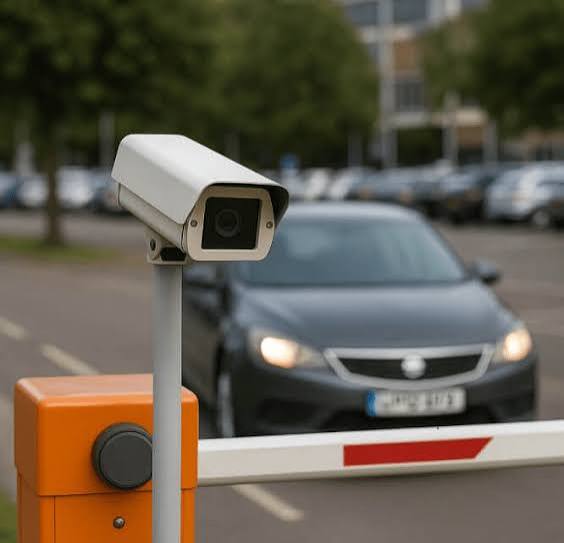
At a barrier gate, you usually get the biggest gains from two things you can directly control: how straight the license plate appears in the image (reading angle) and how consistent the plate lighting is (illumination). When those two are right, an ANPR camera can recognize plates much more consistently, and the whole chain of vehicle identification and barrier control becomes more predictable.
Start with your process, not the camera
First, make it concrete what needs to happen the moment a car enters the recognition zone. Think: automatic access based on a whitelist, and/or automatically recording who entered when and via which lane.
Once that process is clear, you can decide in advance what the system should do when recognition isn’t confident enough. With stricter rules, the solution blocks more and routes to an exception path sooner (for example an intercom or badge), so a valid vehicle can still get through. With looser rules, you prioritize throughput and record what you want to review later. That way it stays workable if a plate isn’t read perfectly once in a while, without everything grinding to a halt.
Reading angle
Recognition is most stable when the plate stays as rectangular as possible in the image. That gives OCR a calmer view: characters stay more “solid,” reflections interfere less, and motion is less likely to cause blur. As a result, the software can read with more confidence and ends up in “uncertain” mode less often.
In practice, it helps to set things up so vehicles approach the lens as straight-on as possible in the recognition zone. A bend right before the barrier, a high mounting position (steep viewing angle), or a large distance (plate smaller in the image) makes the plate skew more quickly and that makes recognition less stable. Framing matters too: an image cropped mainly around the plate often produces more consistent reads than a single image that has to deliver both a wide overview and perfect plate recognition at the same time.
If you also want context (vehicle, lane, situation), it’s usually better to arrange that separately. A second overview camera next to your plate recognition setup keeps the recognition image tight, while you still have context when you need it.
Changing light is usually the real deal-breaker
At a barrier gate you almost always have changing light: low sun in the frame, shadows, wet pavement reflecting, and headlights that make the image brighter. When illumination is more consistent, images look more similar from vehicle to vehicle, and recognition can run more steadily.
Features like IR illumination (more even plate image), WDR (handling backlight better), and a shorter shutter speed (sharper characters on vehicles pulling away) help with that. Do keep the full picture in mind: extra IR and a short shutter speed can make an overview image darker or less usable. That’s why “recognition image + separate overview image” often works more comfortably here than one camera that has to do everything.
What do you do when it’s uncertain, and how do you keep it workable?
License plate recognition only becomes truly useful when the solution can immediately execute a clear choice when it’s uncertain. For example: keep the barrier closed and offer an alternative, or let the vehicle through and record the moment for later review. Keep administration practical too: make sure logs automatically end up in the agreed location, with clear access and retention periods.
Technically, the solution can run with edge processing (fewer links in the chain and often faster) or via a server or VMS (more options for reporting and rules, but also extra administration like updates and permissions). Whichever route you choose: work out your recognition zone, exception flow, and management agreements up front. Then it runs smoothly when automation works, and it stays predictable when there’s no match once in a while.
Do you have questions about reading angle, lighting, or integration for your barrier gate with an ANPR camera? A short on-site practical test usually shows quickly how to achieve the most stable recognition for your lighting conditions and vehicle approach.





Comment