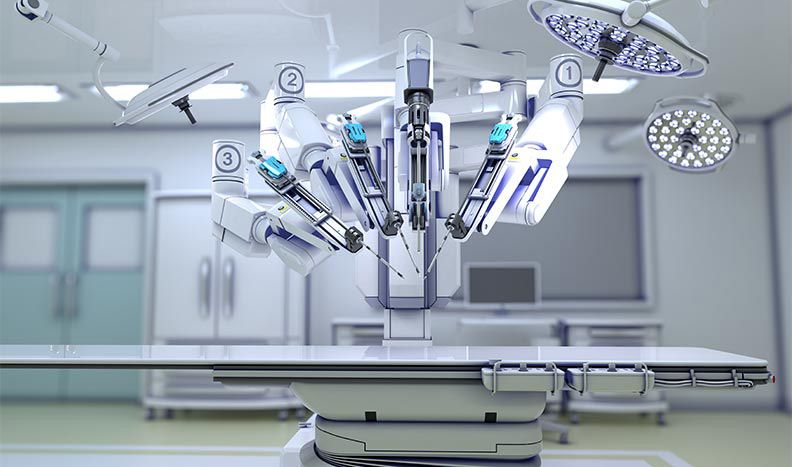
Modern healthcare quietly depends on engineering decisions most people never see. Behind every implant, catheter, or life-sustaining device is a manufacturing reality shaped by extreme constraints. The complexity lies in ensuring materials survive inside an environment that is chemically aggressive, biologically reactive, and unforgiving to even microscopic imperfections.
In that context, critical fabrication methods have moved beyond tooling status and into structural necessity, defining what is even possible inside next-generation medical design. Medical laser welding sits in that narrow intersection between biology and metallurgy, where precision is not merely aesthetic, but existential.
1. The Metallurgical Boundary Problem: When Two Incompatible Metals Must Behave as One System
Inside minimally invasive devices, especially endovascular systems, engineers are often forced into a dual-material architecture that seems inherently contradictory. One section must behave like a rigid transmission system, while another must act like a flexible navigational structure inside twisting vascular pathways.
The dual material architecture required in medical solutions like catheter guidewire or endovascular delivery system demands a welding solution that must bridge two opposite mechanical extremes into a single, flawless component.
- Stainless steel is selected for pushability and structural stiffness
- Nitinol is required for flexibility and shape-memory navigation
The challenge is not joining them, it is preventing the joint itself from becoming the weakest and most brittle point in the entire system.
Traditional thermal joining methods introduce a hidden failure mechanism. When iron-based alloys and nickel-titanium systems are melted together without precision control, they form intermetallic compounds. These structures behave less like metals and more like brittle glass under stress.
The result is a joint that may appear stable but fails unpredictably during real physiological movement. As such Laser Welding Solutions approach this boundary differently by concentrating energy into a tightly controlled micro-zone, often around 0.1 mm. The process creates a rapid fusion interface that limits atomic diffusion time. The objective is not full material blending, but controlled structural bridging.
It’s about forcing two distinct metals to behave as one system, even if they don’t want to. In practice, it allows engineers to treat two incompatible metals as a single functional pathway without triggering catastrophic brittleness at the interface.
2. The Biological Interface Problem: Eliminating Chemistry from the Equation of Healing
Everything inside the human body is interpreted through chemistry. That includes medical devices. Once a material enters blood contact or tissue proximity, the immune system begins a constant evaluation process: accept, isolate, or attack. That means any introduced element, however small, becomes a potential long-term liability.
This is where most traditional joining methods quietly fail the long game because brazing, soldering, and many micro-welding techniques introduce something the body never forgets: filler metals, chemical residues, surface irregularities, and micro-crevices where bacteria can survive. Even if the device works on day one, the body is still “watching” it over years.
However, advanced Medical Laser Welding fundamentally diverges from conventional fabrication and removes that extra layer of risk entirely. The weld is formed entirely from the parent metals themselves, reshaped through localized optical energy; no filler, no additives, and no hidden chemistry introduced into the system.
What this creates is not just a clean joint, but a biologically neutral surface profile. Under inert gas protection, typically ultra-pure argon environments, the molten pool solidifies into a seamless interface with minimal micro-texture variation.
From a clinical standpoint, this matters in very direct ways:
- Reduced bacterial anchoring sites
- Lower risk of long-term biofilm formation
- More stable sterilization performance across repeated cycles
In medical device manufacturing, this is not an incremental improvement. It is the difference between a device that survives regulatory scrutiny and one that fails long-term biological validation.
3. The Hermetic Containment Problem: Protecting Life-Support Systems from Time, Moisture, and Heat
Implantable medical devices operate under one of the harshest contradictions in engineering. They must contain powerful electronics and energy systems inside extremely small metallic enclosures, while remaining completely sealed against bodily fluids for decades.
At the same time, those internal systems are highly heat-sensitive:
- Microelectronics degrade above ~60°C
- Battery chemistry becomes unstable under thermal stress
- Sensors lose calibration when exposed to localized overheating
Yet the outer shell, often titanium, requires extremely high energy input to fuse properly, often exceeding 1600°C at the melt interface. This creates a narrow operational gap exploited only by specialized welding companies like Micro Weld, Inc., who have the capabilities of leveraging laser technology to execute keyhole mode welding.
In this mode, energy density is high enough to vaporize a microscopic channel through the material while keeping thermal diffusion tightly controlled—a feat traditional methods cannot replicate due to unlocalized heat distribution.
What matters here is timing and containment:
- Energy is applied in tightly controlled pulses
- Penetration is deep enough for full-wall sealing
- Heat dissipates so quickly that internal components remain unaffected
Even termination control becomes critical. Advanced systems gradually reduce laser power at seam closure points to prevent micro-crater formation, ensuring the enclosure remains truly hermetic over long-term physiological exposure. In this sense, the weld is not just a closure. It is a long-duration environmental barrier.
4. The Manufacturing Trust Problem: Turning Surgical Precision into Repeatable Industrial Output
One of the less discussed aspects of medical laser welding is not its precision, but its traceability. In regulated environments, especially under FDA and ISO 13485 frameworks, consistency is not optional, it is auditable.
Laser systems introduce a fundamentally different production philosophy:
- Every pulse can be digitally recorded
- Every weld path is programmable and repeatable
- Every parameter shift can be monitored in real time
- Every deviation can be traced to a specific system input
This transforms medical welding from a skilled manual craft into a controlled manufacturing dataset.
For medical device producers and repair engineers, this enables two critical outcomes:
Scalability without loss of precision
Compliance without subjective interpretation
It also allows production lines to move between prototype-level micro-fabrication and full-scale automated manufacturing without changing the core physics of the process. In other words, the same weld that is developed under a microscope can be reproduced identically in a high-volume production cell.
In essence, laser welding occupies a unique position where medical manufacturing precision directly intersects with human survival requirements. It does not simply join metals; it manages incompatible material behavior, protects biological systems, and enforces long-term enclosure integrity under extreme constraint. In advanced medical engineering, it functions less as a process and more as a foundational enabler of modern implantable and minimally invasive technologies.