
Accelerating Hardware Innovation: How On-Demand Precision Engineering Powers Tech Scale-Ups

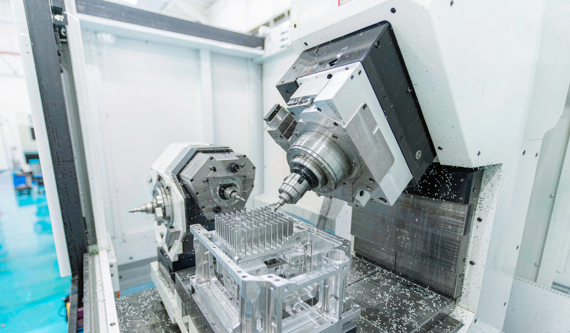
Tech product life cycles are shrinking fast. For sectors spanning autonomous systems, IoT, healthcare, and robotics, delivering groundbreaking hardware before competitors is critical. Yet, transitioning from a successful prototype to full-scale production remains the primary bottleneck, with projects often stalled by lengthy tooling lead times, rigid MOQs, and fragmented supply chains.
On-demand precision engineering reshapes this dynamic. By merging prototyping and production into a unified, continuous workflow rather than disjointed procurement stages, technology companies can significantly accelerate time-to-market without compromising on mechanical quality or fiscal discipline.
The Mechanical Hurdles of Next-Gen Tech Hardware
The modern day hardware development goes way beyond simple circuitry and software coding. With the computing power of microprocessors on the rise along with the compactness of their designs, mechanical issues become more difficult to address:
- Heat dissipation: High-power processors generate localized heat within non-fanned units. Traditional casings are not sufficient anymore; complex machined monolithic or pin fin geometries must be used, along with copper inserts or vapor chambers in case aluminum is insufficient.
- Ingress protection and EMI shielding: Rugged hardware requires IP67 compliance along with RF shielding, and this demands micron precision O-ring grooves and controlled overmolding.
- Optimal strength-to-weight ratio: Autonomous and wearable hardware requires maximum weight savings, so engineers are forced to use thin walls and light 6061/7075 aluminum.
Each of these issues increases tolerance demands – and raises costs of not addressing them correctly. The casing that fails IP67 tests at the final assembly phase is impossible to fix through software updates; hardware must be re-machined, re-tooled and re-tested.
Why Siloed Prototyping Breaks at Scale
Traditionally, hardware teams relied on multiple vendors for each stage: 3D printing for concepts, machine shops for prototypes, and separate factories for mass runs. Because each vendor uses different setups, minor variations compound into costly tolerance stack-ups and communication gaps—issues often discovered only during final assembly when schedules are tightest.
To prevent these delays, tech brands are shifting to integrated manufacturing partners. A turnkey provider like LS Manufacturing consolidates multi-axis CNC machining, injection mold tooling, die casting, and sheet metal fabrication under a unified quality system. By running cross-disciplinary DFM analysis upfront, engineering teams can validate thermal performance, mating tolerances, and structural fit long before cutting production tooling.
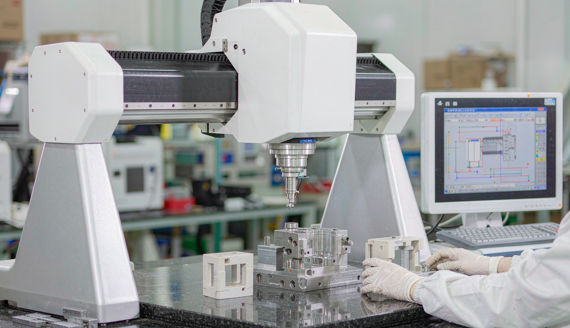
Making Hardware Supply Chains Resilient
In the face of an unpredictable supply chain, agile processes shield a hardware roadmap far more than long-term contracts ever will. Tariff changes, shortage of components, and logistical problems happen faster than annual business cycles can cope with them. The resilient programs have four things in common:
- Bridge tooling: Rather than invest money into hardened steel tools at the beginning, teams use rapid aluminum tools and CNC milling for small batch productions of hundreds to thousands of units in weeks, not months.
- Agile iterations: Modification of the digital CAM files enables iterations on component geometry in between batches without waiting for months for re-tooling.
- Scalable on demand: On-demand manufacturing enables the fabrication to match the market traction, thus reducing warehousing cost and preventing the obsolescence of components in stock and tying up of capital.
- Closed-loop metrology: CMM measurement, optical profiling, and certified surface treatments ensure that the components are within specification from prototyping until mass production, according to ISO 9001 standards.
Such an approach creates a manufacturing paradigm where production is driven by the demands and not forecasts—creating an inherent strength as changing the categories of the hardware can be accomplished within a single quarter. Companies that take up this approach gain even more strengths as they go through each product cycle.
Conclusion
In the future, any innovation in technology will rely on the link between design and manufacturing. Within the industry of connected hardware where technology is still advancing, success will be attained by those who are able to turn their CAD designs into efficient, accurate parts. Integrated on-demand manufacturing involving subtractive machining, rapid tooling and measurement is the winning path around the supply chain barrier to hardware innovation.
FAQs
Q1: Why is multi-axis CNC machining preferred over 3D printing for commercial enclosures?
A1: While 3D printing is useful in generating conceptual designs, it cannot provide the consistency in material strength, EMI shielding, and surface finish that is necessary for IP rated seals in commercial products. Enclosures made using machining techniques retain their anodized finishes much better than most printed pieces will.
Q2: How does rapid bridge tooling mitigate risks associated with product launches?
A2: Rapid bridge tooling utilizes rapid-turn aluminum tooling to create functional, commercial-quality parts for testing on the market before making any substantial investments in tooling for untested products.
Q3: How does on-demand manufacturing help with managing inventory?
A3: It allows engineering departments to manufacture commercial parts in low-to-medium quantities whenever necessary, controlling the quantities of manufactured batches based on actual sales.
Q4: What quality inspections are crucial in ensuring high accuracy parts?
A4: Coordinate measuring machines (CMM) surface roughness profiling, and thorough DFM analysis ensures that the parts fall within tight geometric tolerances for each production run.
Author Bio
LS Manufacturing is a provider of custom precision machined parts, including 5-axis CNC machining, fast tooling, plastic injection molding, sheet metal working, and surface finishing services. With ISO certified quality control in place, LS Manufacturing caters to startups, Internet of Things innovators, and OEMs from rapid prototype to mass production. Visit lsrpf.com.







Comment