
A Complete Guide to Lawn Care in Central Texas

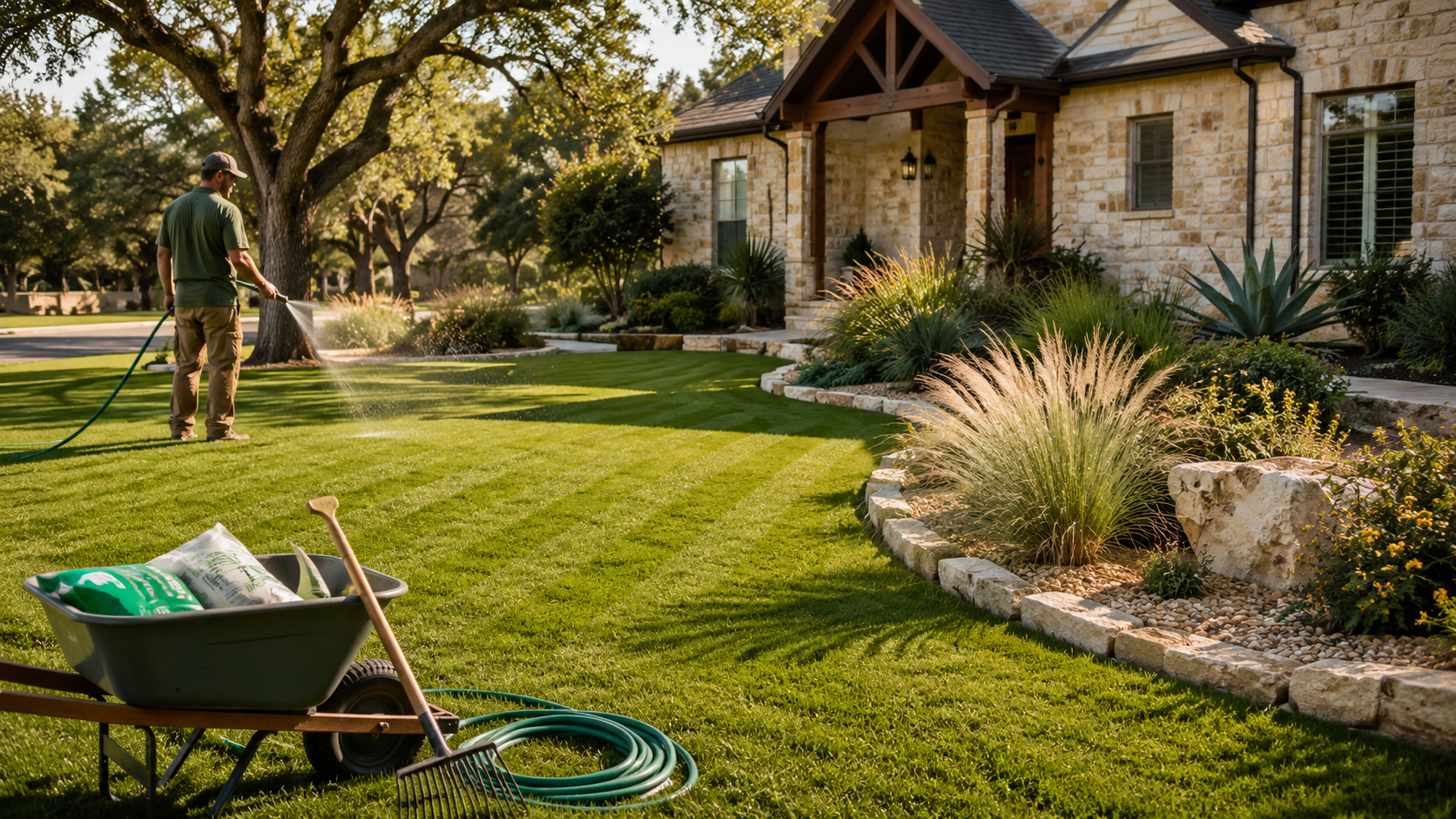
Lawn care in Central Texas requires working with the region’s heat, drought, and clay soils rather than against them. The right grass, watering, and seasonal maintenance keep a lawn healthy despite challenging conditions. This guide covers what Central Texas homeowners need to know to maintain a green, resilient lawn.
What makes Central Texas lawn care challenging?
Central Texas lawn care is challenging because of hot summers, periodic drought, watering restrictions, and heavy clay soils. These conditions stress grass and demand a thoughtful approach to watering and maintenance.
Success comes from choosing grass suited to the climate and managing water wisely. A lawn that thrives here is one cared for with the region’s specific conditions in mind. The Complete Lawn Care Services by Sprinkler Medics of Austin are built around exactly that.
What grass types grow best in Central Texas?
The grasses that grow best in Central Texas are warm-season varieties like Bermuda, St. Augustine, Zoysia, and Buffalo grass. Each tolerates heat, but they differ in shade tolerance, water needs, and durability.
Bermuda thrives in full sun and handles drought well; St. Augustine tolerates shade better; Zoysia is dense and durable; and Buffalo grass is native and low-water. Choosing the right type for your yard’s sun and soil sets the foundation for a healthy lawn.
How much water does a Central Texas lawn need?
A Central Texas lawn generally needs about one inch of water per week, delivered deeply and infrequently rather than in light daily sprinklings. Deep watering encourages strong, drought-resistant roots.
Watering early in the morning reduces evaporation and disease risk. Because the region faces restrictions, an efficient irrigation system matters. The Texas A&M AgriLife Extension’s lawn and turfgrass guidance provides region-specific watering recommendations.
What seasonal maintenance does a lawn need?
Lawn maintenance changes with the season: fertilizing and mowing in spring and summer, adjusting watering as temperatures shift, and preparing the lawn for winter dormancy. Warm-season grasses grow actively in the heat and go dormant in cooler months.
Mowing at the correct height, fertilizing appropriately, and controlling weeds at the right times all support a healthy lawn. Adjusting your watering schedule seasonally prevents both overwatering in mild months and stress during summer.
How does soil affect lawn health?
Soil strongly affects lawn health, and Central Texas clay soils drain poorly and compact easily. Compacted soil limits root growth and water absorption, leaving grass stressed even when watered.
Aeration relieves compaction and improves water and nutrient uptake, while adding organic matter improves clay soils over time. Understanding your soil is a key step in diagnosing why a lawn struggles despite regular care.
How does drainage fit into lawn care?
Drainage is part of lawn care because poor drainage causes standing water, root rot, and unhealthy patches. Central Texas clay soils can hold water in low spots, damaging grass and creating soggy areas.
Solutions like grading and drainage systems move water away from problem areas. For persistent drainage issues, French drain installation redirects water and protects the lawn and foundation.
How do you manage weeds and pests in a Central Texas lawn?
You manage weeds and pests in a Central Texas lawn through healthy turf, proper mowing, and targeted treatment at the right times. A thick, healthy lawn is the best defense, because dense grass crowds out weeds and resists pests.
Pre-emergent treatments applied at the right time of year prevent many weeds from establishing, while post-emergent treatments address weeds already present. Common Central Texas lawn pests include chinch bugs and grubs, which can cause patches of dying grass if left unchecked. Identifying the specific problem is important, since the treatment differs by pest and weed type. Timing matters as much as the product used, because applications made in the wrong season are far less effective. A consistent care routine that keeps the lawn healthy reduces the need for heavy intervention and helps the grass withstand the region’s stresses.
What causes common lawn problems in the region?
Common lawn problems in Central Texas are usually caused by improper watering, compacted clay soil, drought stress, or pest and disease issues. Diagnosing the cause is the first step to fixing a struggling lawn.
Overwatering promotes shallow roots and fungal disease, while underwatering leaves grass stressed and brown, especially in summer heat. Compacted clay soil limits root growth and water absorption, producing thin or patchy turf even when the lawn is watered. Drought and the region’s intense sun add further stress, and pests like chinch bugs can create dead patches that are sometimes mistaken for drought damage. Because these causes can look similar on the surface, correctly identifying the underlying issue prevents wasted effort. Adjusting watering, aerating compacted soil, and addressing pests based on an accurate diagnosis is what restores a healthy lawn.
More home, business, and technology coverage is available across TechBullion.
Why hire a professional for lawn care?
You should hire a professional for lawn care because proper watering, soil management, and drainage require knowledge of local conditions that generic advice misses. A professional tailors care to your specific yard and the region’s challenges.
Sprinkler Medics of Austin provides lawn care, irrigation, and drainage services across the area, including communities like Hutto. If you want a healthier lawn suited to Central Texas, a consultation can help you build the right care plan.
A healthy Central Texas lawn comes from working with the region’s conditions: choosing the right grass, watering deeply and efficiently, managing clay soil, and addressing weeds and pests at the right times. Because these factors interact, diagnosing the real cause of a struggling lawn is what leads to an effective fix. If your lawn is not thriving, a professional assessment can identify whether the issue is watering, soil, drainage, or pests, and recommend a tailored plan. Local knowledge of the area’s climate and watering rules produces far better results than generic advice. With the right care routine, a lawn can stay green and resilient through Central Texas summers. With the right plan tailored to your yard, a lush lawn is achievable even in Central Texas’s demanding climate.







Comment