
When Should You Get a Mold Inspection in Sarasota in 2026?

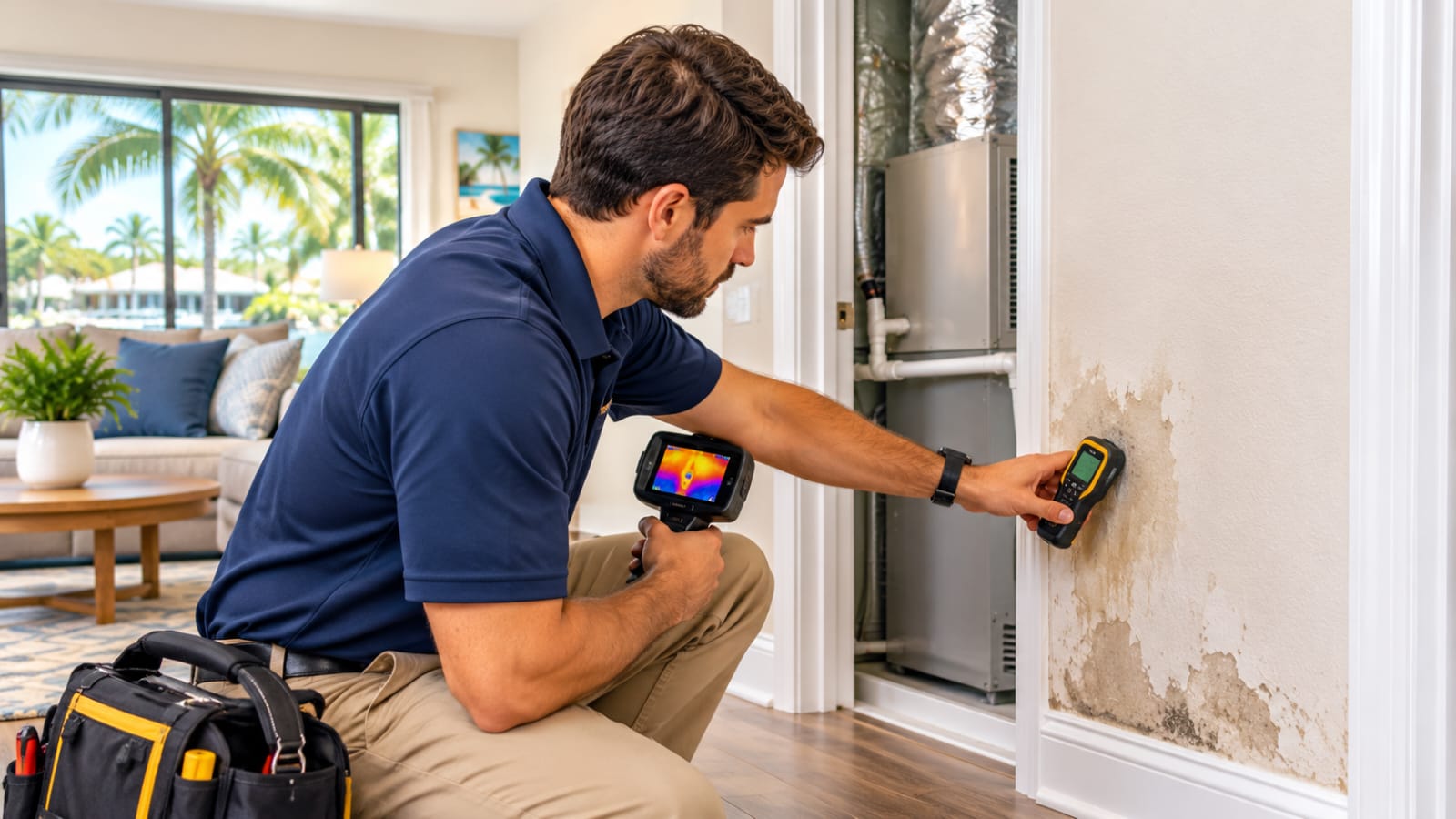
You can live in a Sarasota house for years and never think about mold, until one humid week makes the place smell different. Maybe it is a musty note in a closet that never quite dries. Maybe the air conditioner has been short-cycling through a stretch of afternoon storms, or you found a soft spot under a bathroom vanity after a slow leak. A mold inspection in Sarasota is not only for homes that already have obvious growth on a wall. It is a way to check whether moisture is sitting in places you cannot see, and whether that moisture has had enough time to become a problem.
Why Moisture Builds Up So Easily in Sarasota Homes
Gulf Coast humidity does a lot of the work on its own. Outdoor air in Sarasota often sits well above 70 percent relative humidity, especially from late spring through the wet season. When that air leaks into a house, or when an aging air handler cannot keep up, indoor surfaces stay just damp enough for growth to start.
The way many local homes are built adds to it. Slab edges, sliding-door tracks, and lanai intersections take a beating during summer storms. Condos and older ranch houses around Gulf Gate or Southgate often hide air handlers in closets, where a clogged condensate line can wet the wall behind the unit for weeks before anyone notices. After a tropical system, water can also travel along trusses or inside a wall cavity far from the stained ceiling you finally spotted.
Signs You May Need a Mold Inspection in Sarasota
Some signs are obvious: peeling paint, darkened baseboards, or a patch of growth after a plumbing leak. Others are easier to talk yourself out of. A faint odor that comes and goes. Allergies that flare at home but ease when you spend a weekend out of town. A room that feels clammy even when the thermostat is set low.
If you had a roof leak, a supply-line failure, or standing water after a storm, do not wait for a visible colony. The U.S. Environmental Protection Agency notes that mold can begin to grow within 24 to 48 hours of moisture being present. A clean-looking listing in Palmer Ranch or on Siesta Key can still have a wet air-handler closet or a shower pan leaking into the wall. If you are trying to decide whether a smell, a recent leak, or a stubborn allergy flare is worth a closer look, professional Mold Inspection and Testing can tell you whether moisture is actually feeding growth behind the finish, or whether the concern stops at the surface.
What a Thorough Inspection Actually Covers
A useful inspection is more than a flashlight walk-through. A licensed assessor starts with the history of the property: past leaks, recent storms, HVAC service, and rooms that never seem to dry. Then comes a visual survey of bathrooms, under sinks, windows, the air-handler area, the laundry, and exterior walls that take wind-driven rain.
A moisture meter can show whether drywall or trim is holding water even when the surface looks clean. A thermal camera can highlight temperature differences that often point to wet insulation or a damp cavity. Neither tool “sees mold” by itself. They help the inspector decide where to look harder, and whether sampling is warranted. You should leave with a written report, photos, and a clear description of what was found. If moisture is present, the report ought to point toward the source, not just the stain, because growth will return if the water problem stays in place.
How Testing Works, and When You Actually Need It
Inspection and testing are related, but they are not the same thing. Testing usually means collecting air samples inside the house, plus an outdoor comparison sample, and sometimes a surface sample from a suspicious spot. A laboratory then identifies spore types and concentrations.
You do not always need lab work. If there is a clear patch of growth and a known leak, the priority is to stop the water and clean or remove the damaged material. The Centers for Disease Control and Prevention has long made that point: visible mold is already a reason to act, and you often do not need a species name to start the repair. Testing is more useful when the source is hidden, when a buyer or lender wants documentation, or when you want independent confirmation after cleanup. That last step, post-remediation verification, should be done by someone other than the contractor who performed the work.
Cheap do-it-yourself kits rarely give you that clarity. They often lack a proper outdoor baseline, a calibrated collection method, and someone who can explain whether the numbers mean indoor amplification or just a normal Gulf Coast outdoor spore load.
After a Leak, a Storm, or a Real Estate Offer
Timing is practical, not dramatic. If a pipe has burst or a roof has leaked, dry the area quickly and document what you see. If the materials cannot be dried within a day or two, or if a musty smell lingers, that is a sensible moment to bring in an inspector. The same is true after a tropical storm, even if the damage looks minor from the street.
In a purchase, a mold inspection is often worth adding when the home is older, has a history of roof work, or has an air handler in a tight closet. A written report gives both sides something concrete to discuss. One Florida rule is also worth knowing: state law generally bars a mold assessor from performing remediation on the same property. That separation exists so the person who reports a problem is not also selling you the cleanup. If one company offers to inspect and then immediately quote a removal job on the same house, treat that as a warning sign.
Questions Worth Asking Before You Hire Anyone
Before you book, ask whether the inspector is licensed by the Florida Department of Business and Professional Regulation, and ask for the license number. Confirm that they carry insurance. Ask whether they also do remediation, and if they do, how they handle the conflict on your property.
It also helps to get the scope in writing:
- Does the visit include a visual assessment, moisture readings, thermal imaging, and a written report, or only a quick sample?
- Which laboratory reviews the samples, and how long do results usually take?
- Will someone walk you through the findings in plain language?
- If you are buying or selling, is the report written in a form you can share with the other party’s agent?
A cheap visit that produces a one-page spore count and no moisture mapping can leave you with more questions than you started with. Keep the HVAC running as it normally would before the visit, unless the inspector asks otherwise, and do not bleach a stain that morning and expect a useful reading.
Conclusion
A mold inspection in Sarasota is less about panic and more about timing. This is a humid coastal city with a long wet season, busy air conditioners, and storms that can push water into places a casual walk-through will miss. If you have a lingering odor, a recent leak, a room that will not stay dry, or a real estate decision that needs better information, a proper inspection can tell you whether moisture is still active and whether testing is even necessary. Look for a licensed assessor, a written report, and a clear line between inspection and cleanup, rather than a rushed kit or a guess based on one dark spot on a baseboard.
Previously in Business news: The Winter Trim: How Often to Cut When the Air Turns Dry







Comment