
FC 27 Ultimate Team: How to Make Progress When You Have Limited Time


You have an hour to play, a target player on the Transfer Market and a reward screen full of possibilities. Do you chase another Rivals match, complete an objective or use the time to sort through your club? When your week is busy, the right answer starts with deciding what would make your next session more enjoyable.
Progress in Ultimate Team is not one number. Coins help you buy eligible players, while match results and objectives can move you towards rewards or unlock other content. A sensible plan connects those things without assuming every match will produce the same reward. Let’s put a practical week together.
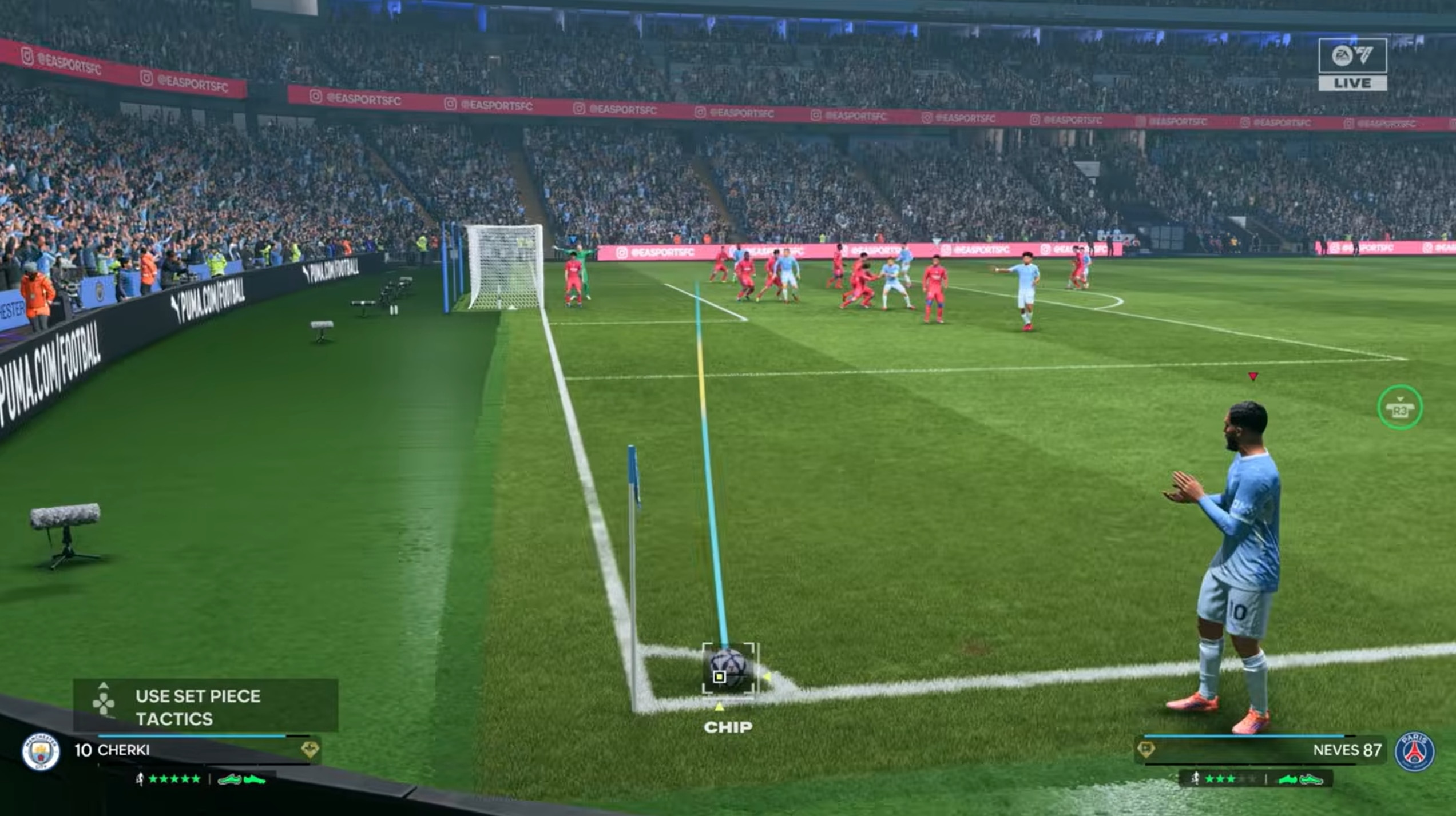
An FC 27 corner-kick setup. Gameplay image: EA SPORTS.
Choose one upgrade before choosing a mode
Start with a problem you notice in matches. Perhaps your right winger reaches the box but struggles to make the final pass, or your midfield loses possession before the attack begins. Identify the position, the attributes you need and one or two exact card versions. Check whether your formation supports them and whether the change affects chemistry.
Suppose you have 35,000 coins, want to keep 10,000 in reserve and find a target listed for 40,000. Your usable budget is 25,000 and the gap is 15,000. That example is hypothetical; a real listing can move before you return. A player considering whether to Buy FC 27 Coins can use that gap to compare the amount needed, while another player may prefer to save or choose a cheaper card.
Do not count a tradeable player’s expected sale proceeds until the sale completes. A 10,000-coin sale returns 9,500 after the usual 5% market deduction; an untradeable item cannot fund the purchase in that way. This small calculation stops a planned reserve disappearing before the next match.
Pick the reward route that fits your week
Rivals can suit players who enjoy competitive online matches and can return during the weekly cycle. EA explains that weekly Rivals rewards depend on points earned and your division and rank. The actual thresholds, reward choices and reset should be checked in the current in-game hub. A reward screen showing you are close to a reachable milestone may be a better reason to play one more match than a general feeling that you ought to grind.
Squad Battles offers a different rhythm against AI opposition. It can be useful when you would rather pause between matches or practise a formation without immediately facing another player. Check the current competition window and match rules before planning a session; do not assume the rewards are identical to Rivals or fixed across seasons.
Objectives can sometimes overlap with the matches you already intended to play. Before starting, read the requirements: the specified mode, any squad restrictions, whether a win is required and the expiry. An objective that fits your existing lineup can add value to a session. One that requires a complete squad rebuild and several extra games may not be worth interrupting your plan.
A short session can still have a purpose
For a hypothetical 60-minute session, allow a few minutes to check the active objectives and the match you need for your chosen reward. Leave time between games for menus and interruptions. If an objective asks for a specific player type, put that player in your squad before you queue rather than discovering the requirement afterwards.
After the matches, check what actually changed: progress towards the reward, coins credited and any tradeable items you are willing to sell. Record the new balance and recalculate the target-player gap. A useful week might mean completing a reward; another might simply mean testing a cheaper winger and deciding you do not need the expensive one yet.
The same approach works if you have several shorter sessions. Choose an objective that can be advanced across them, provided its own rules permit it. Avoid building a plan around perfect results, because a draw, loss or unexpected break can change how many matches you need.
Understand what a reward actually gives you
Coins, packs, player items and season progress are different outcomes. A pack can be useful, but its contents are not a guaranteed specific signing. An untradeable player might improve your squad or be useful elsewhere in the club, yet cannot be sold to increase your market balance. A tradeable reward gives you a choice to keep or list the item; its sale price and timing remain uncertain.
Compare the reward with the goal you wrote down. If your target is one specific tradeable card, a coin balance has a clear relationship to its market price. If you enjoy trying new players, a pack may be more appealing even when it does not immediately close that gap. There is no need to treat every reward as a financial return.
The EA FC 27 launch update describes how matches and Rivals progress contribute to the mode. Use it for the broad system, then check the live screen for the current season’s details. If the goal is a match-based milestone, listings for FC 27 Boosting describe services for different modes and objectives.
When the goal is bigger than your available time
Some weeks the objective is clear but your calendar is not. A player aiming for a particular Rivals milestone might find that the remaining matches do not fit around work or travel. At that point, consider lowering the target, waiting for the next cycle or reviewing a service matching that specific objective.
A gameplay service and buying coins address different needs. A service description should identify the task and conditions; it should not be assumed to deliver a specific player or a fixed coin amount. Check the exact listing, timing and account requirements, and consider EA’s account and gameplay rules before choosing. No result is needed to make your ordinary playing time worthwhile.
Make the market work around your schedule
Once you reach your target, search the exact version rather than buying the first card with the right name. Compare current listings on your platform and keep the reserve you planned. If you sell your old player, allow for the market deduction and the possibility that a listing takes time to sell.
TechBullion has also examined how player-run game economies depend on how participants value items. Ultimate Team uses a different market, but the useful lesson still applies: a price is a snapshot, not a promise about tomorrow. Do not build a weekly schedule on an assumed future profit.
Finally, give the new signing a few matches in the role you bought them to fill. If your target was a better final pass, watch for that pass. The goal of a busy week’s plan is to make the time you have count, whether you end it with a new player, a reward or a clearer idea of what your team actually needs.
Previously in Technology: The Future of Automated Quality Control in High-Tech Industries







Comment