
Six Years Off the IPO Track, Ant Group Became a Fintech Infrastructure Vendor

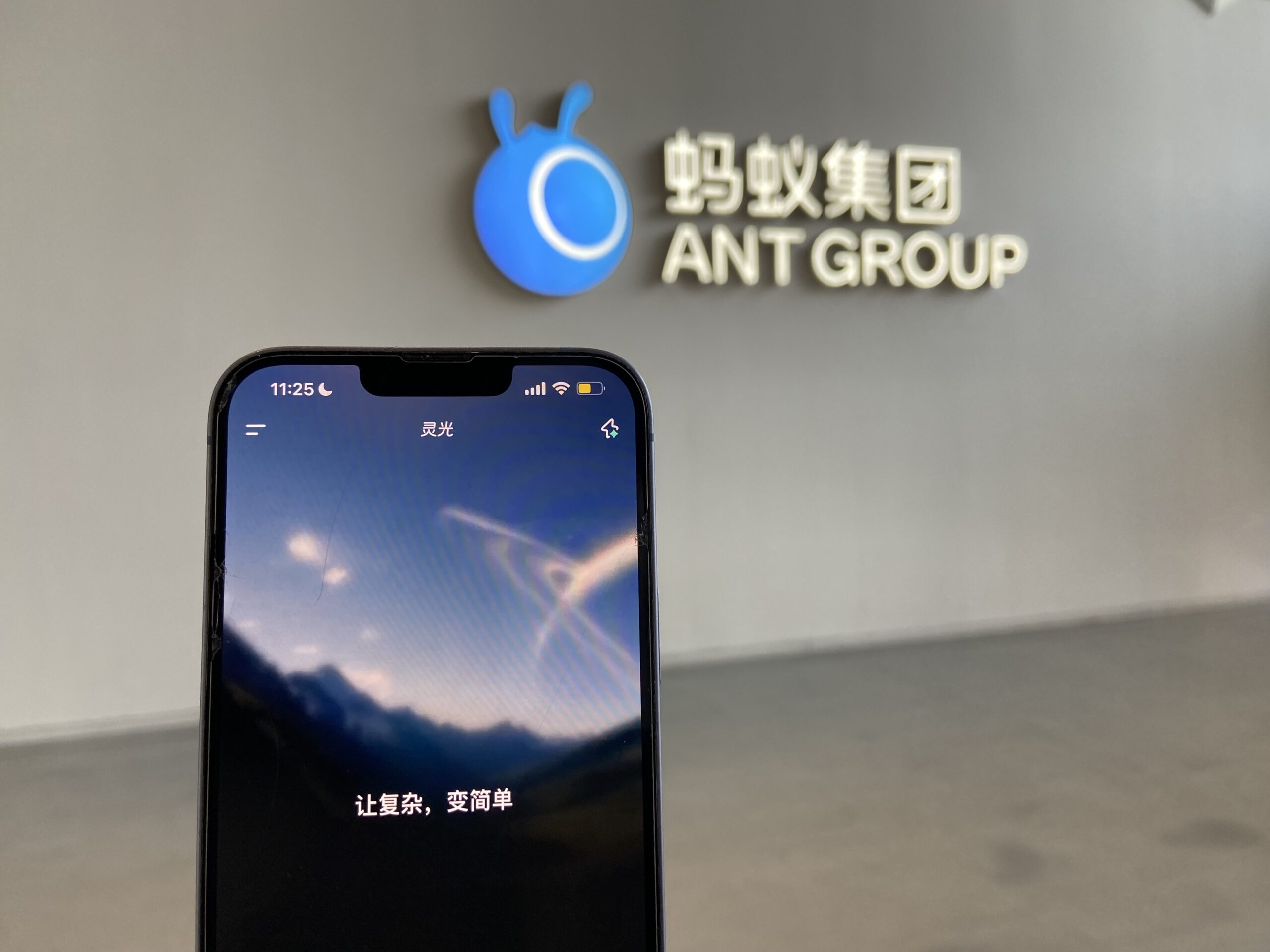
The most-watched fintech story of November was an American one: Anthropic’s record $81.3 billion Nasdaq IPO — under the ticker ANT, as it happens — followed within three sessions by a slide below its $83 offer price. The quieter story, and arguably the more relevant one for financial institutions, concerns a company that never got its listing at all. Six years after Chinese regulators suspended what was then the world’s largest planned IPO, Ant Group has rebuilt itself as an AI application platform — and the parts of it that banks and payments firms will actually buy are already shipping.
A recent Asia Tech Times analysis traced that reconstruction from “the payment button to the agent,” and it is worth reading less as a consumer-technology story than as a supplier catalogue with a balance sheet attached.
A balance sheet with a catalogue attached
Asia Tech Times estimated, by working backward from Alibaba’s quarterly disclosures — Alibaba holds 33% of Ant and reports its share one quarter in arrears — that Ant earned about RMB 10.5 billion (US$1.6 billion) in the June quarter, up 27% year on year: the first quarter in which, as the analysis puts it, the profit curve and the investment thesis pointed the same way. The same series shows the bill. Research spending reached a record RMB 35.03 billion in 2025 — above 10% of revenue, by the company’s own statement — while estimated profit fell to RMB 15.3 billion that year before the recovery.
A 2023 share repurchase valued Ant at about US$79 billion, against the US$280 billion its aborted IPO implied. The gap is the market’s verdict on the old Ant. The new one is being priced in contracts.
The layer banks buy
Start with OceanBase, the distributed database Ant built for its own e-commerce-scale traffic and now sells commercially. In October it signed Vietnam’s MB Bank; this month the Japanese game developer f4samurai became its first customer in Japan, reporting 1.7 times its previous throughput, over 70% less storage and 40% lower monthly running costs. For institutions weighing core-systems modernization, an independent benchmark from a non-financial Japanese customer is the kind of reference distributed-database vendors usually have to manufacture.
Above the database sits Agentar, Ant Digital Technologies’ full-stack agent development platform, already used by more than 200 financial institutions; the July release, Agentar 2.0 — a “commercial agent super-factory” — ships 200 ready-made role-based digital-expert templates. The model layer matters to regulated buyers too: Ling-3.0-flash-Fin, released as an open model in September, was built with financial institutions for accuracy and auditability. In markets where model provenance and audit trails are procurement questions, an open model tuned with institutions is a pitch, not a slogan.
The agent is the new checkout
The third layer is the one payments professionals should study hardest. Ant International — the Alipay+, Antom, Bettr and WorldFirst family — raised US$1.2 billion in July to push cross-border payments and agentic commerce into new markets. “The payment step is what separates an agent from a chatbot,” as Asia Tech Times puts it. Its evidence is concrete: Alipay’s service agent Ah Bao runs a Starbucks “Coffee Alarm Clock” — a standing voice order, remembered, executed and paid on schedule — the loop of request, remember, execute, confirm, pay that agent-native checkout will have to serve.
The sizings Asia Tech Times cites give the market its dimensions: McKinsey projects agentic commerce at US$3–5 trillion globally by 2030, and Morgan Stanley puts US agent-driven online spending at US$190–385 billion by the same year, with about 23% of Americans having bought something through an AI assistant in the past month. Wherever the final figure lands, acquiring, issuing and fraud infrastructure will need to transact inside conversations rather than at buttons.
The risk register is equally concrete. Gartner warns that more than 40% of agentic AI projects will be scrapped by the end of 2027 — and, as Asia Tech Times itself notes, “well equipped” and “will win” are different claims. Tencent’s cash capital spending jumped 225% year on year in the September quarter; the Financial Times reports a WeChat AI agent is close to launch, backed by the one distribution rival in China with more daily users than Alipay. Meanwhile the newly public Anthropic — its listing already below issue price — will finance roughly $900 billion of committed compute spending, which says the model layer is not waiting around either.
What to watch into 2027
For fintech decision-makers, three numbers on Ant’s scoreboard are worth tracking: the count of financial institutions on Agentar, OceanBase’s international signings, and agent-mediated payment volume through Ant International’s rails. If, as Asia Tech Times puts it, spending and profit keep rising together into 2027, “the company that missed its IPO will have found a slower, more durable listing: its products, in daily use, paying for the next round of research.” For an industry deciding what to buy in the agentic cycle, the supplier list already exists — and most of it carries six years of production traffic.
Previously in Fintech News: How Much Do You Need to Invest Each Month to Reach $100,000?







Comment