
How Digital Tools Help Investors Understand Dividend Stocks

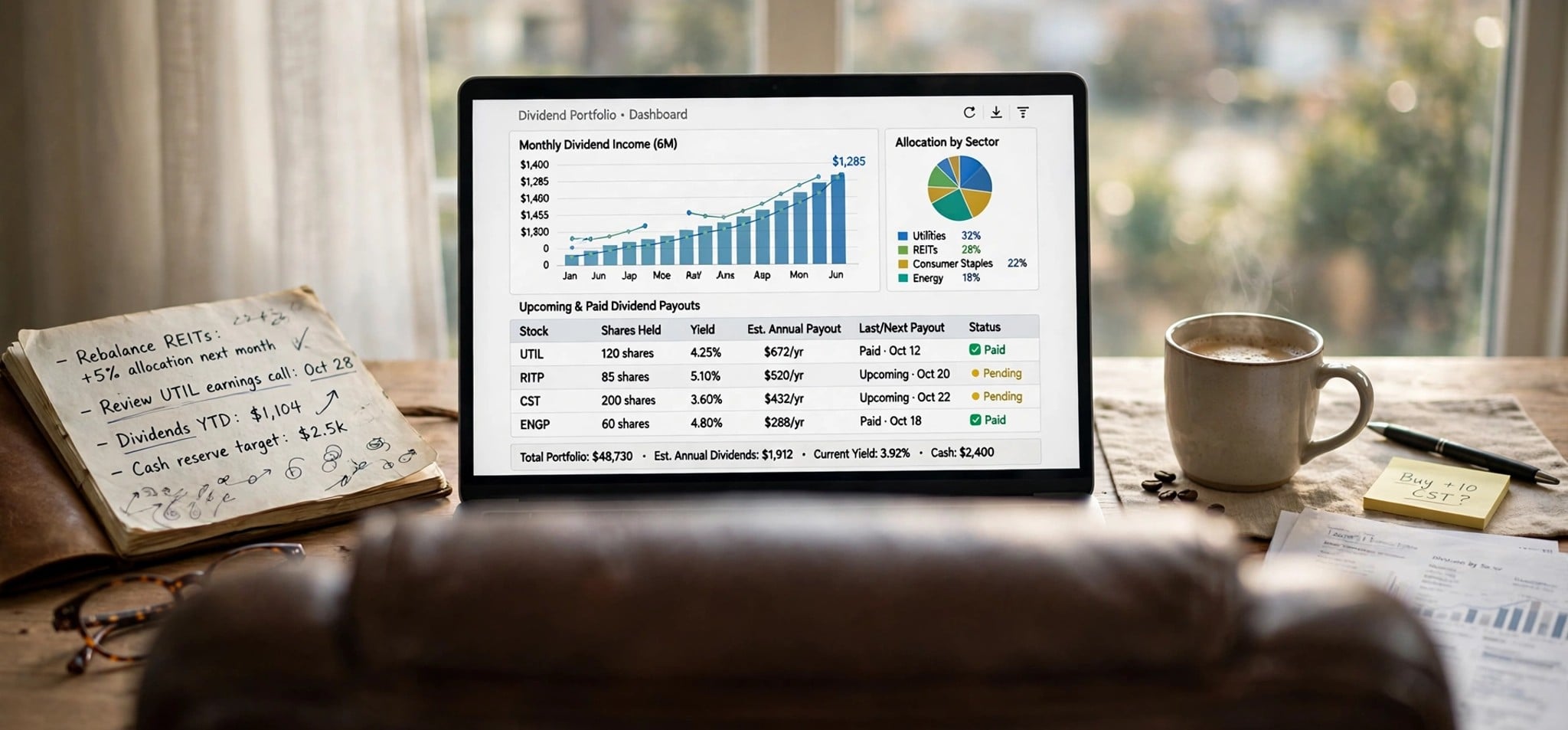
Technology has transformed the way people research financial markets, monitor investments, and manage their personal finances. Tasks that once required spreadsheets, financial publications, and manual calculations can now be completed using online platforms and digital investment tools.
One area benefiting from this transformation is dividend investing. Investors can now access financial information, calculate potential dividend income, compare stock performance, and monitor important corporate announcements through digital resources.
However, having access to more information does not automatically lead to better investment decisions. Understanding how dividends work, interpreting financial data, and recognising investment risks remain essential.
The Growing Role of Technology in Stock Market Research
Traditional stock market research often involved reviewing company reports, financial newspapers, and investment publications. Although these resources remain valuable, digital platforms have made financial information more accessible.
Modern investment tools allow users to:
- Monitor stock prices and market movements.
- Review company financial statements.
- Compare dividend yields across different companies.
- Estimate potential dividend income.
- Track dividend announcements and payment dates.
- Organise investment information in one place.
These capabilities can save time and help investors examine different financial scenarios before making decisions.
For beginners, online financial resources can also make unfamiliar investment concepts easier to understand.
Understanding Dividend Investing in a Digital Financial Environment
Dividend investing involves purchasing shares in companies that distribute a portion of their earnings to shareholders.
When a company declares a dividend, eligible investors receive payments according to the announced distribution schedule.
For example, suppose an investor owns 150 shares in a company that pays an annual dividend of $2 per share.
The estimated annual dividend income would be:
150 × $2 = $300
Investors can receive these distributions as cash or reinvest them to purchase additional shares.
Digital financial tools make it easier to calculate potential payments, compare investment scenarios, and organise dividend information without relying entirely on manual spreadsheets.
However, dividends are not guaranteed. Companies can reduce, suspend, or discontinue payments depending on their financial performance and business requirements.
How Dividend Calculators Simplify Investment Planning
Calculating dividend income manually can become complicated when someone owns shares in multiple companies or wants to compare different investment scenarios.
Dividend calculators help simplify this process by using basic investment information to estimate potential distributions.
Depending on the calculator, users may enter details such as:
- Number of shares owned.
- Dividend payment per share.
- Annual dividend yield.
- Investment amount.
- Expected dividend growth assumptions.
For example, an investor can adjust the number of shares or dividend amount to understand how different assumptions affect estimated annual income.
Online resources such as Dividend Calculator USA can help investors perform these calculations and explore potential dividend income scenarios.
These tools are particularly useful for financial planning because they reduce repetitive calculations and make comparisons easier.
Nevertheless, calculator results are estimates rather than guaranteed returns. Actual dividend payments depend on company decisions, market conditions, and other investment factors.
Why Understanding Dividend Yield Matters
Dividend yield is one of the most frequently used measurements when evaluating dividend-paying stocks.
It shows the annual dividend payment as a percentage of the stock's current market price.
The formula is:
Dividend Yield = (Annual Dividend Per Share ÷ Current Share Price) × 100
Consider a company that pays an annual dividend of $3 per share and has a current share price of $75.
The calculation would be:
($3 ÷ $75) × 100 = 4%
This means the stock has a dividend yield of 4% based on its current price and stated annual dividend.
Investors can use dividend yield to compare the income characteristics of different stocks. However, a higher percentage does not necessarily mean a better investment.
A declining share price can increase dividend yield even when the company has not increased its payments. Therefore, investors should examine company earnings, cash flow, debt, and dividend sustainability before drawing conclusions.
What Is an Ex-Dividend Date?
Corporate dividend announcements contain several important dates that investors need to understand. One of the most important is the ex-dividend date.
The ex-dividend date determines whether a new share purchaser qualifies for an upcoming dividend distribution, subject to applicable settlement rules.
Generally, investors must purchase shares before the ex-dividend date to qualify for the declared payment. Investors purchasing shares on or after that date typically do not receive the upcoming dividend.
For example, imagine a company announces a dividend with an ex-dividend date of June 15.
An investor who purchases eligible shares before the ex-dividend date may qualify for the payment, while someone purchasing on June 15 would generally not qualify.
Understanding this date is important when researching dividend stocks because purchasing shares shortly before a payment does not automatically make the transaction beneficial.
The stock price may also adjust around the ex-dividend date, reflecting the value of the distribution and broader market conditions.
Investors looking for a more detailed explanation can read this guide to understanding the ex-dividend date, including how it affects dividend eligibility and investment planning.
How Financial Technology Supports Better Investment Decisions
Financial technology provides several useful capabilities that can help investors organise information and evaluate companies more effectively.
1. Automated Financial Calculations
Online calculators can perform repetitive calculations involving dividend income, yields, and investment assumptions.
This reduces manual effort and allows investors to compare different scenarios more efficiently.
2. Access to Corporate Announcements
Digital financial platforms make it easier to find company announcements, earnings reports, and dividend declarations.
Investors can use these resources to stay informed about changes that may affect their holdings.
3. Portfolio Monitoring
Portfolio management tools allow individuals to organise their investments and monitor changes in stock prices and dividend distributions.
Some platforms also provide notifications about upcoming corporate events and payment schedules.
4. Financial Education
Educational websites, investment guides, and online calculators help beginners understand financial concepts that may otherwise seem complicated.
Learning about dividend yield, payout ratios, earnings, and ex-dividend dates can improve an investor's ability to interpret financial information.
Common Mistakes When Using Digital Investment Tools
Although financial technology can simplify investment research, relying on digital tools without understanding their limitations can lead to poor decisions.
Treating estimates as guaranteed returns: Calculators use assumptions and entered information. Actual dividend payments may change.
Focusing only on dividend yield: A high yield does not automatically indicate a financially healthy company.
Ignoring company fundamentals: Financial calculations should be supported by research into earnings, cash flow, debt, and business performance.
Overlooking investment costs and taxes: Brokerage charges, applicable taxes, and other expenses can affect actual investment returns.
Making decisions based on incomplete information: Digital platforms may not always provide the latest corporate announcements or complete financial data. Investors should verify important information through reliable sources.
Technology should support financial research rather than replace independent analysis.
The Future of Technology in Personal Investment Management
The development of financial technology is creating new opportunities for individuals to access and understand investment information.
Artificial intelligence, automated financial analysis, portfolio tracking, and personalised reporting are changing how people interact with financial markets.
These technologies may help investors identify patterns, organise financial information, and evaluate different scenarios more efficiently.
However, automated systems also depend on the accuracy of their underlying data and assumptions. Investors should understand how tools generate their results rather than treating automated outputs as guaranteed financial guidance.
As digital investment resources continue to develop, financial literacy will remain important. People who understand the fundamentals of investing will be better positioned to use technology responsibly.
Final Thoughts
Technology has made stock market research and dividend calculations more accessible to individual investors. Online calculators, financial platforms, and educational resources can simplify investment planning and help people understand important concepts.
Dividend yield, payout ratios, payment schedules, and ex-dividend dates are particularly useful areas to understand when researching dividend-paying companies.
However, digital tools cannot eliminate investment risk or guarantee financial success. Combining reliable information, practical calculations, and careful financial research remains essential for making informed investment decisions.
Previously in Finance News: Broker or Bank? Questions to Ask a Mortgage Broker in Brisbane Before You Choose







Comment