
Why Elite Families Are Rethinking the Boarding School Playbook

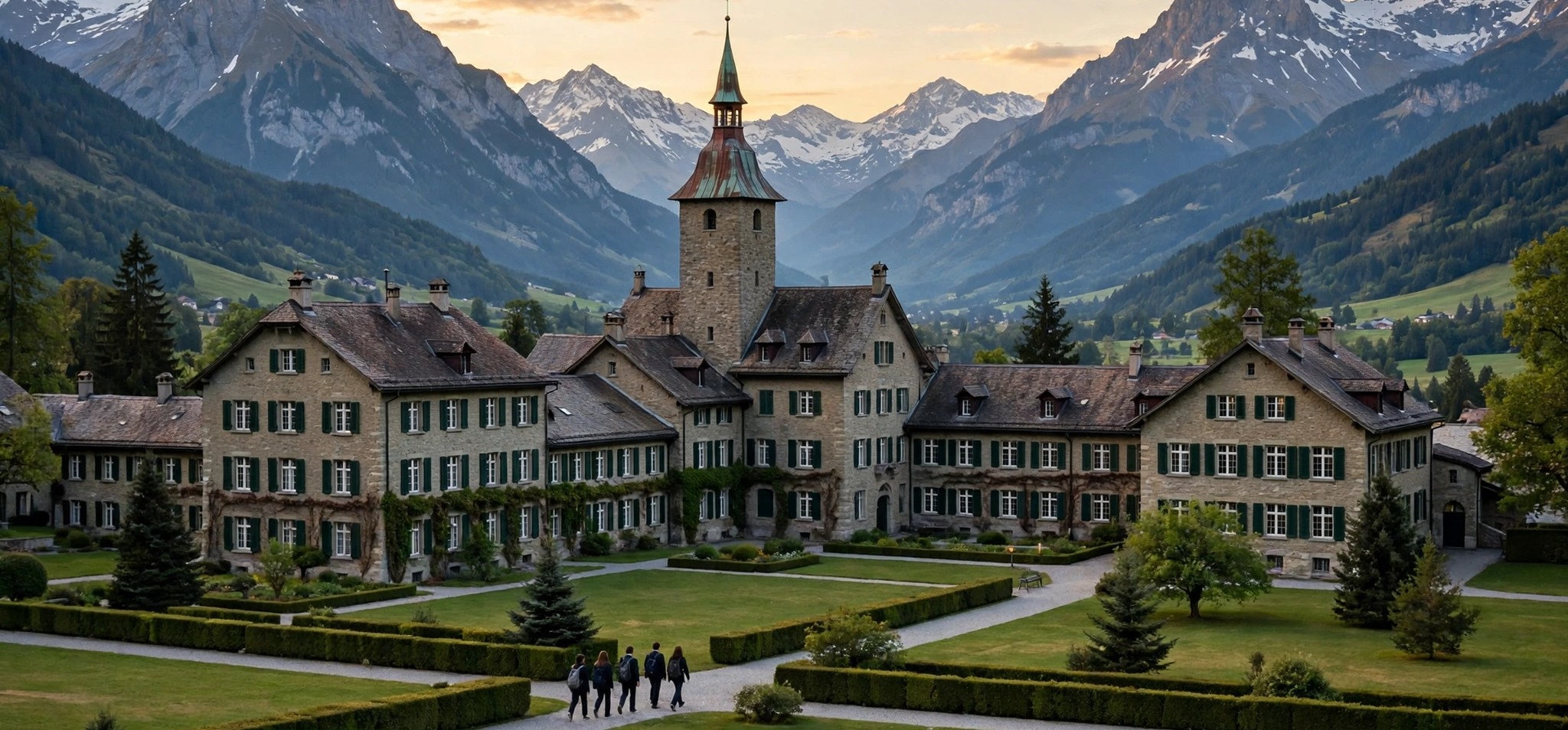
Sixteen countries. That is roughly how many passports you will hear over a single dinner at a Swiss boarding school, and it is the fastest argument for the whole idea. Your kid spends four years in a hallway where the person next door grew up in Lagos and the one across from them in Seoul. You cannot engineer that mix at home, not with any app, not with any tutor.
The catch is that the industry selling this experience runs on brochures written in the 1990s. Cold dormitories, rigid grade bands, a mysterious infirmary wing nobody visits. Parents who are used to making decisions with real data tend to arrive at these campuses and find themselves negotiating on vibes. So here is the useful reframe: treat the school search less like a parenting milestone and more like a relocation project, with the same due diligence you would apply to a hire or a vendor.
That means comparing schools on five axes that actually predict outcomes: timetable flexibility, credential variety, boarding quality, pastoral care, and total cost. Families who do this well often end up looking at Swiss Boarding Schools early, because the Swiss model rewards exactly the kind of customization those five axes expose. Get the axes right and the shortlist builds itself.
What does a boarding school actually optimize for?
Most schools optimize for throughput. Thirty students per class, one exam pathway, a schedule locked in September. That works fine for kids who fit the mold. It fails the kid who wants advanced physics and studio art in the same week.
Ask any admissions director what happens when a student outpaces the age group and you will usually get a polite version of “we will see.” The better programs have already answered that question. Age-neutral learning, where a student is placed by ability rather than by birth year, shows up in a handful of places, and it is the single feature I would press hardest on in any interview. A fourteen-year-old who is ready for higher-level coursework should not have to wait three years for the system to catch up.
One school I would point to here is Institut auf dem Rosenberg in St. Gallen, which builds a fully individual timetable for every student and runs near 500 courses across multiple credential tracks. That is unusual, and it is the kind of detail you only find by asking the right question early.
The five-axis screen I would run before any campus visit
Run this on a spreadsheet, not in your head. Rate each school from one to five on each axis, then weight them. The weighting matters more than the scores.
- Timetable fit. Can your child combine the subjects they actually want, or are they picking from preset baskets?
- Credential variety. Does the school prepare for more than one qualification, so a late change of plan does not mean a school change?
- Boarding quality. Look at how residences are staffed and whether students can reach them during the day. Ask to see one on a Tuesday afternoon, not a showcase Saturday.
- Pastoral depth. Who notices when a student goes quiet for a week, and what is the escalation path?
- Cost transparency. Tuition, boarding, trips, materials, language exams. Ask for the all-in figure in writing.
Score anything below a three on pastoral depth as a fail regardless of the total. Everything else can be negotiated or supplemented. That one cannot.
The visa logistics nobody preps families for
Switzerland draws students from across Europe and beyond, and the paperwork is its own project. According to national guidance from Swiss universities, international students should expect the country to run on a decentralized, canton-level administrative structure, which shapes everything from permits to local registration. That structure rewards preparation and punishes late starts.
What that means in practice: build a timeline backward from enrollment, not forward from acceptance. Passport validity, residence permit applications, health coverage requirements, and legal guardian arrangements each take weeks and some depend on the others. I would appoint one parent as the family logistics owner and give them a single shared document. Sounds bureaucratic. It saves a semester.
A concrete scenario from a family I have watched go through this: they received an acceptance in March, assumed August would be plenty of time, and discovered in June that a document needed a county-level apostille that took eleven business days to process. They made it, but only because a school administrator flagged the gap. Ask every school on your list whether they run an onboarding checklist for visa steps. The good ones do, and they will hand it to you before you sign anything.
Why the education market is getting more global, not less
This is not a niche trend for a small slice of families. Cross-border education has grown steadily for decades, and organizations like the OECD track international student movement as a major component of how higher education systems operate. Schools that draw from many countries are not an anomaly. They are the direction of travel.
The practical upread for you: a boarding school cohort is now a genuine global network, and that network is the real asset. Friendships formed at sixteen become contacts at thirty. If you are choosing between two schools of equal academic quality, pick the one with the wider spread of nationalities. The classroom teaches the syllabus. The hallway teaches everything else.
What to ask when you are standing on campus
Skip the tour script. Ask these four things and watch how people answer.
First: can I see today’s timetable for a student in my child’s year? If they have to go find one, personalization is marketing. Second: what happened the last time a student wanted to drop a subject mid-term? The answer tells you how flexible the policy really is. Third: how do teachers communicate with parents who live in a different time zone? Vague answers here mean you will be reading quarterly reports and guessing. Fourth: who is on duty in the residences on a Sunday night, and can I meet them?
My strong opinion on the fourth one: if a school will not let you meet the boarding staff on an ordinary day, that is your answer. The showcase visit is theater. Sunday night is the product.
Not every child should board, and that is fine
Here is a contrarian take that will annoy some admissions offices. The student, not the school, does most of the work. Boarding amplifies self-direction. It does not create it. A kid who needs to be pushed every evening will struggle in a setting that assumes initiative, no matter how beautiful the campus.
So run an honest assessment before you run a search. Can your child manage a laundry schedule and a difficult conversation without you? Are they curious enough to knock on a teacher’s door with a question? Those traits respond well to the boarding model. If the answer is no across the board, a day school closer to home, with a strong language program, may serve them better. There is no shame in that outcome and no prize for sending them anyway.
The bottom line before you shortlist
The school search rewards preparation and punishes brochure reading. Pick your five axes, weight them honestly, build a logistics timeline backward from enrollment, and spend your campus visit interrogating the ordinary weekday instead of the showcase weekend. If you do those four things, the shortlist stops being emotional and starts being obvious.
One last note on culture, which is the part no ranking captures. Look at how students treat the staff at lunch, and how the staff treat each other. That tells you what your child will absorb over four years far better than any motto on a brochure.
So start with the spreadsheet this weekend. Then go stand in a dining hall and watch for thirty minutes. That is when you will know.
Previously in Business news: Five Ways to Evaluate Dumpster Rental Software Before You Subscribe






Comment