
How to Spot and Avoid Airbnb Scams

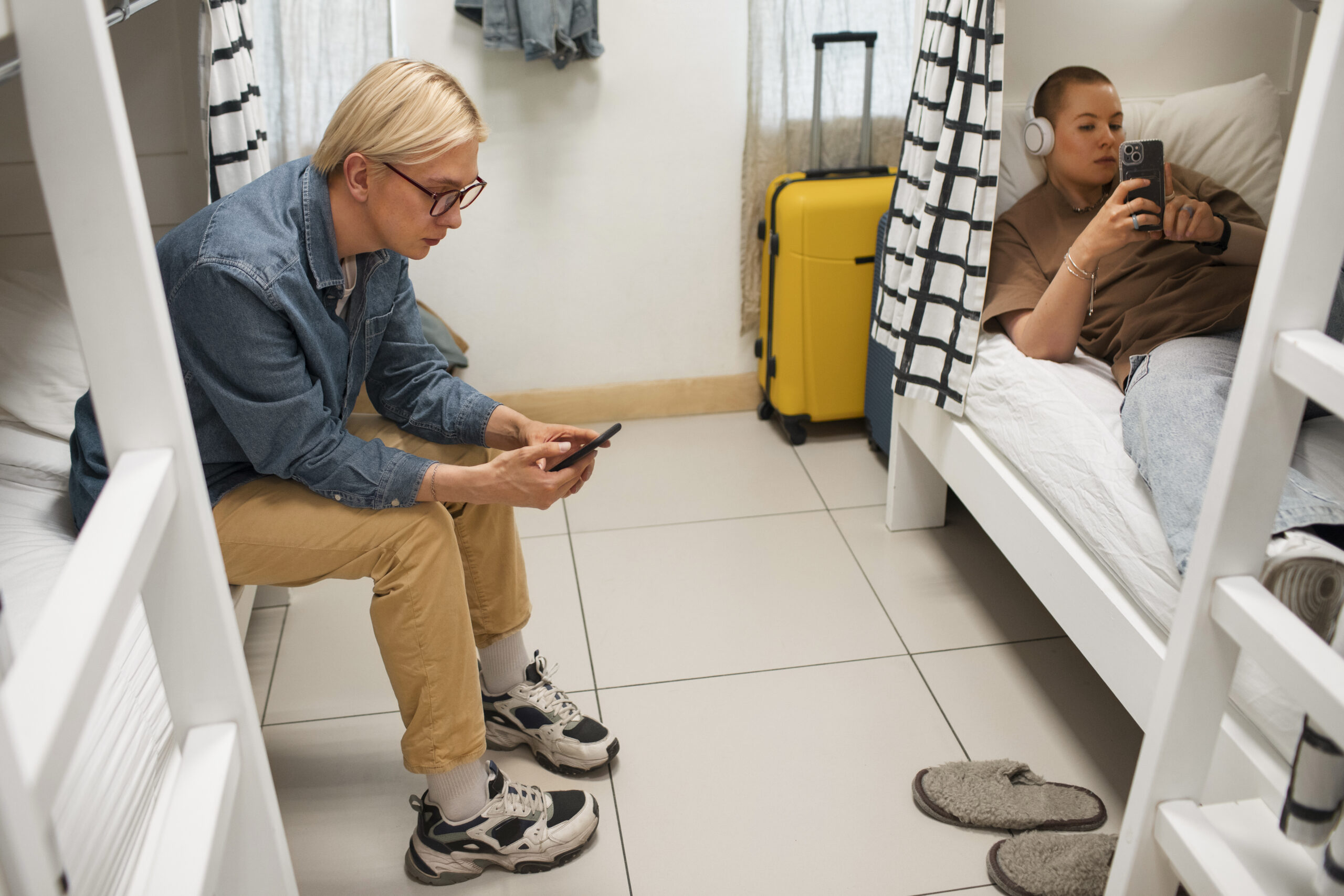
Rental scams are a widespread problem. Consumers reported nearly 65,000 of them to the FTC from 2020 through June 2025, but the good news is that most Airbnb scams are preventable once you know what to watch for.
The core rule is simple and powerful: never communicate or pay outside Airbnb’s official platform. Keep the booking, payment, refund requests, and key terms inside Airbnb, and you preserve the evidence trail that makes platform support, dispute resolution, and payment protection work.
Common Airbnb Scam Red Flags
Off-Platform Communication and Payments
Red flag: A host asks you to text, email, or use a messaging app outside Airbnb to finish booking details or payment.
Why it matters: Airbnb prohibits communicating, booking, paying, or sharing personal contact information outside the platform when doing so compromises transaction integrity. Once you are off-platform, Airbnb’s payment protection and dispute resolution no longer apply in the same way.
What to do in-app: Run a quick decision fork. If a host simply says, “Feel free to text if easier,” that can be harmless convenience. However, if they ask you to move the actual booking, payment, or deposit off-platform through Venmo, wire transfer, or a “direct” link, refuse immediately. Keep all messaging inside Airbnb and report the message thread through Airbnb’s tools.
Too-Good-to-Be-True Pricing
Red flag: A listing is priced noticeably lower than comparable vacation rental options nearby.
Why it matters: Regulators flag an unusually low rate compared with similar properties as a classic warning sign for vacation-rental scams. Scammers use aggressive pricing to rush bookings before guests can verify the property.
What to do in-app: Spend under 60 seconds checking 3–5 comparable listings in the same neighborhood for the same dates. If one listing sits far below that cluster, treat it as a reason to verify further, not automatic proof of a scam.
Legitimate discounts do exist: off-season gaps, new-host promos, or last-minute availability can all explain a lower price. Even then, a real deal should still run through Airbnb’s normal in-platform booking and payment flow. If someone wants off-platform payment to “honor” a low price, that is the real red flag.
Suspicious Photos and Missing Property Details
Red flag: Listing photos or descriptions feel incomplete, inconsistent, or oddly generic.
Why it matters: Official guidance flags errors involving a property’s address, photos, or description as indicators a scammer may have copied and altered a legitimate listing to create a fake listing.
What to do in-app: Look for four verifiability gaps:
- No exterior or building context shots
- No floor plan or inconsistent room continuity between photos
- Sparse or contradictory amenity lists
- Vague or shifting location cues
As a quick checkpoint, run a reverse image search on a few photos before messaging the host. If they appear elsewhere online under a different listing, that is a major warning sign. Tools like Google Images can help you spot whether a photo set was lifted from a different property or market.
New Profiles and Generic Review Patterns
Red flag: The host account is new or the reviews feel oddly uniform.
Why it matters: Scammers often clone details from real listings but cannot easily replicate a genuine, organic review history.
What to do in-app: Scan for these quick review signals:
- Identical phrasing repeated across multiple reviews
- A cluster of reviews all posted within a narrow date range
- Reviews that praise the stay but never mention specifics about the unit or location
- Host replies that read like a templated script rather than a direct response
Prioritize listings where reviews reference concrete features you can actually see in the photos. That alignment is a strong trust signal.
Urgency, Pressure, and Last-Minute Emergency Scripts
Red flag: The host creates artificial time pressure to push you into a fast decision.
Why it matters: Urgency short-circuits the normal verification steps you would otherwise take. That is exactly what a scammer wants.
What to do in-app: Watch for these three scripted patterns and respond the same safe way each time: pause, request the same ask in Airbnb messages, and contact Airbnb support before changing anything.
- “This booking must be completed in the next hour or it’s gone.”
- “Our payment system is down right now—just pay me directly.”
- “Another guest is arriving soon, so send the deposit immediately.”
External Messaging, Payment, and Refund Promises
Red flag: A host offers you a deal that depends on breaking Airbnb’s rules.
Why it matters: This ties directly back to the core platform rule: Airbnb prohibits communicating, booking, paying, or sharing personal contact information outside the platform when it compromises transaction integrity.
Two common framings are especially important to recognize:
- “Pay off-platform and I’ll give you a discount or refund later.”
- “Cancel the booking on your end so you can get a refund.”
What to do in-app: Decline both. Once you have moved outside Airbnb’s official system, any promised refund, discount, or credit card chargeback protection becomes harder to enforce. Airbnb has no complete record of the transaction and cannot intervene as effectively on your behalf.
Stop booking and verify if you see:
- Any request to pay, message, or share contact details outside Airbnb
- A price far below 3–5 comparable listings nearby
- Photos or details that fail a quick reverse image search or show inconsistent room layouts
Common Airbnb Scams
Fake Listings and Stolen Photos
How it works: This scam runs in two main variants.
The first is a phantom listing: a property that does not exist at all, built entirely from stolen photos and a fabricated address, designed to collect payment for a stay no one can ever check into.
The second is a duplicate listing. In this version, a scammer copies a real, currently active property down to the photos and description, then swaps in their own contact details and payment path so your money goes to them instead of the actual host.
In both cases, the failure mode appears at the worst possible moment. You arrive and either the address does not exist, leads you nowhere, or the person who answers the door has no idea who you are because the host identity you booked with was never the person who controls the unit.
What the scammer wants: To collect payment for access to a property they do not own, do not control, or that does not exist.
Fastest safe move: If something feels off before you travel, do not wire extra funds or “confirm” with a new contact. Verify the host and listing through Airbnb’s official channels and keep all payment inside the platform so a dispute stays recoverable.
A mini tell set is worth watching for here. Look for a narrative that describes amenities, such as a pool, a view, or a specific appliance, that never actually appear in any photo. Be careful with interior shots that look like a staged stock set with zero exterior or street-level context. Small inconsistencies also matter: mismatched furniture between photos supposedly from the same room, or captions that do not match what is shown, can suggest the images were copied and edited rather than taken on-site.
Bait-and-Switch Properties
How it works: This scam usually appears in two timing scenarios.
In the first, a host messages you right before travel, sometimes the night before or the morning of check-in, claiming the booked unit is suddenly unavailable and offering a “comparable” replacement. This replacement is often arranged off-platform.
In the second, the switch happens at arrival. You show up to find a different unit than advertised, often smaller, less furnished, or in a different location entirely, with the host or a go-between pressuring you to accept it because you have already traveled.
In both scenarios, the scammer’s leverage is your fatigue and time pressure. You are tired, you have nowhere else lined up, and saying no feels harder than going along with it.
What the scammer wants: To pressure you into accepting an unreviewed, unverified unit or moving the arrangement off-platform where Airbnb cannot help.
Fastest safe move: Do not agree to move off-listing or accept a “temporary” swap on the spot. Pause, push the conversation back into Airbnb messaging, and let support intervene before you lose booking protections.
Phishing Emails, Texts, and Links
How it works: Phishing attempts aimed at Airbnb users usually chase one of three goals.
The first is credential theft. A message mimics an Airbnb login prompt to harvest your username and password for full account takeover.
The second is payment diversion. A lookalike checkout page, styled to resemble Airbnb’s real payment flow, redirects your card or bank details to the scammer instead.
The third is identity harvesting. A fake “verification” form asks for ID numbers, selfies, or other personal documents under the guise of mandatory host or guest compliance.
A concrete indicator unique to this scam type is the link itself. It often lives on typosquatted or near-match domains, or is hidden behind shortened URLs that disguise where you are actually being sent.
What the scammer wants: To steal login credentials, redirect payments, or collect personal identity documents they can exploit or resell.
Fastest safe move: Treat any message that asks you to log in or pay through a link as suspicious by default. Ignore the link entirely and manually open the official Airbnb app or site to check your actual messages and notifications.
False Damage Claims and Checkout Charges
How it works: Two distinct situations fall under this scam type.
The first is a legitimate damage disagreement. Something genuinely got broken or stained, and the host and guest simply see the responsibility or cost differently.
The second is a fabricated or overstated charge. A host invents damage that never happened or inflates a minor issue into a much larger bill, counting on the guest not having evidence to push back.
The practical nuance matters: disputes of either kind are far easier to resolve in your favor when you have before-and-after evidence and communicated through the app promptly.
What the scammer wants: To extract extra payment for damage that is exaggerated, pre-existing, or entirely invented.
Fastest safe move: Document everything at checkout, keep that documentation inside your Airbnb account, and contact support promptly if a charge appears that does not match what actually happened.
Three evidence types are especially useful:
- Timestamped photos or video of the unit’s condition at departure
- Message thread context showing any pre-existing issues you flagged on arrival
- Receipts or chat confirmations showing what fees, such as cleaning, extra guests, or late checkout, were actually agreed to
Recognizing these four scam patterns is only half the equation. Verifying hosts, guests, and listings before you commit is how you stop most of these plays before they start.
Host, Guest, and Listing Verification
Profile History and Identity Signals
What to verify:
- Account tenure and activity pattern. A host profile with years of history, multiple completed stays, and a steady trickle of guest reviews is a strong identity-verification signal. A profile created weeks ago with one photo and no activity is weak, but not automatically disqualifying.
- Internal consistency across every touchpoint. Does the host’s bio, listing description, house rules, and message tone all tell the same story about the same property?
- Specific mismatch patterns that indicate the profile and the listing were not built by the same person.
How to verify fast:
- Open the host’s profile and scan for join date, verified ID badge, and review count. Treat “joined this month” plus zero reviews as a flag to dig deeper, not a reason to walk away on its own.
- Run a consistency test. Does the host claim to live locally while the house rules reference a third-party property-management company handling check-in? That is mismatch #1.
- Check whether the listing advertises self check-in but the host’s messages insist on meeting you in person off-platform. That is mismatch #2.
- Reread the listing description for internal contradictions, like a unit described as a “quiet top-floor retreat” that later mentions street noise from a ground-floor window. That is mismatch #3.
If it fails, safest next move: A brand-new host is not automatically a scammer. Some real hosts are just starting out. The correct response is to increase scrutiny: cross-check photos, ask clarifying questions, and verify reviews. If the mismatches stack up, message Airbnb support before paying.
Review Quality and Timing
What to verify:
- Whether reviews contain unit-specific detail or read like generic, swappable praise
- Whether the review timeline looks organic, spread across months and seasons, or suspiciously bunched into a short window
- Whether the features guests mention in reviews actually show up in the listing’s photos and amenities list
How to verify fast:
- Apply a quick rubric. High-information reviews mention specific rooms or layout, building or neighborhood context, noise or parking realities, or exact check-in steps. Low-information reviews are purely emotional, such as “amazing host, 10/10,” and may repeat the same phrasing across multiple guests.
- Scan the review dates. A natural pattern shows stays spaced across different months and seasons. A cluster of a dozen reviews posted within the same two-week window is a timing-pattern trigger worth treating as a verification flag.
- Pick 2–3 reviews that reference something concrete, such as a specific appliance, balcony view, or parking spot, and cross-check that detail against the actual listing photos and amenities list. If it is not there, that is a real inconsistency.
If it fails, safest next move: If reviews are thin on detail, tightly clustered in time, and do not match what is shown in the listing, pause the booking and send the host a specific, verifiable question before paying. Genuine hosts can answer. Copied listings usually cannot.
Reverse Image Search and Address Checks
What to verify:
- Whether the listing’s core photos appear anywhere else online under a different listing, city, or host name
- Whether the general location, building type, and views are internally plausible against the map pin and photos
- Where applicable, whether the host can produce required local short-term-rental documentation
How to verify fast:
- Reverse-image-search 2–3 representative photos: the exterior or building frontage, one distinctive interior feature, and the view from a window or balcony. A match on an unrelated site or in a different city entirely is a high-risk signal. The same building but a different unit number is worth investigating further, not an automatic red flag. If you are running these checks on the go, say during a layover in Singapore, having an eSIM for Singapore means you can verify listings the moment you land rather than hunting for airport Wi-Fi.
- Confirm that neighborhood landmarks and the map pin roughly line up with what is shown. The building type should match the photos: a high-rise balcony view should not come from a listing described as a detached house.
- Where applicable, check for a visible short-term-rental or vacation-rental license or registration number. Washington, D.C. consumer-protection guidance notes this should be displayed or made available on request, and a host who refuses to provide it when asked should be treated as a verification failure (dlcp.dc.gov/release/protecting-consumers-summer-rental-scams).
- Remember the gotcha: legitimate property managers sometimes reuse the same professional photo set across multiple platforms. A photo match alone is not proof of a scam. Use it as a prompt to confirm the host’s right to rent, not as a verdict.
If it fails, safest next move: If photos surface elsewhere with a different address or host name and the host cannot produce consistent identity or licensing confirmation in-platform, stop the booking and report the listing to Airbnb before sending any payment.
Host and Guest Legitimacy Checklist
Host-side checklist:
- Check-in instructions and the property’s story stay consistent every time they are repeated, with no contradictions across messages.
- The host is willing to keep every step—questions, confirmations, payment—inside Airbnb’s platform rather than pushing you toward email, text, or a third-party app.
- The host gives clean, specific answers to clarifying questions scammers typically fumble, such as: What is the nearest cross-street or landmark, without needing the exact address? What is visible from the living-room window? How does trash pickup or parking actually work at this property?
Guest-side checklist:
- Keep all communication inside Airbnb messaging rather than moving to text, email, or a messaging app, even if the host suggests it is “just easier.”
- Ask for any fees, discounts, or special arrangements to be confirmed in writing within the Airbnb message thread, not verbally or over a side channel.
- Decline any “special deal” that requires changing how you book or pay, even if it sounds like a win, such as a bigger discount for paying outside the app.
Decision threshold: If two or more checks fail across either checklist, stop. Do not pay, do not travel, and verify directly with Airbnb support before taking the next step.
Booking, Payment, and Cancellation Safety
Platform-Only Messaging and Payments
Every dollar you move outside Airbnb’s platform is a dollar that falls outside Airbnb’s protection system. At payment time, that distinction stops being theoretical and becomes financial.
If a host convinces you to wire money, send a prepaid card code, or pay through a personal payment app, you lose two things at once: Airbnb’s dispute resolution path and a clean evidence trail showing what you paid for, when, and under what terms. “I sent $800 to a Venmo handle” is a far weaker position than a booking confirmation tied to your Airbnb account.
A quick split helps keep the rules clear:
Allowed:
- Confirming your reservation through Airbnb’s checkout flow
- Paying any portion of the stay—nightly rate, cleaning fee, deposit—through Airbnb’s official payment system
- Receiving your booking confirmation and receipt inside the app
Not allowed:
- Sending a deposit or balance via wire transfer, cash app, or prepaid card at a host’s request
- Paying “the rest” directly to the host to “save on fees”
- Accepting a side invoice or payment link that is not generated by Airbnb
When you have a choice of payment method within Airbnb’s supported options, default to a credit card over a debit card, bank transfer, or any irreversible rail. The reasoning is straightforward: a credit card gives you chargeback leverage if the stay does not materialize or the host misrepresents the property. Wire transfers, direct pulls from your bank account, and prepaid cards are effectively irreversible once sent.
California’s Department of Financial Protection and Innovation explicitly advises vacation-rental consumers to use secure transactions—credit cards or reputable electronic payment services—for exactly this reason: reversibility is your safety net.
It also helps to know how Airbnb’s own payment timing works. Airbnb holds guest payments until 24 hours after check-in before releasing funds to the host. That means a host who pressures you to pay them directly, early, or outside the app is not just bending a convenience rule. They are asking you to bypass a system specifically designed to protect you until you have confirmed the property is real and accessible.
Cancellation Policy Refund Traps
Refund manipulation rarely looks dramatic. It usually arrives as a reasonable-sounding message.
Two phrasings deserve immediate attention:
- “Cancel now and I’ll refund you personally.”
- “Looks like you booked the wrong dates—just cancel and rebook with me directly.”
Both sound like they are solving a problem in your favor. In reality, once you cancel on your end, any refund becomes discretionary and unenforceable. Airbnb’s cancellation policy no longer applies to a booking that no longer exists, and you are now relying on a host’s goodwill instead of a platform guarantee.
The safer move is to keep the entire conversation inside the Airbnb message thread and insist that any refund, rebooking, or adjustment happen through Airbnb’s own mechanisms. That means a modified booking confirmation or an official refund processed through the app, not a promise made in chat.
There is also a timing gotcha worth building into your habits. Cancellation deadlines and refund eligibility are not always as fixed as they feel when you first book. As check-in approaches, the specific terms displayed on your cancellation policy can shift, and what counted as a full refund window two weeks ago may not apply the day before arrival.
If a host or the platform interface is prompting you to cancel, take a screenshot of the exact policy terms and refund amount shown at that moment before you act. This gives you a dated record if the refund that actually lands does not match what you were shown.
Last-Minute Change Requests
Any change to your booking—new dates, a different unit, an adjusted guest count, an added fee—needs to clear one strict test: it should appear as a formal, in-platform alteration you can review and approve. A verbal or messaged “just go with it” is not enough.
If a host asks you to accept a change informally, outside that structured flow, treat the request as void for dispute purposes. Without a platform-recorded alteration, there is nothing for Airbnb to enforce later if the terms do not hold.
The risk changes depending on when the request lands:
- Before travel: You have time on your side. Verify the proposed change in writing inside the Airbnb thread, confirm it appears as an actual booking modification, and decline if the host will not formalize it through the platform.
- After arrival: Pressure is higher and your options are fewer. Prioritize documentation first. Screenshot the request, photograph the current unit or situation, and contact Airbnb support immediately rather than negotiating a side agreement on the spot.
Documentation at Arrival and Departure
Generic “take some photos” advice is not enough to support a booking, payment, or cancellation dispute. You need a tight, specific evidence set, all timestamped and shot in both wide and close-up framing.
Focus on these areas:
- Proof of access at check-in: Photograph the lockbox, keypad, or door instructions exactly as provided, along with whether they worked on the first attempt or failed.
- Condition walkthrough: Cover the highest-dispute areas specifically: kitchen appliances, bathroom fixtures, floors, and walls.
- Fee-related documentation: Capture posted house rules, any signage referencing extra charges, and screenshots of messages mentioning fees so there is no ambiguity about what was actually agreed to.
Pair that photo evidence with a message-thread anchor. Send a short in-platform message right at check-in noting any material issues, with the relevant photos attached. Then send a second message at checkout confirming your departure time and the condition you left the unit in.
This creates a dated, platform-recorded account of both ends of your stay. Your booking confirmation, payment record, and condition evidence all live in one consistent, verifiable thread.
Airbnb Protections and Their Limits
AirCover Coverage
AirCover exists to back you up when something goes wrong. However, what it can actually do for you depends heavily on where the paper trail lives.
Think of AirCover as a scope-and-boundaries system, not a blanket guarantee.
Protected zone, when everything stays on Airbnb:
- Booking confirmed through Airbnb’s checkout
- Payment processed through Airbnb’s system
- All host-guest communication inside Airbnb messaging
- Any changes or refunds formalized as an in-platform action
When something goes sideways here, Airbnb can review the message thread, payment record, and booking details to adjudicate what happened.
Weakened zone, when things move off Airbnb:
- A side conversation on a personal phone number
- A payment sent outside Airbnb’s checkout
- A verbal promise about a security deposit refund
- Terms negotiated anywhere support cannot see them
In this zone, AirCover does not disappear so much as it loses the evidence it needs to work. Airbnb cannot verify what it cannot observe.
The practical takeaway is simple: if you want AirCover’s protections to mean something, keep every part of the transaction—messages, payment, deposit, confirmations—inside Airbnb’s platform every time, even when a host frames the alternative as a favor.
It is also worth being clear-eyed about what AirCover cannot fix. Platform protections reduce your risk, but they do not make scam attempts disappear entirely. Suspicious listings and messages can still slip through and appear before detection systems or human reports catch them.
Airbnb itself has said its anti-fraud technology helped prevent roughly 265,000 potentially suspicious listings from appearing on the platform in 2025. That is a meaningful number, but it also means detection is not instantaneous or perfect. A listing can still be live long enough for you to encounter it.
That is why the verification habits covered earlier in this guide are not optional extras to AirCover. They are the first layer, with AirCover as the backstop if something still gets through.
Off-Platform Transaction Exclusions
Here is the eligibility rule in plain terms: once money, identity details, or key deal terms move off Airbnb, Airbnb generally cannot enforce a refund or extend coverage in the same way, because the transaction integrity and evidence trail that AirCover depends on has been broken.
This is not just a technicality buried in the Terms of Service. It is the direct consequence of Airbnb having no complete record of what was agreed to or paid.
Three off-platform moves often look harmless, but are not:
- Paying a “deposit” separately: Even a small one, even if the rest of the booking stays on Airbnb. A security deposit sent via a personal payment app or wire transfer is not visible to Airbnb’s system.
- Agreeing to a refund through an external method: A host offering to Venmo or PayPal you back “to make it easier” moves the refund outside anything Airbnb can verify or enforce.
- Moving negotiation to personal email or phone and confirming terms there: Even if you eventually book through Airbnb, if the actual agreed terms—price, dates, inclusions—live in a text thread instead of Airbnb messaging, Airbnb has no reliable record of what was promised.
That said, not every off-platform exchange is a red flag. A host texting to ask your estimated arrival time or confirming you found the building is convenience-only contact. It does not touch money, identity, or enforceable terms.
Use the simple decision test: does this move money, identity, or enforceable terms off Airbnb? If yes, treat it as exclusion risk and redirect it back into the platform. If no, and it is just logistics, proceed without worry.
Evidence Requirements for Claims
If a dispute does happen, generic advice like “take photos” will not carry much weight on its own. What actually makes a claim credible is a tight, time-anchored evidence bundle built around the specific scam or dispute scenario.
Your evidence bundle should include:
- In-app message thread: The original booking terms, any requests or changes a host made, and your responses.
- Timestamped arrival and departure media: Photos or video of the unit’s condition, access points, and any issues, captured as close to the moment as possible.
- Screenshots of listing details, house rules, and fees: Save them as they appeared at the time of booking because listings can be edited later.
- Proof of any anomaly: A lockbox that did not work, a property that did not match the listing, or a missing amenity documented at the moment you discovered it.
One nuance matters more than people expect: evidence is strongest when it is created contemporaneously, at check-in, at checkout, or right when a host makes an unusual request. It is weaker when assembled later from memory.
Equally important is how you store it. Keep original files with their native timestamps intact, and send the relevant photos or details through Airbnb messages as you go. That second step timestamps the evidence inside Airbnb’s own system, giving you a dated record that does not depend solely on your device’s metadata.
Scam Response and Reporting
Suspecting a scam is stressful, but your next moves in the first hour matter. They determine whether you stay eligible for platform help, whether your bank can still reverse a charge, and whether Support has enough evidence to act quickly.
Work through these four steps in order: escalate, dispute, secure, preserve.
Airbnb Support Escalation
Do this first: Stop negotiating privately with the host and move every clarification into a channel Airbnb can see.
Use this triage ladder to decide how hard to escalate:
- Message the host in-thread when the issue is ambiguous, such as unclear check-in instructions, a pricing question, or a scheduling mismatch. This creates an on-platform record before you assume bad intent.
- Contact Airbnb Support immediately the moment a host asks for off-platform payment, pushes a last-minute cancellation “favor,” or a listing detail does not match what you booked.
- Treat it as urgent if you cannot access the property on arrival, are being asked to pay outside Airbnb to “fix” the situation, or your own account shows logins, messages, or bookings you do not recognize.
- Keep every clarification, refusal, and host reply inside Airbnb messages. Support reviews a single canonical thread far faster than a mix of screenshots from different apps.
When you contact the host or Support, a short factual message works better than an emotional one. Use something like this:
“I’m reaching out about [reservation ID]. The host asked me to [off-platform payment / cancel and rebook / accept a different unit]. I have not paid, cancelled, or agreed to this. I’m requesting [a refund / rebooking help / an account security review] and want this resolved inside Airbnb.”
Payment Dispute Steps
Do this first: Identify which payment rail you used. That single fact determines who you contact next and how much leverage you have.
- Paid through Airbnb: Use Airbnb’s official dispute path, referencing your booking ID and the in-thread message record as supporting evidence. This is a reversible, platform-recorded payment method, so Airbnb has the transaction details needed to investigate, whether you paid by card or a supported wallet like Apple Pay or Google Pay.
- Paid off-platform: Contact your bank, credit card issuer, or payment provider immediately. Flag the charge as fraudulent or unauthorized where that option exists, and stop any further transfers to the same recipient. Off-platform rails like wire transfers or cash apps are far harder to reverse than a credit card charge, so speed is what preserves your leverage.
Timing matters. Act the same day you suspect fraud, not after you have “slept on it.” Freeze any pending or recurring payment attempts, notify your card issuer or bank right away, and document the exact timestamps of when you paid and when you noticed the problem.
Resist the urge to send a small “test” payment to see if the host is legitimate. It only increases your exposure and muddies the dispute by adding a second, harder-to-explain transaction.
Account Security After Phishing
Do this first: Assume your credentials may already be compromised and lock the account down before you do anything else.
- Change your Airbnb password from a clean, separate device, not the one you used when you clicked the suspicious link.
- Sign out of all other active sessions so any attacker holding your old credentials loses access immediately.
- Review recent logins, booking changes, and payment-method edits for anything you did not authorize.
- If your email was exposed in the phishing attempt, re-secure that email account first. Airbnb’s password reset flow routes through email, so an attacker who controls your inbox can simply reset your Airbnb password again.
If you clicked a link or entered credentials on a phishing page, stop using that link entirely. Do not reply to it, do not “confirm” anything through it, and do not continue the conversation on that channel.
Instead, open the official Airbnb app or website directly and check your real messages and notifications there. Genuine account alerts will be waiting for you inside the platform, not in whatever channel the phishing attempt arrived through.
Evidence Preservation
Do this first: Before anything else, assemble a dispute-ready evidence bundle. This is what turns a slow back-and-forth into a faster resolution.
Group your evidence into four categories:
- Transaction identifiers: Your reservation code, the listing URL, and the host’s profile link.
- Communication record: A full export or screenshots of the in-app message thread with visible timestamps, plus any off-platform messages if they occurred.
- Listing state at time of booking: Screenshots of the price, cancellation policy, house rules, fees, and check-in instructions exactly as they appeared when you booked. Listings can be edited later, so this freezes what you actually agreed to.
- Condition/access proof: Timestamped arrival and departure photos or video, plus specific proof of any lock or entry failure if that is part of your dispute.
Preserve the original files, not just copies. Originals retain device metadata, such as true timestamps and location data, that a cropped screenshot or forwarded copy often strips out.
Finally, write a short chain-of-events timeline. Keep it to 6–10 chronological lines covering the date and time of each event, who said what, what payment method was used, what was actually paid, and what changed along the way.
This single document is high-leverage. It lets Airbnb Support or your card issuer review the whole situation in under a minute instead of piecing it together from scattered messages and screenshots.
Frequently Asked Questions
How do I know if an Airbnb payment request is a scam?
Treat it as a scam if you are asked to pay outside the Airbnb checkout or invoice flow, or to pay “early” to secure the booking before your reservation is confirmed through the platform.
Both are classic off-platform payment traps, no matter how reasonable the excuse sounds. The safest move is simple: only pay through your reservation in the Airbnb app or site, and stop immediately if a host asks you to do otherwise.
What should I do if I receive a phishing email pretending to be from Airbnb?
Do not click any link in the email, and do not log in, pay, or “verify” anything through it. Phishing messages are built to look like official Airbnb alerts precisely so you will act on impulse.
Instead, manually open the official Airbnb app or website and check your messages and notifications there directly. If the email’s request is not waiting for you inside the real platform, it was not real.
If you already clicked or entered credentials, secure your Airbnb account and your email account immediately.
Does AirCover protect me from all Airbnb scams?
No. AirCover can reduce certain losses and help resolve disputes, but it does not prevent scam attempts from happening in the first place.
Its biggest blind spot is one many guests misunderstand: coverage and support weaken significantly once money or key terms move off-platform, since Airbnb cannot verify or enforce what it never recorded.
The best protection is the combination of careful verification, platform-only booking and payment, and well-preserved evidence. That is how you spot and avoid Airbnb scams without compromise.
Previously in Cryptocurrency: Memecoins on Canton Test a New Model: Creator Rewards Tied to Trading After Launch







Comment