
Top 8 Drug Discovery Activities Biotech Companies Commonly Outsource

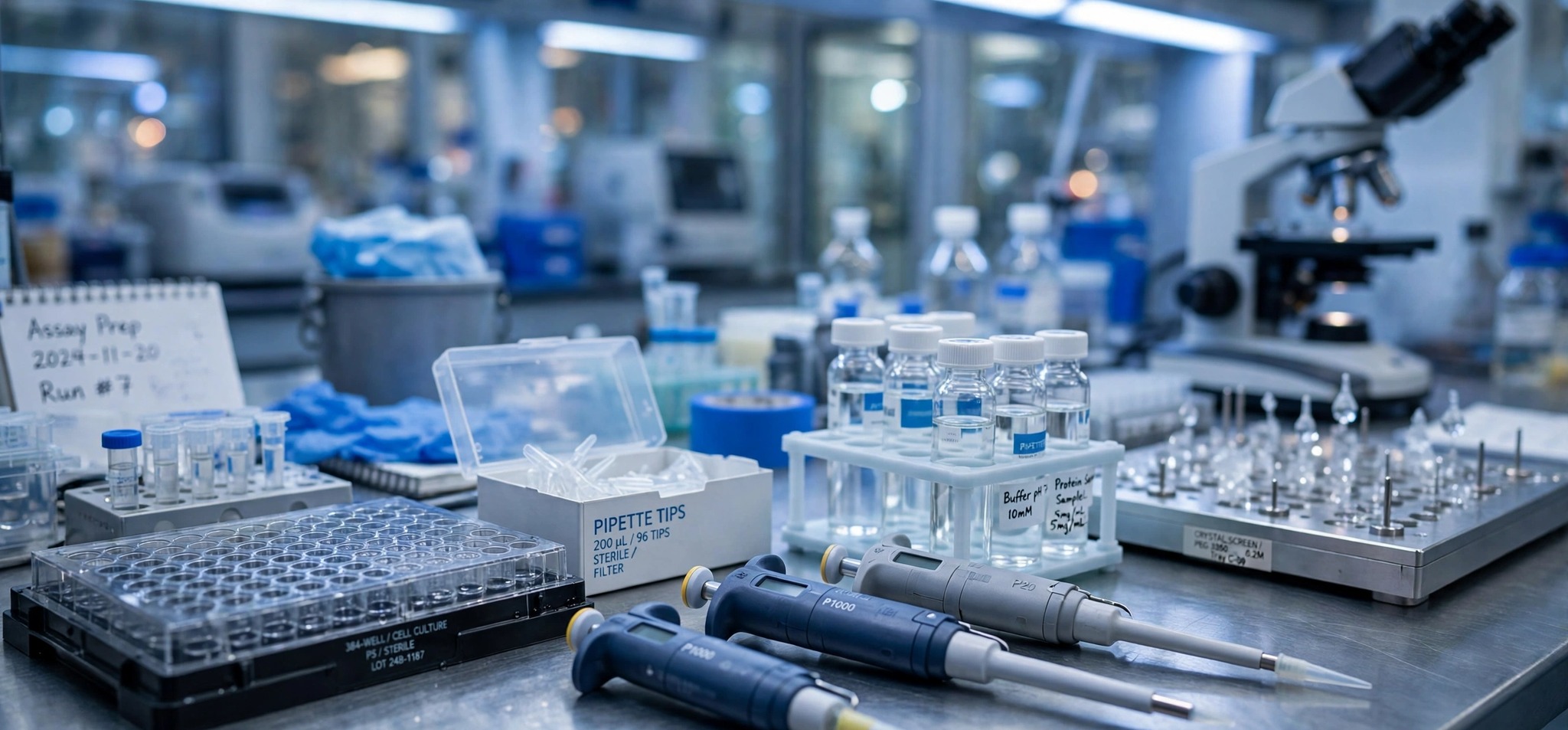
Drug discovery outsourcing was worth an estimated USD 8.08 billion in 2025, and Grand View Research, in its 2026 Drug Discovery Outsourcing Market report, expects that figure to more than double to USD 17.11 billion by 2033. Behind those numbers sits a very practical question that every young biotech has to answer early.
How does a team of 15 or 30 scientists move a program from target to candidate when the work demands protein chemists, crystallographers, medicinal chemists, DMPK specialists, and pharmacologists? Building all of that capability in-house would consume most of a seed or Series A round before the first compound is ever made. Equipment sits idle between projects, and hiring for every discipline takes months.
Most biotechs solve this by keeping a lean core team and drawing on external partners for specialized work. The activities below are the ones handed off most often, along with the reasons they make good candidates for outsourcing.
Why Lean Biotech Teams Rely on External Discovery Partners
Outsourcing drug discovery services turns high fixed costs into variable ones that scale with a program's progress. Instead of buying an SPR instrument or securing synchrotron time, a company can pay for the data it needs, when it needs it. That flexibility is why many startups build their core team around target biology and decision-making, then fill the remaining gaps with specialized CRO services.
The main drivers are consistent across the industry:
- Specialized infrastructure such as crystallography pipelines, screening libraries, and animal facilities
- Deep expertise in disciplines a small team cannot hire for all at once
- Speed, since an established partner can start within weeks
- Capital efficiency, which investors watch closely between funding rounds
Matching the Engagement Model to the Program Stage
How work is contracted shapes cost, control, and flexibility. Most partnerships fall into one of three models:
| Model | How it works | Best suited for | Main consideration |
|---|---|---|---|
| Fee-for-service | Fixed price per study or deliverable | Well-defined tasks such as ADME panels or protein batches | Little room for scope changes |
| FTE-based | A dedicated team billed per scientist per year | Iterative work such as medicinal chemistry | Requires active scientific management |
| Risk-sharing | Lower fees combined with milestones or royalties | Integrated programs with shared upside | More complex contracts and IP terms |
Many programs blend models, using fee-for-service for routine assays and an FTE team for the chemistry engine at the center of lead optimization.
The 8 Drug Discovery Activities Biotechs Outsource Most
1. Recombinant Protein Production
Almost every discovery program depends on milligram to gram quantities of pure, active target protein. Expression systems, purification workflows, and quality control take years to build and refine. A difficult protein can stall an entire program, so teams often hand construct design and production to groups that have already solved similar targets.
Common deliverables include expression and purification protocols, purity and activity data, and stable batches sized for screening or crystallography. Reliable protein supply keeps assays, structures, and biophysics consistent from one study to the next, which makes results easier to compare across the whole program.
2. Assay Development and Validation
A screening campaign is only as good as the assay behind it. Partners develop biochemical and cell-based assays, then validate them for robustness, typically aiming for a Z' factor above 0.5 before screening begins. Getting this right early prevents expensive false positives later.
Partners also miniaturize assays into 384- or 1536-well formats, set up counter-screens to catch interfering compounds, and transfer validated protocols back to the sponsor when needed. A well-documented assay becomes a reusable asset that supports hit confirmation, SAR work, and lead optimization.
3. Hit Identification and Screening
Maintaining compound libraries, robotics, and screening platforms is costly for a company running one or two programs. Biotechs commonly outsource high-throughput screening, fragment screening, DNA-encoded library selections, and virtual screening. Many run two orthogonal approaches in parallel to increase the chance of finding tractable chemical matter.
Hit triage is where outsourced screening adds the most value. Experienced teams retest actives from fresh stock, measure dose response, and remove frequent hitters and assay artifacts. The goal is a short list of validated series with clear starting chemistry, ready for structural and biophysical follow-up.
4. Structural Biology
Protein-ligand structures from X-ray crystallography or cryo-EM show exactly how compounds bind. The work requires crystallization robotics, high-end detectors, and regular synchrotron or microscope access. Fast structural turnaround keeps chemistry decisions grounded in data during every design cycle.
Many biotechs establish a crystal system early so new compounds can be soaked and solved routinely. Once that system is running, a new protein-ligand structure can often be delivered within days, matching the pace of active chemistry. Cryo-EM extends the same support to membrane proteins and large complexes that resist crystallization.
5. Medicinal Chemistry and Compound Synthesis
Chemistry is usually the largest outsourced budget line in a discovery program. FTE-based teams synthesize analogs, scale up key intermediates, and contribute design ideas while the sponsor's chemists set strategy. Fortune Business Insights identifies lead optimization as the biggest segment of the discovery outsourcing market in 2025.
Outsourced chemistry also covers building blocks, reference compounds, labeled material, and early route scouting for scale-up. Close, frequent communication between design and synthesis teams keeps cycle times short, often to a few weeks per design round.
6. Biophysics and Binding Kinetics
Techniques such as SPR, isothermal titration calorimetry, and thermal shift assays confirm that hits bind their target directly. They also measure on and off rates. Residence time often explains in vivo efficacy that affinity alone cannot, which makes kinetic data valuable well before animal studies.
Biophysical methods are equally good at spotting problems. They reveal aggregators, nonspecific binders, and compounds that destabilize the protein, all of which can look like genuine hits in a functional assay. Orthogonal binding data gives teams confidence before they invest in chemistry.
7. In Vitro ADME and DMPK Profiling
Early ADME data flags compounds likely to fail on absorption, metabolism, or drug-drug interactions. Standard panels are highly suited to fee-for-service work:
| Assay | What it predicts |
|---|---|
| Microsomal or hepatocyte stability | How quickly the liver clears the compound |
| Caco-2 or MDCK permeability | Oral absorption potential |
| CYP450 inhibition | Risk of drug-drug interactions |
| Plasma protein binding | Free drug available to act on the target |
| Kinetic solubility | Formulation and exposure challenges |
Running these assays on every new series builds a structure-property dataset that steers chemists away from metabolic soft spots and poor permeability. Catching liabilities at this stage costs a fraction of discovering them in animal studies.
8. In Vivo Pharmacology and Early Safety
Animal studies need licensed facilities, ethics approvals, and experienced study teams, so very few early-stage biotechs run them internally. Partners handle pharmacokinetic studies, efficacy models, and early safety work such as hERG testing and off-target panels. These data feed directly into candidate nomination and later IND-enabling studies.
Model selection deserves careful thought. Partners with broad model portfolios can help match disease biology, species, and readouts to the question the program needs answered. In vitro safety panels covering dozens of receptors, ion channels and enzymes add an early check on off-target risk before a candidate is nominated.
Setting Up a Drug Discovery Outsourcing Partnership That Delivers
The science a partner produces is only part of the result. How the collaboration is set up decides whether data arrives on time and in a form the team can act on. A practical sequence looks like this:
- Define the decision each study must support, along with clear go and no-go criteria.
- Agree on IP ownership, data formats, and reporting timelines before work begins.
- Run a small pilot study to test communication and data quality.
- Set a fixed rhythm of project meetings with named scientific contacts on both sides.
- Review progress against milestones and adjust scope as the program evolves.
A few warning signs deserve attention during partner selection:
- Vague answers about who will actually perform the work
- No raw data access, or reports delivered without underlying files
- Limited experience with the target class or modality in question
- Unclear handling of compounds, materials, and confidential information
Integrated partners that cover several activities can reduce hand-off delays, although many biotechs deliberately split work across specialists to get the strongest expertise for each step.
What Successful Biotechs Keep In-House When They Outsource
The biotechs that outsource most effectively keep scientific judgment inside the company and buy capacity outside it. Target biology, program strategy, and the decision on which compounds advance remain with the core team. Protein production, screening, structures, chemistry, and profiling can then scale up or down as each stage demands.
That balance lets a small company run a program with the depth of a much larger organization. With the market for external discovery work set to keep growing, choosing the right partners and managing them well has become a core skill for every early-stage drug developer.
Frequently Asked Question
Which drug discovery activities should I keep in-house?
Keep the work that defines your competitive edge: target biology insight, program strategy, and final compound selection. Capacity-heavy and equipment-heavy tasks such as screening, structural biology, and ADME profiling are usually easier to outsource.
How much does outsourcing drug discovery services cost?
Costs vary widely with scope and model. Fee-for-service studies are priced per assay or deliverable, while FTE-based chemistry or biology teams are billed per scientist per year. Asking several partners to quote on the same defined package is the most reliable way to compare.
How do I protect my IP when I outsource?
Sign a confidentiality agreement before sharing anything sensitive, and make sure the service contract assigns all inventions and data to your company. Clarify how compounds, materials, and raw data are stored, transferred, and returned at the end of the project.
Should I use one integrated partner or several specialists?
An integrated partner simplifies project management and reduces hand-off delays. Specialists can offer deeper expertise for difficult steps such as protein production or structural biology. Many biotechs combine both, with one partner coordinating the core work.
How quickly can a partner start working on my project?
For standard assays and established services, work can often begin within a few weeks of contract signature. Projects that need new protein constructs, custom assays, or dedicated FTE teams typically take longer to set up.
Previously in HealthTech: How Addiction Affects Your Well-Being in Day-to-Day Life






Comment