
The Hidden Economics of Convenience in Mobile Entertainment

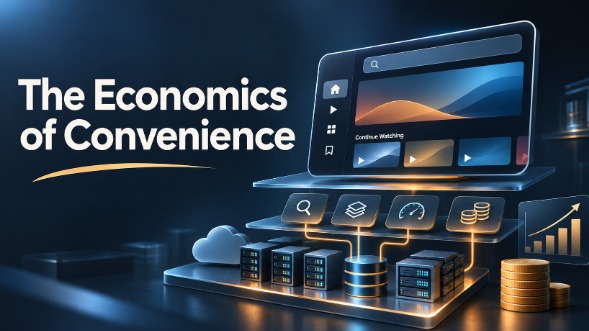
Convenience has become one of the most valuable qualities in digital entertainment, yet it is also one of the easiest to overlook. A viewer opens an application, finds an interesting film, and begins watching wihin moments. The process feels effortless, which is precisely why the technology behind it rarely attracts attention.
For the businesses developing these services, however, simplicity is anything but simple. Every smooth interaction depends on decisions involving software architecture, interface design, content organisation, infrastructure investment, and ongoing maintenance. A search result that appears instantly or a menu that requires fewer taps may represent months of development and testing.
This creates an interesting economic contradiction. Users increasingly expect convenience as a standard feature, while providing it requires continuous investment. For mobile entertainment companies, understanding this relationship is essential because convenience influences not only satisfaction but also operating costs, competitive positioning, and long-term business performance.
Convenience Is a Product, Not Just a Feature
Digital entertainment companies frequently compete through visible offerings: content selection, streaming quality, interface design, and additional functionality. Yet the overall experience often depends on less noticeable details. How quickly can viewers find something relevant? How easily can they return to unfinished content? How much effort is required to navigate between categories?
These questions reveal why convenience should be treated as a product outcome rather than an isolated feature. A well-designed search function has limited value if the surrounding navigation remains confusing. Similarly, an attractive interface cannot compensate for slow responses or unnecessarily complicated controls.
The economic importance becomes clearer when considering development priorities. A company can invest in adding another feature that looks impressive in promotional materials, or it can improve an existing interaction used thousands of times each day. The second investment may generate less publicity, but its benefits can extend across the entire user experience.
Convenience therefore represents accumulated design decisions. Its value comes from reducing unnecessary effort across many interactions rather than delivering one dramatic improvement.
The Engineering Cost of Saving a Few Seconds
Consider a common entertainment activity: searching for a film by name. From the viewer’s perspective, the process involves typing a few words and selecting a result. Behind the interface, several systems may need to work together, from maintaining an organised content index to processing search requests and displaying relevant information.
Improving this experience can require substantial engineering work. Developers may optimise database queries, refine search matching, reduce unnecessary network requests, or adjust how information is stored locally. Each improvement has potential costs involving development time, testing, infrastructure, and maintenance.
The same principle applies to application startup. A faster opening experience may depend on reducing initial resource loading, reorganising background processes, and ensuring that essential interface elements appear before less important content. These changes can be particularly demanding when an application must operate across Android devices with different processors, memory capacities, and operating system versions.
The financial challenge is deciding which improvements justify their cost. Reducing an interaction by one second may seem insignificant when considered individually. Across a large audience performing the same action repeatedly, however, the cumulative reduction in waiting and frustration can become meaningful.
The difficulty is that these benefits are not always easy to measure directly. Companies must evaluate technical performance alongside user behaviour rather than assuming that every faster interaction automatically produces higher revenue.
Why Interface Simplicity Requires Complex Decisions
A simple interface is often mistaken for one with fewer features. In reality, simplicity is primarily about making the right information available at the right moment.
Entertainment applications must accommodate different viewing intentions. Some users know exactly what they want, while others prefer browsing until something captures their interest. A navigation system that works well for one group may be less effective for another, making interface design a continuous balancing exercise.
The broader Android entertainment market illustrates this challenge. Nuvix operates within a category where the relationship between content exploration and interface convenience is central to the overall product experience. For entertainment brands, presenting information clearly and organising browsing journeys thoughtfully can help reduce the effort involved in discovering what to watch.
Achieving this balance involves more than arranging buttons on a screen. Product teams must decide which actions deserve prominence, how categories should be organised, and when additional information becomes useful rather than distracting.
Every interface decision also creates an opportunity cost. Development resources devoted to redesigning navigation cannot simultaneously be used for another project. This makes simplicity a business priority that requires deliberate investment, not merely an aesthetic preference.
The Invisible Infrastructure Behind a Smooth Experience
Mobile entertainment services rely on infrastructure that viewers rarely see. Servers process requests, databases organise information, and content delivery systems help move data between services and devices. Even when an application appears lightweight, its supporting infrastructure can involve significant operational complexity.
Performance expectations make these decisions particularly important. Users may access entertainment applications during busy evening periods, when many people are attempting similar activities simultaneously. Infrastructure that performs comfortably under ordinary demand may require additional capacity or optimisation during heavier usage.
Companies must therefore balance reliability with spending. Maintaining excessive capacity can increase operating costs, while insufficient resources may lead to slower responses and interruptions. Cloud infrastructure offers flexibility, but usage-based pricing introduces its own financial considerations.
Caching frequently requested information, reducing unnecessary data transfers, and improving backend efficiency can help manage these trade-offs. However, optimisation itself requires engineering expertise and continuous monitoring.
The result is a business model in which convenience has an ongoing cost. A responsive application is not simply built once and left unchanged; its supporting systems must continue to perform as audience behaviour, device capabilities, and technical requirements evolve.
Convenience Looks Different Across Devices and Markets
Not every user experiences the same application under identical conditions. A service that performs well on a recent smartphone connected to reliable broadband may behave differently on an older Android device using mobile data.
This variation is particularly relevant in markets with diverse device ownership and network conditions. In India, for example, entertainment audiences use smartphones across a wide range of price points and hardware configurations. Designing exclusively for high-end devices can overlook the practical needs of people using more limited equipment.
The economics of accessibility involve difficult choices. Supporting additional Android versions may require more compatibility testing. Optimising memory usage can demand extra engineering work, while reducing unnecessary data consumption may involve changes to how images and other resources are delivered.
These investments can broaden the audience able to use a service comfortably, although the commercial return depends on actual demand and product performance.
The Nuvix App is part of this wider Android entertainment landscape, where device requirements and everyday usability are relevant considerations for audiences evaluating mobile viewing options. Across the category, understanding how different users access entertainment is an important part of designing a convenient experience.
A successful approach does not necessarily require identical performance on every device. It requires realistic compatibility expectations, clear product information, and thoughtful decisions about which experiences should remain accessible across different hardware environments.
The Business Value of Reducing Decision Fatigue
Convenience is not limited to technical speed. It also concerns the mental effort required to make choices.
Entertainment applications can present viewers with numerous films, television programmes, genres, and browsing categories. While variety creates opportunities for discovery, excessive choice can make a simple evening decision unexpectedly tiring.
Product teams often respond through clearer categorisation, search tools, browsing filters, and interface structures that help users narrow their options. These mechanisms require careful design because reducing choices too aggressively may limit exploration, while presenting everything at once can overwhelm the viewer.
The commercial value lies in helping users reach a satisfying outcome with less unnecessary effort. An application that makes entertainment discovery straightforward may encourage people to return, although the relationship between convenience and retention must be evaluated rather than assumed.
This also changes how product performance should be measured. More screen time is not always evidence of a better experience. A viewer spending fifteen minutes struggling to locate a film has remained active, but the additional time represents friction rather than value.
Useful measures may include successful search completion, time required to reach content, repeated navigation attempts, and satisfaction with the overall browsing process. Interpreted together, these indicators can reveal whether an application is genuinely becoming easier to use.
When Convenience and Monetisation Pull in Different Directions
The economics of convenience become especially complicated when entertainment services depend on advertising or other forms of monetisation.
Advertising can help finance free access, but poorly positioned advertisements may interrupt navigation or make basic actions more difficult. A design that increases short-term ad exposure can therefore conflict with the objective of creating a comfortable user experience.
The challenge is not simply deciding whether advertisements should exist. It is determining how commercial elements interact with the purpose of the application.
An advertisement that appears at a predictable point may be less disruptive than one that unexpectedly covers an important control. Similarly, promotional content that is clearly distinguished from navigation can be easier to understand than advertising placed where users expect an ordinary application function.
These decisions involve trade-offs between immediate revenue opportunities and longer-term engagement. Excessive friction may discourage returning users, but reducing advertisements without considering operating costs can create financial pressure.
For publishers, the objective should be to understand the full economic consequences of monetisation choices rather than optimising a single metric in isolation.
Measuring the Return on Convenience
Investments in convenience can be difficult to justify because their benefits are distributed across multiple parts of the business. Faster navigation might improve satisfaction, reduce support enquiries, or encourage repeat usage, but attributing those outcomes to one interface change is rarely straightforward.
A practical evaluation begins with a clearly defined problem. If users frequently abandon searches before selecting content, the team can investigate whether search relevance, loading time, or confusing results contribute to that behaviour. Improvements can then be tested against meaningful indicators rather than judged solely by appearance.
Controlled experiments, where appropriate, can help distinguish the effects of a design change from unrelated fluctuations in traffic or audience behaviour. Performance data should also be interpreted alongside user feedback, since numerical improvements do not always capture the quality of an experience.
There is an additional financial consideration: convenience improvements often require maintenance after launch. A redesigned search system may need further refinement as content changes, while interface adjustments must remain compatible with future application updates.
The return on convenience is therefore not a one-time calculation. It develops through continued investment, measurement, and adaptation.
Conclusion
Convenience in mobile entertainment is easy to experience but expensive to create. Behind a responsive search bar, an intuitive interface, or a smooth browsing journey are engineering decisions, infrastructure costs, design trade-offs, and ongoing operational responsibilities.
For entertainment businesses, the challenge is to make those investments strategically. Adding features may attract attention, but reducing unnecessary effort can influence how people experience a product every day.
The most valuable improvements are not always the most visible. Sometimes, the strongest competitive advantage comes from making complex technology feel remarkably simple.







Comment