
The 5 Best AI Language Tools for Real Fluency, Natural Idioms, and Accent Reduction

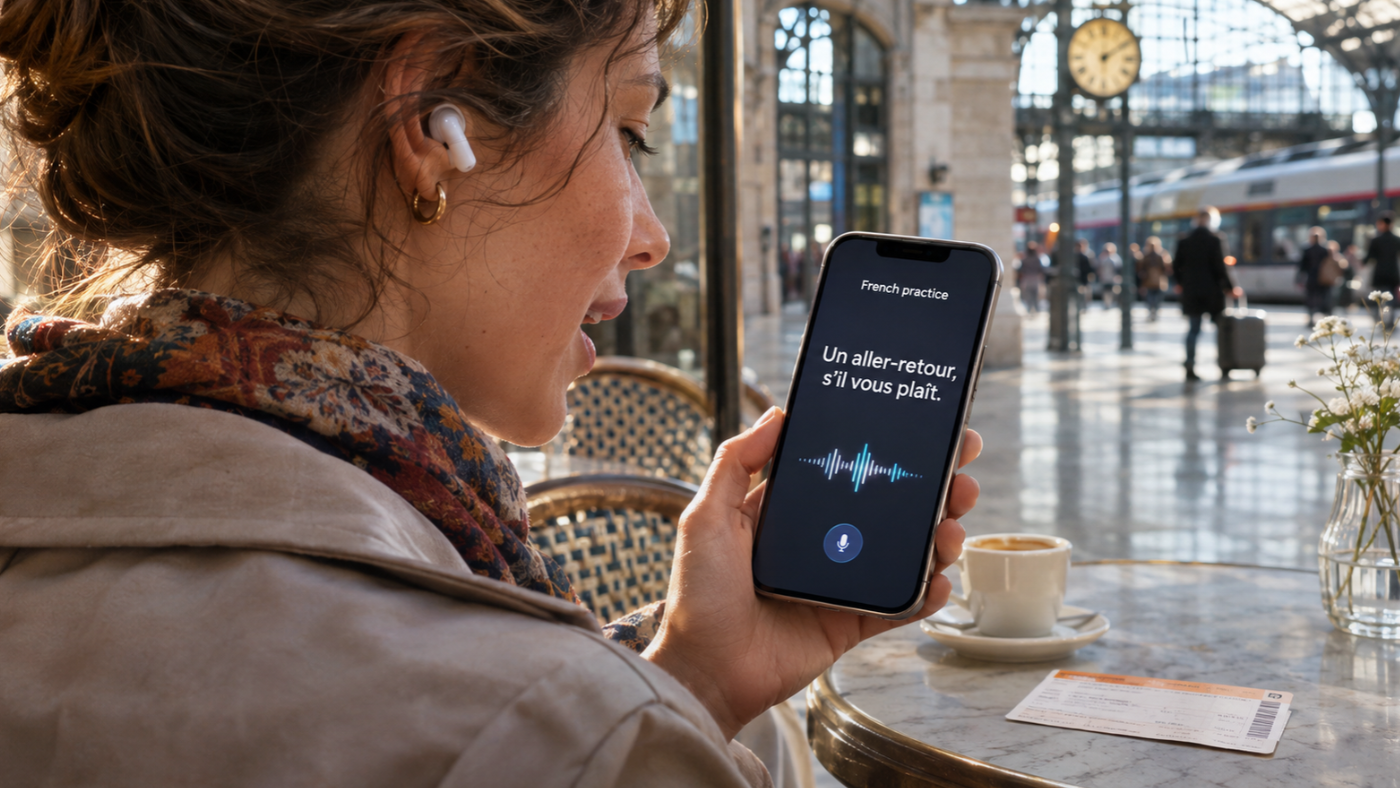
Most language learners hit a wall that flashcards cannot fix. You can pass grammar quizzes and order coffee on vacation, but the second a native speaker talks at full speed, your mind freezes.
Chatbots were supposed to solve this. Instead, most conversational AI apps default to textbook-clean phrasing that nobody uses on the street. They are polite, sanitized, and predictable. If you want to speak like a local, you cannot just exchange broken messages with a bot in an empty chat window.
You need tools that show you real speech, catch physical pronunciation slips, and force your sentences into natural shapes.
Here is a breakdown of five tools that tackle the problem from different angles, and where each one fits into your routine.
1) Reverso: Best for Real-World Phrasing and Context
Most language tools guess what sounds natural using probability models. Reverso works differently. It checks your words against hundreds of millions of real bilingual texts, from published literature and film scripts to legal contracts and news archives. That makes it the most reliable baseline for everyday idiom and sentence structure.
Real sentence pairs: When you search a phrase, you do not get an isolated definition. You get dozens of actual sentences showing how native speakers use the term in different settings. That prevents the word-for-word mistakes that make foreigners sound like translation software.
Reverso Writer: Paste up to 5,000 characters of your own text, and the system rewrites it. It fixes grammar, but more importantly, it offers natural idiomatic alternatives so your sentences read like a native wrote them.
Document formatting: For work or study, it translates complete Word files, PDFs, and slide decks while keeping every table, margin, and font in place.
The reality: Chatbots give you a low-stakes place to practice, but they will not tell you if your phrasing sounds bizarre to a local. Reverso acts as your factual check to verify that people actually speak the way you are writing.
2) Praktika: Best for Overcoming the Fear of Speaking
For many learners, the biggest hurdle is embarrassment. Your throat tightens when you have to speak in front of a teacher. Praktika strips away that social pressure by putting you in front of real-time digital avatars.
Visual avatars: You talk out loud with animated characters that listen, react, and steer the dialogue. The app keeps the momentum going so you do not have to carry the whole conversation alone.
On-the-spot repetition: When you stumble over a sentence or mangle a tense, the app logs the mistake. You can listen to your own audio clip right next to the corrected version, then repeat the line until it feels natural.
3) ELSA Speak: Best for Syllable Stress and Pronunciation
You can have perfect grammar, but if your cadence and tongue placement are off, people will still ask you to repeat yourself. ELSA Speak focuses entirely on acoustic feedback, evaluating your voice at the phonetic level.
Phoneme-level scoring: The app listens to your recorded voice and highlights the exact consonants or vowels you missed. It flags subtle problems, like flat intonation or misplaced syllable weight.
Physical mechanics: Instead of handing you a generic percentage score, the app shows you how to position your mouth, tongue, and airflow to reproduce the target sound accurately.
4) Talkpal AI: Best for Unscripted Roleplay and Debates
If you find structured courses boring and just want hours of unscripted conversation, Talkpal runs on flexible conversational models across more than 57 languages.
Open scenarios: You can pick specific situations, such as running through a mock job interview, arguing a point in a debate, or describing an image in detail.
Fast adaptability: The system shifts topics instantly based on whatever you say, offering alternative phrasing suggestions on the fly to help you express complicated ideas simply.
5) Memrise: Best for Slang and Regional Speed
Standard vocabulary tools fail because they isolate words in a sterile box. Memrise built its reputation around video of real people talking on their own streets.
Video clips: You can watch thousands of short clips of locals speaking with regional accents, natural speed, and colloquial body language.
MemBot: After watching the video feeds, you can jump into the integrated chat feature to use those newly learned slang terms in mock conversations.
The Verdict
Achieving native fluency requires combining targeted practice tools with a comprehensive verification architecture rather than relying on a single conversational app.
Platforms like Praktika and Talkpal reduce conversational anxiety and offer free-form roleplay, while ELSA Speak and Memrise specialize in phonetic precision and regional idiom immersion.
Ultimately, tools like Reverso provide the foundational, real-world linguistic verification necessary to ensure syntactic accuracy before committing phrasing to memory. You can explore the platform at Reverso.






Comment