
Voltu Motor Delivers New Era of Electrification with AC Fast Charging Network and Heavy Duty Truck Built for 24/7 Work

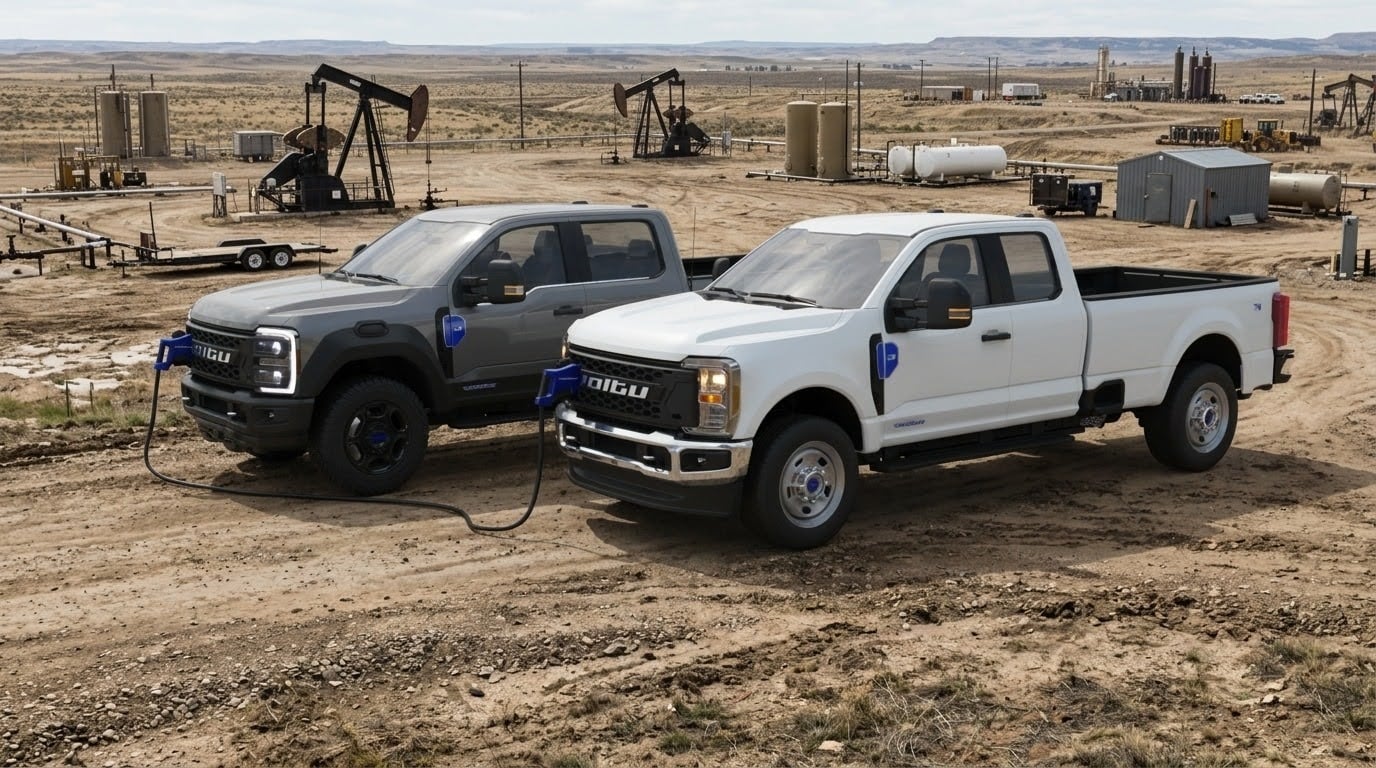
Voltu Motor, Inc. is redefining commercial electrification through a coordinated architecture spanning vehicles, energy, charging and software and has shipped trucks and has delivered its first trucks in 2026. Now the company is ensuring that job sites are operating continuously.
For a utility crew with a half-hour lunch break, the location of a charger can matter as much as its speed. A ten-minute drive from the yard to a public charger leaves just ten minutes to charge before the driver has to head back. Voltu Motor has designed its 2027 Voltu3 heavy-duty electric pickup around the value of keeping those minutes at the depot.
The Riverside, California, company has introduced the truck alongside the Voltu Charging Network and a new online ordering platform. Each pickup comes with a Voltu Power Outlet hardware kit. At a customer site with suitable three-phase electrical service, the truck can use its own electronics to charge at up to 200 kilowatts (kW). Voltu says fast charging can take as little as 30 minutes. The company also plans to deploy one public charging outlet within 12 months of each vehicle delivery.
“The future of commercial electrification demands more than a capable truck. It requires an entirely innovative approach to how fleets are powered and operated,” said George Gebhart, CEO of Voltu Motor. “With the launch of the 2027 Voltu3, we are bringing together the vehicle, charging access and a direct ordering experience to help customers put electric trucks to work. Welcome to a new era of electrification.”
Voltu already has a municipal customer in its home city. In June 2026, the City of Riverside reported taking delivery of the first production Voltu3 vehicles as manufacturing began at Voltu Forge One. The 2027 announcement builds on that earlier milestone. Once a fleet has bought its first electric pickup, a different question comes into focus. Where can the next crew charge it during a working day?
How the Voltu3 charges from a three-phase supply
A truck battery stores energy as direct current (DC). A commercial building typically receives alternating current (AC). At a conventional DC fast charger, equipment at the charging station converts that electricity before it reaches the vehicle. Voltu puts the high-power conversion equipment on the other side of the cable. When the pickup is parked, its patented bidirectional inverter architecture lets components that normally propel the vehicle take on a second job charging its battery.
The Voltu Power Outlet gives the truck controlled access to a suitable three-phase supply. A certified electrician can install it, and Voltu says any electrical upgrades needed to reach maximum charging power are assessed separately. The distinction matters when budgeting. The buyer receives the outlet hardware with the truck. The cost of bringing power to the parking bay depends on what is already available at that particular property.
Consider a contractor whose crews rotate between two yards. If both have compatible outlets and sufficient electrical capacity, a Voltu3 can use its onboard conversion equipment at either location. That gives the contractor a reason to look at where the trucks actually spend time before deciding which yard to equip first. Standard DC fast-charging compatibility gives drivers another option when an assignment takes them beyond those premises.
What a 30-minute charge means on shift
Whether a Voltu3 can charge in 30 minutes depends on the site’s available power, the battery’s state of charge and the conditions in which the truck is operating. The company does not specify a starting or finishing battery percentage for that time. The practical question for a dispatcher is how much energy a particular truck can recover between returning from one assignment and leaving for the next.
The arithmetic gives buyers a way to interpret the headline figure. At a constant 200 kW, half an hour represents 100 kilowatt-hours (kWh) of energy before losses. At a constant 100 kW, the same stop represents 50 kWh. Both are illustrations. Actual power can vary during a session, and translating energy into miles requires knowing how much the truck consumes on the intended route, with its usual tools, passengers and load.
There is a place for both slow overnight charging and short daytime stops. A peer-reviewed study published in Nature Energy used real operating schedules to model charging for short-haul heavy trucks. In the cases examined, rates of 100 kW or less per vehicle could meet the trucks’ needs. A fleet that parks for several hours can spread its demand across that time. A vehicle shared by two shifts has a different schedule, and a half-hour handover may be the most valuable charging window of its day.
The pattern changes again when several vehicles return together. Two trucks drawing 200 kW apiece would call for 400 kW before allowing for losses or the building’s other loads. A manager who knows which crew leaves first can stagger those sessions. TechBullion’s examination of why fleet depots can become a bottleneck for EV charging explains why existing electrical capacity and the price a utility charges for peak demand deserve attention even when a fleet has already chosen its vehicles.

One public outlet for every truck delivered
Voltu’s network commitment has a precise timetable. A buyer gets one Power Outlet kit with the pickup. Separately, Voltu says it will deploy one public outlet for every delivered vehicle over the following 12 months. The first part gives the buyer hardware for its own premises. The second establishes a way for the public network to grow as deliveries accumulate, with a lag between the handover of a truck and the deployment of the corresponding outlet.
A fleet manager will read that commitment in terms of geography. A single well-placed outlet could let a maintenance crew take an afternoon assignment on the far side of its territory and charge close to the job. Several outlets clustered near the home depot might add less flexibility for that same crew. Locations, hours of access and room to manoeuvre a laden pickup will determine which assignments a new outlet makes possible. Existing compatible DC fast chargers can already figure in those route calculations.
Work pickups occupy a distinct corner of a growing market. The International Energy Agency’s Global EV Outlook 2026 put worldwide electric medium- and heavy-freight truck sales above 400,000 in 2025, roughly double the previous year and 9% of sales across those categories. The United States accounted for about 17,000 electric truck sales, more than 95% of them in the agency’s medium-freight category, which includes some delivery vans. Those figures establish the scale of commercial electrification. The electric work pickup serves a more specific buyer, often responsible for getting a crew and its equipment to a succession of jobs.
Putting the fuel savings estimate to work
“The Voltu3 heavy-duty electric truck delivers what businesses demand: performance, uptime and lower operating costs,” said Juan Ignacio Artola, chief commercial officer of Voltu Motor. “With potential fuel savings of up to $13,000 annually, customers can now customize and order a truck built to work harder and cost less to operate.”
A fleet can put Voltu’s estimate of up to US$13,000 a year into terms its finance team already uses. For a pickup covering 40,000 miles a year, achieving that figure would require an average saving of 32.5 US cents per mile on energy. At 25,000 miles, the required saving rises to 52 cents per mile. These are illustrative mileages. They show why the same truck can produce different financial results for a busy field service team and a department that keeps a pickup available for occasional call-outs.
The starting figures are already in many operators’ records. Fuel receipts and odometer readings establish what a comparable pickup costs per mile. Electricity measured at the depot meter captures the cost of charging losses as well as energy that reaches the battery. Public charging receipts account for work away from base. Where the electricity tariff includes a charge for peak demand, that cost also belongs in the calculation. Together, those figures let a buyer test the manufacturer’s upper estimate against a working week it recognises.
Time saved can have value of its own. A technician who charges while collecting parts might gain another appointment in the afternoon. An operator can record the minutes spent diverting to a charger and the number of jobs completed, alongside its energy bills. Keeping those figures separate makes the case clearer at replacement time. Fuel savings will appear in one part of the budget, while the ability to send the same crew to an extra customer will appear in another.

Buying the truck and choosing the first depot
The online configurator offers two versions of the pickup. Voltu3 is the fully equipped model, while Voltu3 Work is a streamlined configuration for work-focused applications. Both offer the same stated maximum onboard fast-charging power, and both include the Power Outlet kit. Buyers can configure and order a vehicle online, with financing available to qualified customers. A fleet comparing the two versions can therefore start with the equipment its crews require, knowing the charging proposition applies to either choice.
For a first deployment, a week of dispatch records can reveal more than an average daily mileage figure. The longest run matters, but so does the gap between runs. A truck might cover fewer miles than another in the fleet and still be harder to charge because it comes back only briefly, at the same time as every other crew. Pairing those records with the depot’s electricity use can identify a bay where the first outlet will earn its keep.
Voltu describes the pickup as the first commercial application of a platform combining energy storage, propulsion, power conversion and software. Whether that platform finds a wider market may depend on a fairly modest test. Give a crew the same jobs it did with its old pickup, let it plug in where it stops for lunch, then check the charge when the afternoon call comes in. If the truck is ready when the crew is, a piece of engineering most drivers will never see has done its job.







Comment