
How Long Does a Water Softener Last With Toronto’s Hard Water?

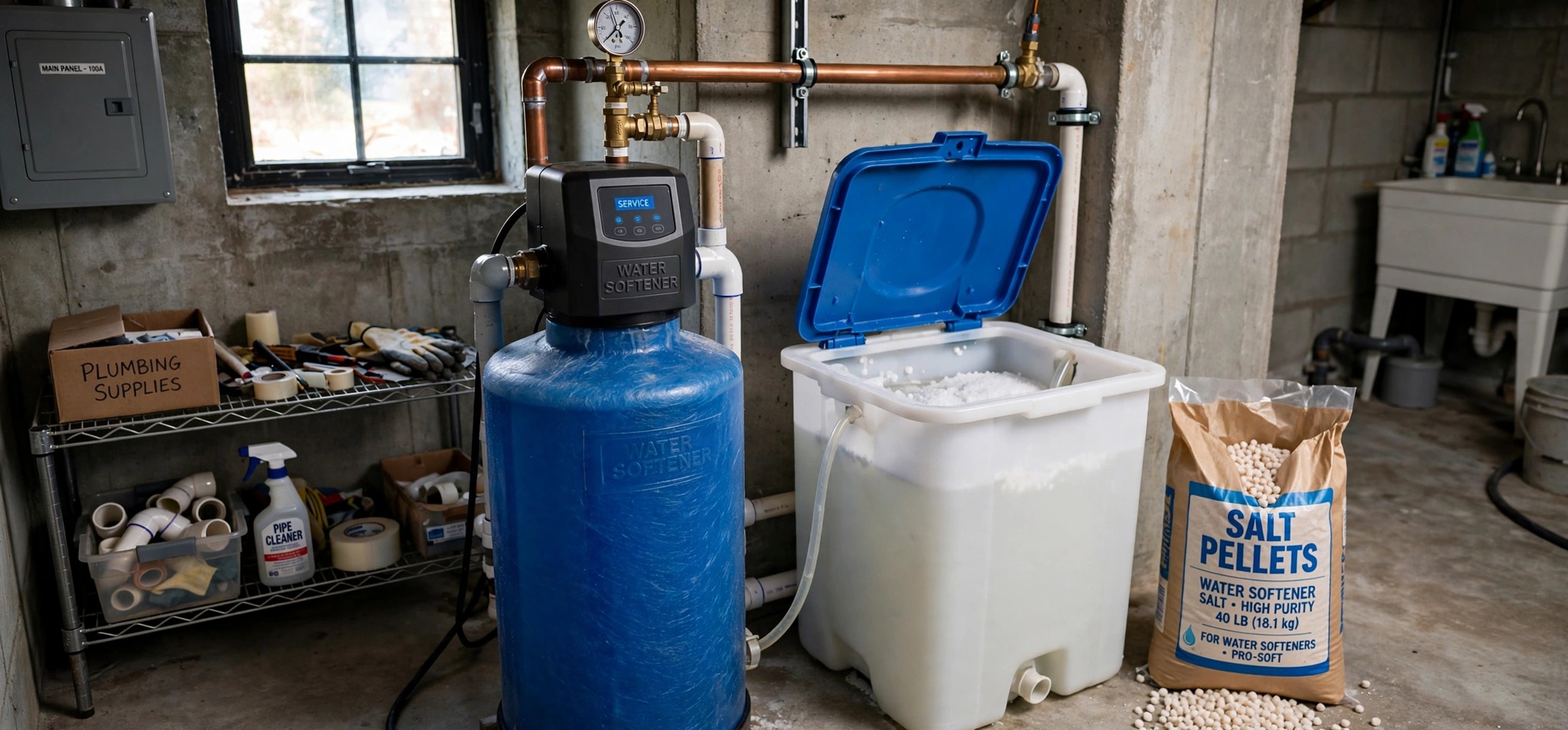
A water softener is a long term investment, so it is natural to wonder how many years you can expect from it. Most well maintained systems last somewhere between 10 and 20 years, but the actual number depends on your water, your household and how the unit is cared for. If you are planning a water softener system installation in Toronto or already own one, understanding what wears out first will help you get the most value from it. Here is what affects softener life in Toronto homes and how to make yours last longer.
The Typical Lifespan of a Water Softener
A water softener is made up of several parts, and each one ages at a different rate:
- Resin beads: usually 10 to 15 years on municipal water
- Control valve and electronics: often 10 to 15 years, sometimes longer with good care
- Resin tank: commonly 15 to 20 years or more
- Brine tank: can last 20 years or longer, since it simply holds salt and water
In many cases, the whole system does not fail at once. A unit may need a resin replacement or a new valve while the tanks remain in good condition.
How Toronto’s Water Affects Softener Life
Hardness Level
Toronto water measures around 120 to 130 milligrams per litre of hardness, or roughly 7 grains per gallon. This is moderately hard, not extreme, which is good news for your softener. Homes in areas with very hard well water force their systems to regenerate far more often, which wears out parts faster. A properly sized softener on Toronto city water usually works at a comfortable pace.
Chlorine in City Water
The bigger factor for Toronto homes is chlorine. The city keeps a small amount of chlorine in the water to protect it as it travels through the pipes. Over years of exposure, chlorine slowly breaks down the resin beads inside your softener. The beads swell, turn soft and lose their ability to capture calcium and magnesium. This is the most common reason resin wears out in homes on municipal water.
Household Water Use
A larger family uses more water, which means more regeneration cycles. Each cycle adds a little wear to the control valve, seals and resin. A softener that is too small for the household will regenerate too often and age faster.
Signs Your Water Softener Is Wearing Out
Watch for these signs that your system may be nearing the end of its life:
- Spots on dishes and scale on fixtures return even with salt in the tank
- Soap and shampoo stop lathering well
- Salt use changes suddenly, either dropping to almost nothing or rising sharply
- Small beads or brown sand appear in faucet aerators or toilet tanks, which can mean broken resin
- The unit makes unusual noises or regenerates at the wrong times
- Water pressure drops after the softener was installed, often due to resin breaking down and packing tightly
- Leaks appear around the valve, tanks or fittings
Before assuming the system has failed, rule out simple problems such as a salt bridge, an empty brine tank or incorrect settings after a power outage.
Repair or Replace?
Age is the first thing to consider. If your softener is under 10 years old and one part has failed, a repair such as a new valve or fresh resin often makes sense. If the unit is 15 years or older, uses outdated timer controls or has several problems at once, replacing it is usually the better value.
Newer softeners use demand based regeneration, which tracks your actual water use and regenerates only when needed. This can save salt and water compared with older models that regenerate on a fixed schedule, whether the resin is exhausted or not.
How to Make Your Water Softener Last Longer
Add Carbon Prefiltration
Since chlorine is the main threat to resin in Toronto, a carbon filter installed before the softener can make a real difference. It removes most of the chlorine before water reaches the resin, which helps the beads last longer. It also improves taste and smell throughout the house.
Choose the Right Size
A correctly sized system regenerates at a reasonable interval, usually every few days. Sizing depends on your water hardness, the number of people in the home and your daily water use.
Use Quality Salt
Evaporated salt pellets or clean solar salt leave less residue in the brine tank than rock salt. Less residue means fewer clogs and a cleaner system.
Clean the Resin Periodically
A resin cleaner added to the brine tank a few times a year helps remove iron, organic matter and other deposits that can coat the beads.
Keep It Protected
Install the softener in a dry space that stays above freezing. Put it in bypass mode during plumbing work or renovations so debris does not enter the resin tank.
Schedule Regular Checkups
An annual inspection can catch worn seals, incorrect settings or failing parts before they cause bigger problems.
What a Long Lasting Softener Gives You
A softener that stays in good working order protects your water heater, dishwasher and washing machine from scale for its entire life. It also reduces cleaning time, soap use and the dry skin many people notice with hard water. Keeping the system healthy means these benefits continue year after year.
Conclusion
A water softener in a Toronto home can last 10 to 20 years, with resin usually being the first part to need attention because of chlorine in city water. Proper sizing, carbon prefiltration, good quality salt and simple yearly checks all help extend that lifespan. Paying attention to early warning signs lets you repair or replace parts at the right time instead of dealing with sudden hard water problems. For more information on water treatment for your home, visit oakswater.ca.







Comment