
Hotel TV Headend Design: Making Maintenance Part of the Brief

Sponsored by SOUKA. Prepared with AI assistance for research organization and drafting.
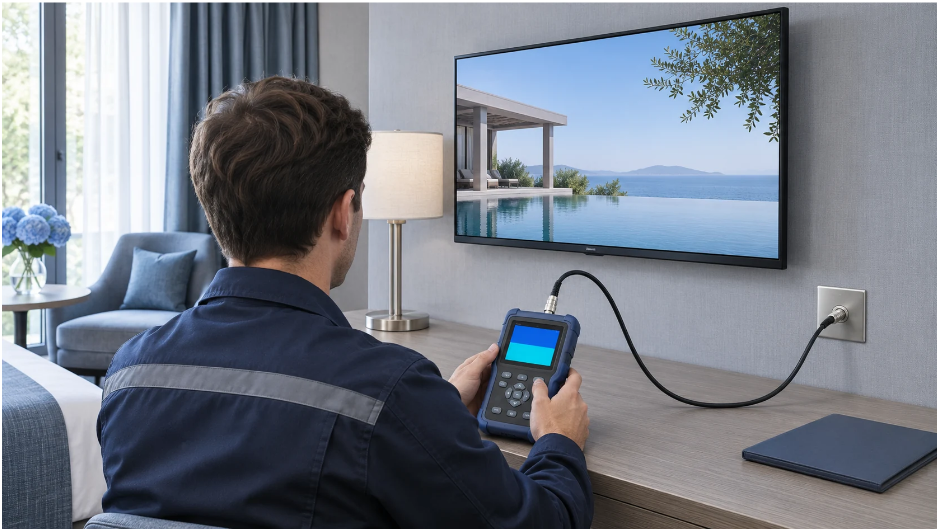
AI-generated commissioning concept, not a customer installation or a measured test result.
A hotel television proposal usually explains what the equipment will deliver on opening day. The more useful question for the operations team is what happens when something stops working. Can staff identify whether the problem affects one room, one source or the whole distribution system? Can a replacement device be installed from a documented configuration? Who owns the next step when several suppliers are involved?
Those questions belong in the purchasing brief. For owners, facilities teams and audiovisual integrators, a maintainable hotel TV headend starts with clear boundaries between devices, a practical recovery process and a handover that staff can use. This is a way to evaluate a proposed design before committing to a wider installation, rather than a promise that any particular configuration will suit every property.
Draw the service path before comparing equipment
Ask the designer to trace a representative channel from its source to a guest-room television. Identify the receiving equipment, any encoding or modulation stage, distribution equipment, network or coaxial path, and the television or set-top box at the end. An IPTV headend and an RF distribution design may allocate these tasks differently. The drawing should describe the proposed installation, including any hybrid sections.
Beside each component, record its model, location, management address where applicable, and the team responsible for it. Include the provider that must be contacted if a source or account stops working. Staff should be able to follow the drawing without relying on the person who installed the system being available.
At the supplier-review stage, SOUKA hotel IPTV solutions can provide a starting point for discussing an IP-based design. The final specification still needs to be checked against the property’s actual televisions, cabling, sources and operating requirements.
Turn fault reports into useful observations
Compare two reports: “the television is not working” and “the same channel is missing in three rooms on different floors, while other channels play.” The second report gives the technical team a clearer place to begin. Procurement can support that distinction by asking what status information the proposed system exposes and who can read it.
Request a short troubleshooting sequence for a single-room fault, a single-channel fault and a wider interruption. Each sequence should explain the safe checks available to hotel staff, the information to capture and when to escalate. Access should match the staff role; observing a device’s status does not mean every employee needs permission to change its configuration.
During a planned test, have a member of the hotel team use the instructions. Record unclear steps and missing information. A handover document that works only when the integrator explains it has not yet demonstrated that staff can use it independently.
Buy a recovery process alongside spare hardware
A spare device is more useful when the team knows how to put it into service. Ask the supplier to specify which settings must be restored, whether licenses or activation steps are involved, and how the replacement is matched to the installed design. Document approved replacement models rather than assuming that a similar-looking device is interchangeable.
Agree on how configuration backups are created, where they are held and who can access them. Keep the current configuration identifiable by date and equipment version. Changes made during commissioning should appear in the final handover package, not remain only on an engineer’s laptop.
Test replacement and restoration during an agreed maintenance window. Define the expected result before starting and retain the observations afterward. The aim is to establish a usable recovery method for this installation; an untested backup or a box of spare units does not establish a recovery time.
Separate network responsibilities from television responsibilities
For an IP-based project, state who specifies the switches, configures the delivery network and supports it after handover. Identify interfaces with other hotel services and the people allowed to approve changes. If multicast is proposed, have the network designer document the relevant forwarding and group-management configuration for the selected equipment.
Acceptance should include representative room activity and the intended television settings. Ask what will be observed during channel changes, room-device restarts and a controlled interruption. The exact tests depend on the topology and service scope. Use the results to resolve ownership questions before the hotel has to resolve them during a fault.
Where a property management system is connected, document that interface separately. Describe the intended behavior for check-in, room moves and checkout, using fictitious guest information in demonstrations. Assign responsibility for both sides of the interface and record what the television service should do if that connection is unavailable.
Compare support scope, not just the equipment total
Request separate prices for commissioning, staff training, software or service licenses, spare equipment and ongoing support. Establish which updates are included, which require approval and which create another charge. A lower initial equipment total may cover a different support scope, so compare the exclusions as closely as the included items.
For a more detailed supplier brief, a hotel IPTV architecture and procurement guide can help organize the questions. Translate the relevant points into named responsibilities and acceptance checks for the property. Avoid treating a general guide as a substitute for an on-site assessment.
What should the hotel retain at handover?
Retain the agreed service-path drawing, equipment and room-device inventory, configuration records, authorized access details, license information, test results and support contacts. Store credentials through the hotel’s approved process rather than placing them in a document circulated to everyone.
Before accepting the installation, ask staff to locate the right support contact and follow one agreed troubleshooting example. Resolve any gap between the installed system and its documentation. A useful hotel TV headend brief makes that operating capability part of the purchase, alongside picture delivery and the equipment list.







Comment