
Random Generator Tools: Free Online Generators for Names, Emails, Addresses, Passwords, and More

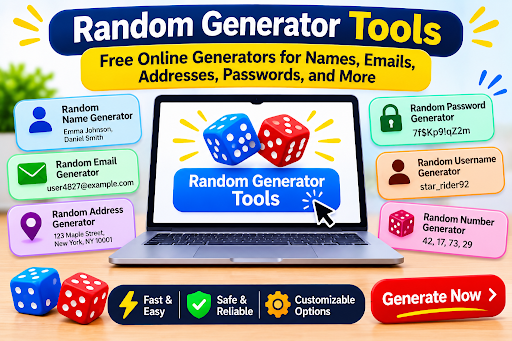
Random data is useful in many situations, particularly when developing websites, testing applications, creating sample databases, and experimenting with software features. Developers, designers, students, and digital professionals often need realistic-looking information without using actual personal details. This is where Random Generator Tools become valuable.
Random Generator Tools are online utilities designed to generate different types of information automatically. These can include random names, email addresses, residential addresses, passwords, usernames, phone numbers, and other sample data. Instead of creating each entry manually, users can generate information within seconds.
A collection of free random generators can make everyday tasks easier by providing convenient access to different data-generation options in one place. Whether someone is testing a registration form or preparing sample records for a development project, these tools offer a practical solution.
What Are Random Generator Tools?
Random Generator Tools are online applications that automatically produce data based on predefined rules or user-selected options. They can generate simple text, numerical values, passwords, identity-style information, and other sample datasets.
For example, a developer building a website registration system may need hundreds of sample names and email addresses to test how the application behaves. Creating this information manually can be time-consuming. A random generator can produce multiple entries quickly, helping developers focus on testing and improving their applications.
Most online generators feature simple interfaces. Users select the type of information they need, customize available settings, and generate results with a single click.
Different Types of Random Generator Tools
One of the biggest advantages of using a collection of random generators is the variety of information available. Different tools serve different purposes depending on the user’s requirements.
1. Random Name Generator
A random name generator creates sample first names, last names, or complete names. These tools can be useful when designing registration forms, creating fictional characters, or preparing demonstration databases.
Developers can use generated names to test how different text lengths appear in user interfaces. Writers and designers may also find them helpful when creating sample profiles or fictional scenarios.
2. Random Email Generator
Random email generators produce sample email addresses for testing and demonstration purposes. They can help developers check email input fields, validate formatting, and test registration workflows.
For privacy and reliability, generated addresses should use reserved example domains or controlled test environments rather than real people’s email addresses. This helps prevent accidental messages from reaching unrelated recipients.
3. Random Address Generator
A random address generator creates sample street addresses, cities, postal codes, and other location-style information.
These generators can be useful for testing checkout pages, delivery forms, customer management systems, and address input fields. Developers can use fictional or clearly designated test addresses to evaluate how applications handle different address formats.
4. Random Password Generator
Password generators create random combinations of letters, numbers, and special characters. They can help users generate stronger passwords for accounts and testing environments.
A useful password generator may allow users to customize password length and choose whether to include uppercase letters, lowercase letters, numbers, and symbols.
For actual account security, users should choose a reputable generator that uses a cryptographically secure random number generator. Sensitive passwords should never be stored or transmitted through untrusted services.
5. Random Username Generator
A username generator creates different combinations of words, letters, and numbers. It can help users find inspiration for usernames or prepare sample accounts for software testing.
Developers may use generated usernames to check character limits, uniqueness requirements, and profile display functionality.
6. Random Number Generator
Random number generators produce numerical values within specified ranges. They are useful for simulations, testing calculations, creating sample datasets, and running development experiments.
Some tools also support decimal values, number sequences, and multiple results in a single operation.
Benefits of Using Free Random Generator Tools
Random Generator Tools offer several advantages for individuals and businesses.
Saves Time:
Generating sample information automatically reduces the need for repetitive manual data entry. Users can create multiple records in seconds.
Simplifies Software Testing:
Developers can use different data combinations to evaluate registration systems, forms, search functions, and database operations.
Protects Personal Information:
Using fictional test information instead of real customer details can reduce unnecessary exposure of personal data during development.
Improves Productivity:
Having several generators available in one collection makes it easier to access different types of sample information without visiting multiple websites.
Supports Different Projects:
From web development and application testing to educational exercises and design demonstrations, random generators serve a wide range of purposes.
Customizable Results:
Many tools allow users to adjust output length, quantity, character types, or other settings according to project requirements.
Why Developers and Testers Need Random Generator Tools
Software development involves repeated testing to ensure applications work correctly under different conditions. Using the same sample information repeatedly may not reveal every possible problem.
Random Generator Tools help developers introduce variety into their testing processes.
For example, a developer creating an online shopping platform may need sample customer names, email addresses, delivery details, and account passwords. These records can help test different sections of the application without relying on actual customer information.
Similarly, testers can generate different input combinations to identify formatting problems, unexpected errors, and limitations in form validation.
Random data can also support database testing by helping developers understand how applications perform when handling larger collections of records.
However, generated data should not automatically be treated as a complete substitute for realistic testing datasets. Some projects require carefully designed edge cases, structured test scenarios, or specialized synthetic data.
Important Features to Look for in Random Generator Tools
Not every random generator offers the same functionality. Before choosing an online service, users should consider several important features.
- Simple Interface:
Clear navigation makes it easier to generate information quickly.
- Multiple Generator Categories:
Access to names, emails, addresses, passwords, and numbers in one collection improves convenience.
- Customization Options:
Users should be able to adjust output settings according to their requirements.
- Bulk Generation:
Generating multiple records at once can save considerable time.
- Copy and Export Options:
Convenient copying or downloading makes it easier to transfer generated data into development projects.
- Privacy and Security:
Reputable tools should explain how generated information is processed and whether any data is stored.
- No Unnecessary Installation:
Browser-based tools allow users to generate sample information without installing additional software.
Are Online Random Generators Safe to Use?
Most basic random generators are straightforward to use, but users should still consider privacy and security.
Never enter real passwords, private customer information, financial details, or confidential business data into an unfamiliar generator. When generating passwords for important accounts, use a trusted security-focused tool that creates values locally or follows strong cryptographic practices.
Similarly, fictional names, addresses, and email addresses should remain clearly identified as test data. They should not be used to impersonate real individuals or create unauthorized accounts.
For developers working with sensitive applications, dedicated test environments and properly managed synthetic datasets are preferable.
Conclusion
Random Generator Tools provide a convenient way to create sample information for development, testing, education, and creative projects. From random names and email addresses to passwords, usernames, and numerical values, these utilities help users generate different types of data without spending time creating everything manually.







Comment