
Healthcare Reputation Management: Protecting Patient Trust


In 2022, a California dental practice pays $23,000 to federal regulators. The trigger is a reply to a one star Yelp review. To defend itself, the office names the patient, describes the treatment and mentions insurance details. The review stays up. The settlement goes on the public record.
That case shows why reputation work in healthcare is its own game. A restaurant fights a bad review with a sharp reply. A clinic, hospital or dental group fights the same fight with one hand tied by HIPAA. And patients judge it harder than any other business they pick.
And they do judge. In the 2026 rater8 Patient Choice Report, a survey of 992 US adults, 55% say they cancel or skip a booking because of online reviews. That is up from 40% a year earlier. Three in four skip any provider rated below 4.0 stars.
How Patients Size Up a Provider Before Booking
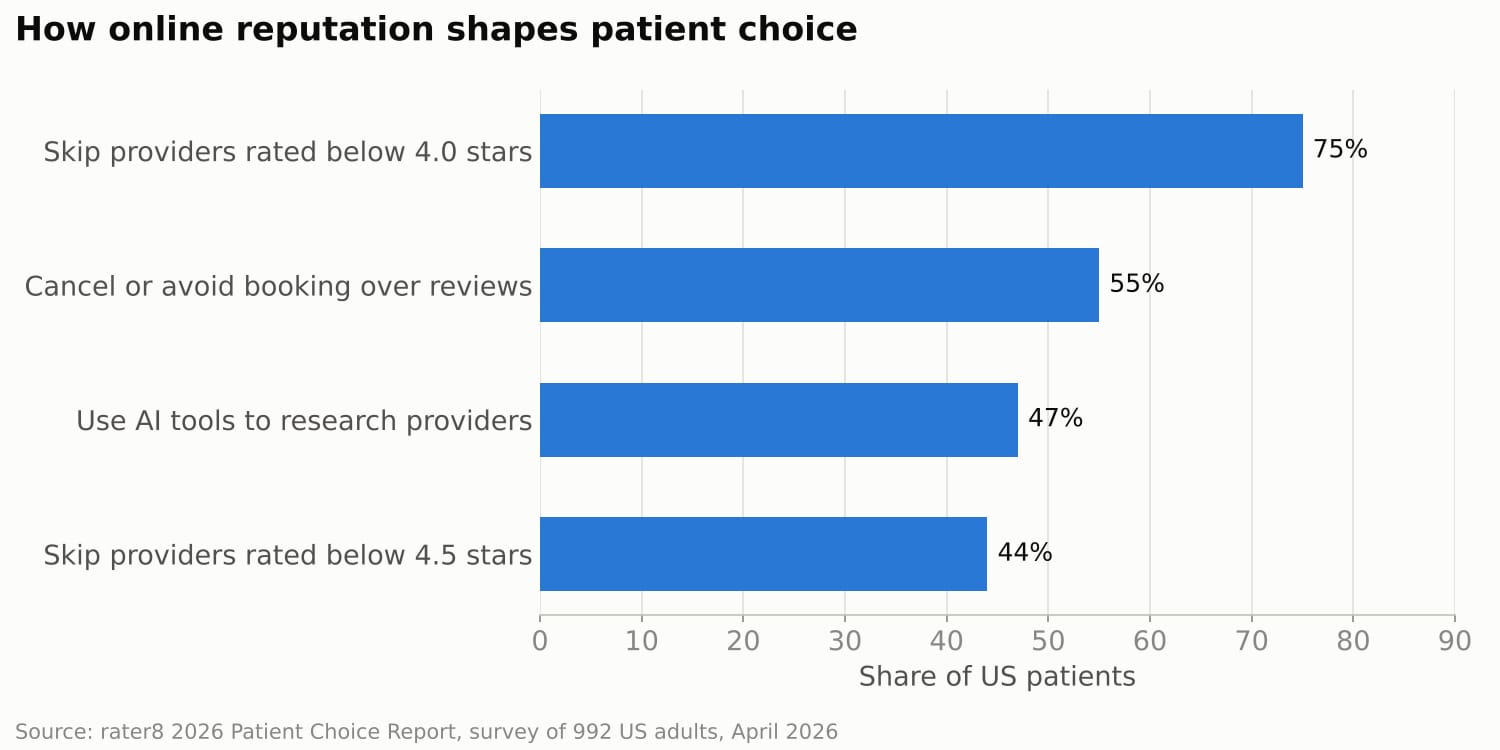
rater8 2026 Patient Choice Report, survey of 992 US adults.
Four numbers from the rater8 survey shape every healthcare reputation plan:
- 75% skip providers rated below 4.0 stars, and 44% skip anyone below 4.5.
- 55% cancel or avoid a booking after reading reviews.
- 47% use AI tools such as ChatGPT to research providers, up from 31% a year earlier. Among patients aged 45 to 60, that figure reaches 64%.
- Only 11% say ratings play zero role in their choice.
The AI number matters most for what comes next. When a patient asks a chatbot for the best bone surgeon nearby, the answer pulls from review sites, directories and news stories. A weak footprint there means the practice misses the short list, even with great outcomes.
The Review Reply That Turns Into a HIPAA Case
Federal regulators keep fining providers for one mistake: confirming patient details in a review reply. Here are three cases from the HHS Office for Civil Rights:
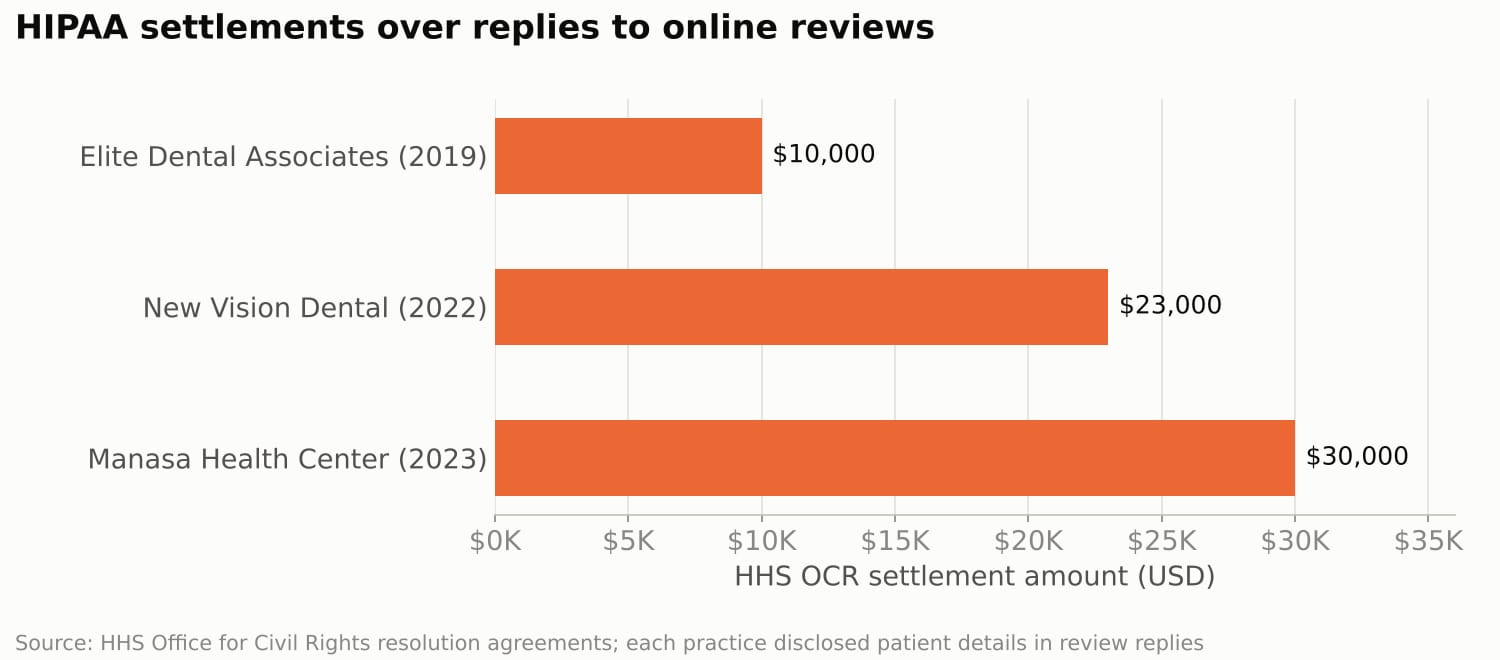
HHS OCR settlements tied to replies to online reviews.
| Provider | Year | Amount | What Went Wrong |
| Elite Dental Associates, Dallas | 2019 | $10,000 | Shared patient names and treatment details in Yelp replies |
| New Vision Dental, California | 2022 | $23,000 | Disclosed names, treatment and insurance details in review replies |
| Manasa Health Center, New Jersey | 2023 | $30,000 | Posted patient health information in replies to negative reviews |
HIPAA settlements over online review replies
The rule behind all three is simple. Even saying the reviewer is a patient counts as a disclosure. The patient is free to share every detail of their visit. The practice shares none.
A Reply Pattern That Stays Inside HIPAA
- Thank the reviewer, with zero mention of a visit, a doctor or a treatment.
- State a general policy, such as we aim to see every patient within 15 minutes of their slot.
- Invite them to call the practice manager by name and direct number.
- Keep the reply under 60 words and skip any argument.
- Have one trained person approve every public reply.
Here is a safe example: Thank you for taking the time to share this. We take wait times seriously and review our schedule every week. Please call our practice manager, Maria, at 555 0100 to talk this through privately.
Replies matter to people who skip writing reviews too. Readers check how a practice handles complaints before they book: 89% of consumers check business responses to reviews before making a decision. A calm, private reply wins more patients than the review loses.
Where Healthcare Reputation Lives Online
A provider shows up on far more review sites than a typical local shop. Each one feeds search results and AI answers.
| Platform | Who Reads It | What to Manage |
| Google Business Profile | Nearly every local patient | Reviews, photos, hours, Q and A, service list |
| Healthgrades and WebMD | Patients comparing doctors | Doctor profiles, ratings, insurance accepted |
| Zocdoc | Patients ready to book | Verified reviews tied to real appointments |
| Yelp and Facebook | Local patients, especially for dental and cosmetic care | Reviews and replies |
| Glassdoor and Indeed | Nurses, doctors and staff you want to hire | Employer reviews and replies |
| Reddit and local forums | Patients asking for honest opinions | Mentions and threads, with zero patient details in replies |
| ChatGPT, Gemini and AI Overviews | Patients asking for recommendations | The sources these tools quote about you |
Healthcare review and reputation platforms
Doctor profiles need as much care as the practice listing. Patients search for a surgeon by name before surgery. A stale Healthgrades page with three old reviews drags down a great Google rating.
Build a Steady Flow of Real Patient Reviews
The best defense against a bad review is a large pile of recent good ones. Most happy patients write a review only when someone asks.
- Send a review request by text within two hours of the visit, while it is fresh.
- Ask every patient, past only the ones you expect to be happy.
- Link straight to the review form on Google, with one tap.
- Rotate requests across Google, Healthgrades and Zocdoc so each profile stays fresh.
- Train front desk staff to mention reviews at checkout.
- Track review volume per provider and per location each month.
The FTC Rules That Apply to Reviews
Since October 21, 2024, the FTC rule on reviews lets the agency seek fines of more than $50,000 per violation. For healthcare brands, four habits now carry real risk:
- Writing or buying fake reviews, including AI written ones.
- Reviews from staff, owners or family members with zero clear disclosure.
- Gifts, discounts or entries tied to leaving a positive review.
- Threats or lawsuits to silence honest bad reviews, or hiding bad reviews on your own site.
The Consumer Review Fairness Act of 2016 also voids clauses in patient forms that ban reviews. Remove any such wording from intake forms.
Handle Fake, False and Abusive Reviews
Some one star reviews are unfair. Rivals, former staff and bots post reviews too. Act on these, but follow the platform process.
- Check the reviewer against your patient records privately, and keep the result private.
- Flag reviews that break platform rules, such as conflicts of interest, spam or hate speech.
- File a removal request through the platform support form with clear evidence.
- Post a short, neutral reply in the meantime, with zero patient details.
- Talk to a lawyer before any legal step. A lawsuit against a reviewer draws more attention than the review itself.
Data Breaches Are Reputation Crises Too
A breach hits trust harder than any review. In 2025, large US healthcare data breaches affect about 138.5 million people, based on HIPAA Journal data. In 2024, the number tops 289 million. The Change Healthcare attack alone affects about 192.7 million people.
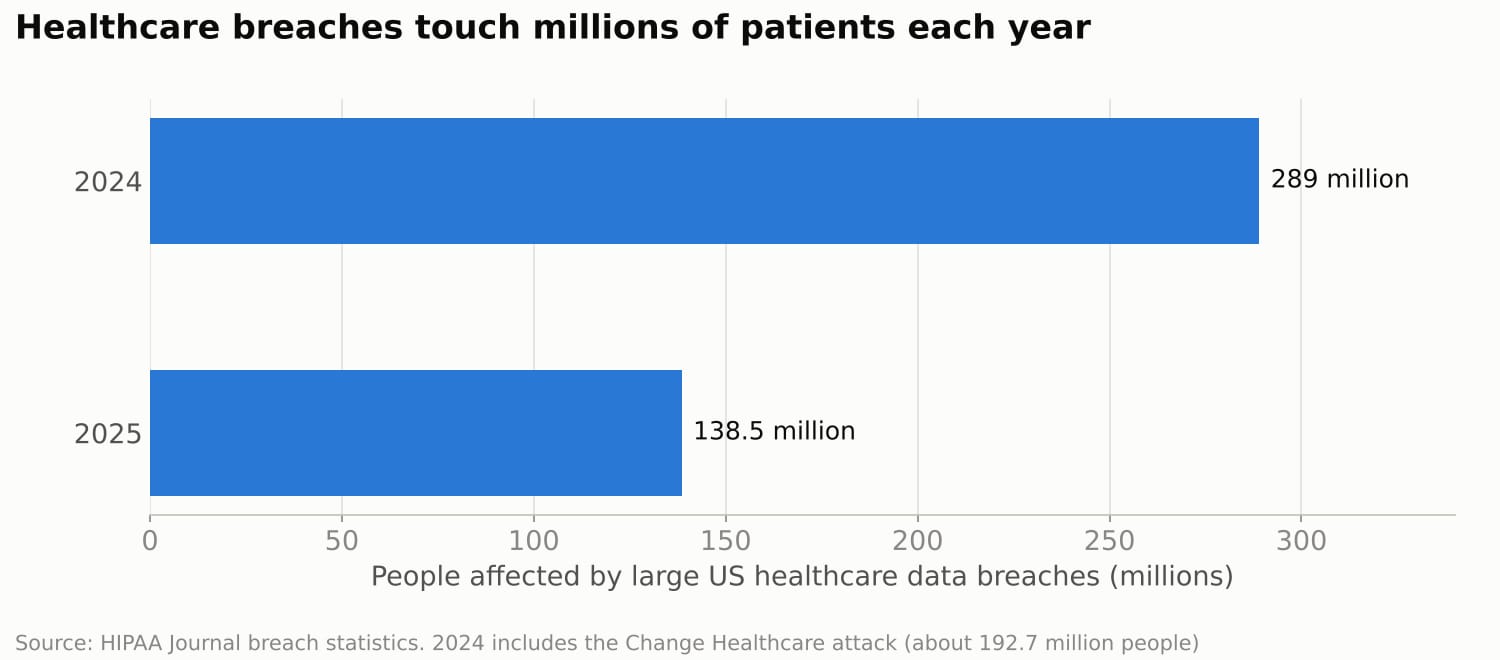
People affected by large US healthcare data breaches.
- Write a breach statement, FAQ page and call script before you need them.
- Tell affected patients within the 60 day limit set by HIPAA.
- Name one spokesperson and give front desk staff set answers.
- Offer clear help, such as credit checks and a direct phone line.
- Post updates on your own site first, so search results show your version.
Control the First Page of Search for Your Name
Patients search a practice or doctor name right before booking. Whatever ranks there shapes the choice: your site, your profiles, news stories and any complaint threads.
- Publish a full bio page for every provider, with degrees, focus areas and a photo.
- Keep a steady blog on conditions and treatments, written or checked by your doctors.
- Claim profiles on big directories and keep details the same everywhere.
- Earn local press with expert quotes, local events and health tips.
A stale blog hurts more than it helps, since old medical advice and broken pages look careless. Before you add new posts, run your existing articles through a free blog health checker from BlogVitals to spot thin, old or broken posts worth fixing first.
Paid search also guards a brand name. When a complaint thread or a rival ad sits above your listing, a brand search ad puts your own message first. Dental groups weighing that choice see the cost gap clearly in this look at google ads vs SEO for dental healthcare.
Staff Reviews Shape Patient Trust
Glassdoor and Indeed reviews from nurses and front desk staff reach patients too, and they hurt hiring. A run of complaints about short staffing reads to a patient as rushed care.
- Reply to employer reviews with the same care as patient reviews.
- Run anonymous staff surveys and act on the top issue each quarter.
- Share real staff stories on your careers page and social channels.
Track Reputation at Scale With AI
A health system with 40 locations and 300 providers gets reviews faster than any team reads them. Many now use ai agents for healthcare to scan each new review, sort it by topic such as wait times, billing or bedside manner, and draft a HIPAA safe reply for staff to approve.
Keep a human on the final click. An AI draft that confirms a visit or a diagnosis creates the same legal risk as a human one.
| Metric | Target |
| Average star rating per location | 4.5 or higher |
| New reviews per provider per month | At least 5 |
| Share of reviews answered | 100% of negative reviews, most positive ones |
| Median reply time | Under 48 hours |
| Top complaint themes | Falling quarter over quarter |
| Brand search first page | Owned or positive results only |
Reputation metrics to track each month
Rebuilding Trust After a Public Crisis
A lawsuit, a viral complaint or a breach leaves a mark that replies alone fail to fix.
- Acknowledge the problem publicly and say what changes.
- Show the change with proof: new staff, new systems, new rules.
- Ask long time patients to share honest reviews of recent visits.
- Publish patient guides that show care and skill.
- Review the brand story itself, from name to messaging.
Some groups use the moment to refresh the brand fully, mainly after a merger or a serious incident. Specialist healthcare branding agencies help with that work, from patient research to a new name, logo and voice that match the care the practice now gives.
Healthcare Reputation Management FAQs
Should a Doctor Respond to a Negative Online Review?
Yes, as long as the reply confirms zero patient details. Thank the reviewer, state a general policy and invite them to call the office privately.
Is It a HIPAA Violation to Confirm Someone Is a Patient in a Review Reply?
Yes. Even saying the reviewer is a patient counts as sharing protected health data.
Are Rewards for Reviews Allowed in Healthcare?
Rewards tied to good reviews, which break the FTC rule. Google and most other platforms also ban rewards for any review.
How Many Reviews Does a Medical Practice Need?
Aim for at least five new reviews per provider each month, with an average of 4.5 stars or higher, since 44% of patients skip providers below 4.5.
How Do I Remove a Fake Review About My Practice?
Flag it on the platform, file a removal request with proof and post a neutral reply while you wait. Keep quiet on whether the reviewer is a patient.
Do AI Tools Affect a Healthcare Reputation?
Yes. 47% of patients use AI tools to research providers, and those tools pull from review sites, directories and news.





Comment