
Buying Low-Voltage Switchgear from China: What to Confirm Before Ordering

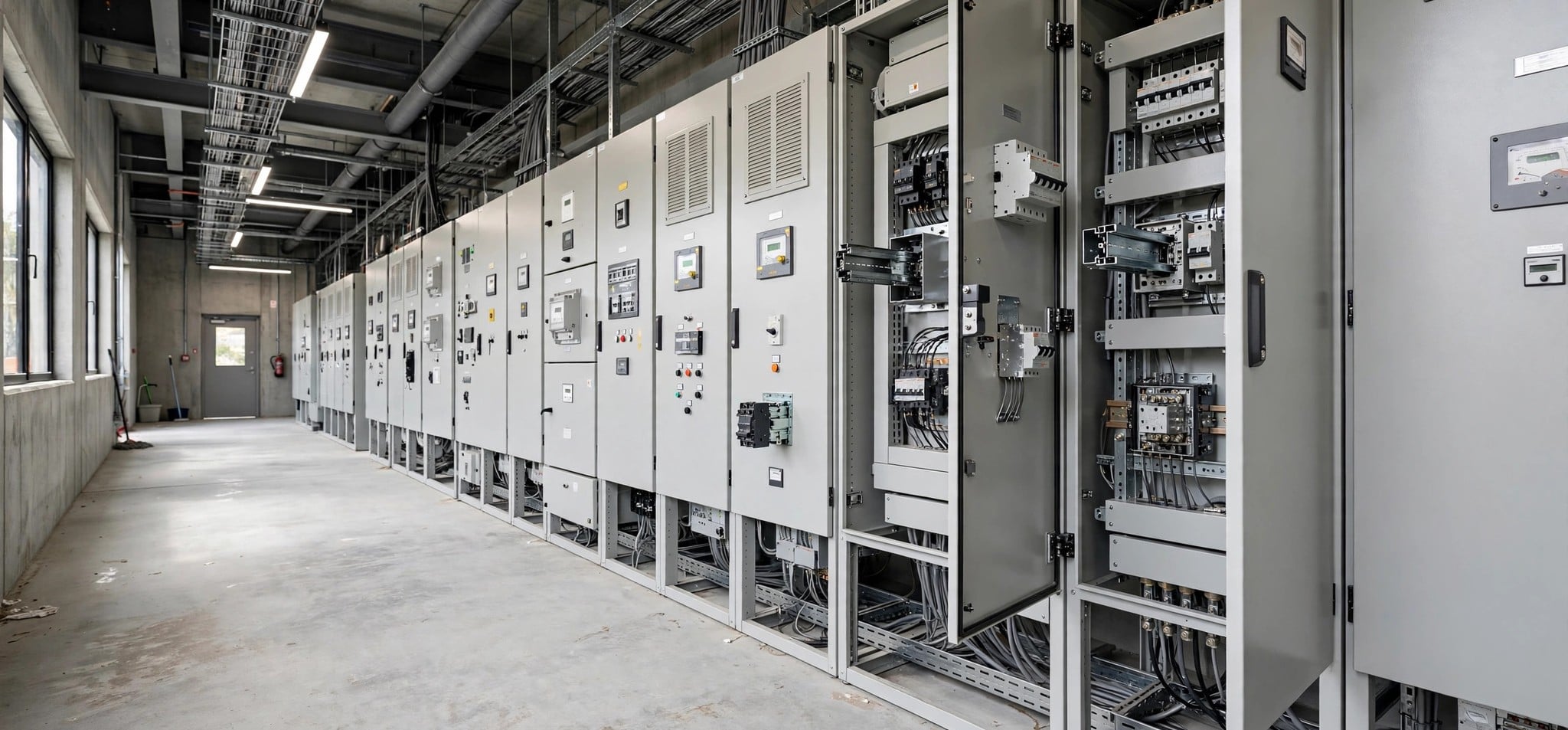
Two quotations for the same switchboard can look comparable until the drawings arrive. One includes metering, spare feeders and a cable compartment; the other assumes these will be supplied or arranged elsewhere. The difference is not always visible in the price summary.
For contractors buying low-voltage switchgear from China, the useful starting point is a shared scope. A single-line diagram helps, but it rarely answers every question needed to build, ship and install an assembly. Before placing an order, buyers should settle five practical issues.
1. Turn the single-line diagram into an agreed supply scope
A single-line diagram shows how the electrical system is organised. It may not specify every component, terminal, control circuit or installation detail.
Send the drawing with a feeder schedule and the project specification. Identify the incoming supplies, bus sections, outgoing circuits and any transfer or motor-control functions. Ask the supplier to list assumptions and exclusions separately. If drawings are incomplete, describe the loads and operating arrangement, then agree what information remains outstanding.
At this stage, an unanswered question is cheaper to resolve than a change to an assembled cabinet.
2. Confirm ratings and component requirements
System voltage, frequency and rated current should be explicit in the quotation. Short-circuit requirements also need to come from the project design, rather than being selected from a catalogue without checking the installation.
Confirm the specified breaker models, protection functions, metering and control requirements. A brand name alone leaves room for different product ranges and accessories. Where alternatives are permitted, ask for the proposed model and the differences before approving a substitution.
Make the required standard and verification documents part of the same discussion. Request evidence applicable to the offered assembly and ratings, rather than relying on a badge or a general statement of compliance.
3. Choose the structure around maintenance needs
Fixed and withdrawable arrangements answer different maintenance and budget priorities. In Zejiefu’s manufacturing experience, consultant-designed projects commonly specify withdrawable units because access and replacement are important. Smaller projects with limited budgets and acceptable planned shutdowns may favour fixed construction.
Withdrawable equipment introduces additional mechanisms and connections to specify and maintain. Buyers should consider spare units, interchangeability and the maintenance team’s familiarity with the system. It does not remove the need for safe isolation procedures.
Zejiefu’s range of low-voltage switchgear configurations provides examples of fixed and withdrawable arrangements. The final choice should follow the operating requirements, not a model name alone.
4. Check the room, cables and environment before approving dimensions
A cabinet that fits on a layout drawing can still be awkward to install. Confirm the delivery route, door openings, handling access and space needed for operation and maintenance.
Cable entry deserves an early decision. Top or bottom entry, cable quantities, termination space and bending requirements can affect the arrangement. Clarify who supplies cable glands, external connections and site-installed accessories.
Also state whether the equipment is indoors or outdoors and describe temperature, dust, humidity and any cooling provisions. These conditions belong in the enquiry, not in a message sent after production has started.
5. Compare the delivery package, not just the cabinet price
Before paying a deposit, request an itemised scope covering equipment, drawings, agreed inspection records, packing, spare parts and shipping responsibilities. Confirm document language and the drawings needed for installation and future maintenance.
For freight, compare quotations using the same named destination and delivery terms. Ask which charges remain outside the supplier’s price and who handles unloading and installation.
The final approval should leave both sides with the same answer to a simple question: what exactly will arrive, and what must the buyer still provide? A quotation with clear assumptions, exclusions and agreed drawings is easier to compare and less likely to create surprises on site.






Comment