
From Home to Road Trips: How a Portable EV Charger Makes EV Life Easier

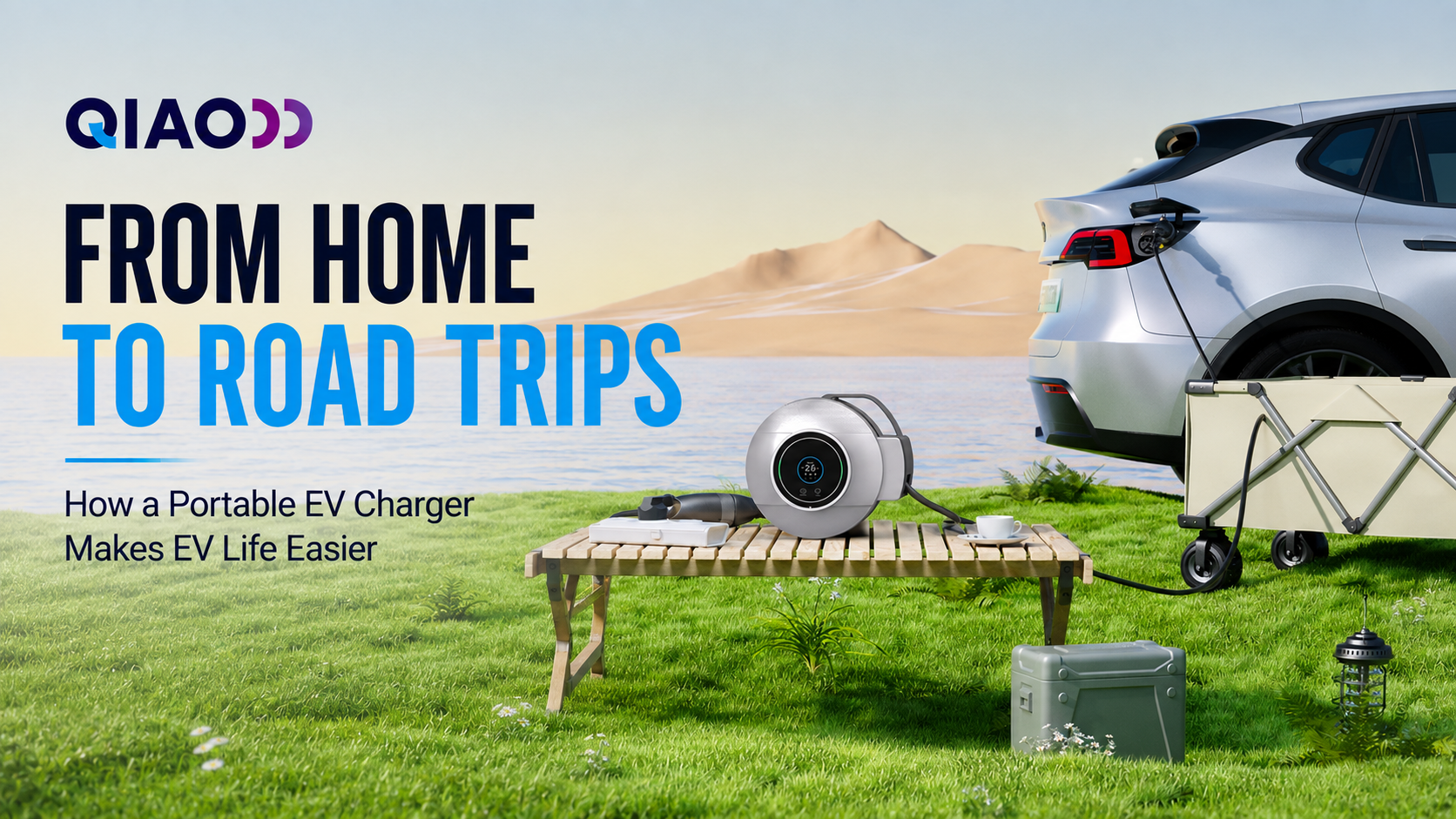
Electric vehicles can make everyday driving cleaner and more convenient, but charging needs are not always predictable. Charging at home may be straightforward, while traveling, visiting family, staying at a hotel, or driving through an area with limited charging infrastructure can require more planning.
A portable EV charger gives drivers an additional way to charge when they are away from their usual setup. Instead of relying entirely on a fixed home charger or public charging network, drivers can carry a compatible charging solution in their vehicle.
The portable charger will not replace public fast charging on every journey. However, it can be a practical option for home use, overnight stays, weekend travel, and situations where a suitable AC power source is available.
Where a Portable EV Charger Fits Into EV Ownership
Most EV owners use a combination of charging methods rather than relying on only one.
A fixed home charger may handle regular overnight charging, while public DC fast chargers provide faster charging during long-distance journeys. A portable charger can complement both by offering greater flexibility at locations that do not have a dedicated EV charging station.
For example, a driver may have a reliable wall-mounted charger at home but occasionally stay at another property. If the destination has a suitable outlet and electrical circuit, a portable charger may make it possible to add range while the vehicle is parked.
This flexibility can be particularly useful for people who:
- Regularly travel between two homes
- Visit family or friends for extended periods
- Stay at holiday homes or rental properties
- Need a charging option for occasional travel
- Want a backup charging method in their vehicle
- Cannot permanently install a fixed charger
The charger still depends on a compatible and safe electricity supply, but it gives drivers more control over where they can consider charging.
How a Portable Charger Can Support Road Trips
Long-distance EV travel usually requires planning around battery range, charging locations, driving conditions, and expected charging time. Public charging networks continue to expand, but individual stations may be occupied, out of service, restricted to certain users, or located away from the final destination.
For most highway journeys, public DC fast charging remains the primary option because it can add range much faster than an AC charger. The main value of a portable charger often comes after the driver leaves the highway and reaches an overnight destination.
A hotel, holiday home, campsite, or private property may not provide a dedicated EV charger. Where a suitable AC connection is available, a portable charger may allow the vehicle to recover some or all of the energy used during the day while it remains parked overnight.
Drivers should obtain permission before using electricity at a hotel, rental property, workplace, or other location they do not own. They should also confirm that the available outlet and circuit are suitable for continuous EV charging.
A Practical Option for Home Charging
A portable EV charger is not limited to travel or emergency use. Many portable models can also support regular charging at home when the charger, outlet, circuit, and electrical installation are suitable for the required continuous load.
This makes a portable charger useful for drivers who want one charging solution for more than one setting. It can be connected to an approved home power source for routine charging and then stored in the vehicle when needed for travel. Some models can also be used with a wall-mounted holder or cable storage accessory at home, providing a more organized setup without turning the charger into a permanently installed wallbox.
However, portability does not remove the need for a safe electrical setup. Repeated EV charging places a continuous load on the circuit. The outlet, wiring, circuit protection, grounding, voltage, and current capacity must all be appropriate for the charging load.
A qualified electrician can assess the installation when there is uncertainty about the condition or capacity of a home circuit.
When a Portable Charger Is Not the Right Solution
A portable charger is useful in many situations, but it is not a universal replacement for every charging method.
It may not be the best choice when:
- A driver needs to add a large amount of range during a short highway stop
- The available outlet or circuit has not been approved for EV charging
- The charger connector does not match the vehicle
- The input plug, voltage, or current does not match the local power supply
- An unapproved extension cord or adapter would be required
- The property owner does not permit EV charging
- The vehicle requires more energy than the available charging time can provide
Drivers should not assume that an outlet is suitable simply because the charger plug physically fits. Plug shape alone does not confirm the circuit rating, grounding condition, voltage, current capacity, or ability to support a continuous charging load.
Portable AC charging is generally most useful when the vehicle will remain parked for several hours, especially overnight. Drivers who need rapid charging during a journey should normally look for an appropriate public fast charger.
What to Check Before Buying
Choosing a portable EV charger requires more than comparing price, appearance, or maximum power. The product needs to match the vehicle, the available electricity supply, and the way the driver intends to use it.
Vehicle Connector and Charging Standard
The charging connector must be compatible with the vehicle. Connector and charging standards vary by vehicle and market, so drivers should confirm the exact requirement rather than relying only on the vehicle brand or country.
Input Plug and Power Supply
The charger’s input plug must match an appropriate power source. Drivers should check the voltage, phase, outlet type, circuit capacity, grounding, and maximum permitted current.
Adapters should only be used when the charger manufacturer approves the complete configuration. A physical connection does not by itself confirm electrical compatibility.
Charging Power
A higher-rated charger does not always charge the vehicle faster. Actual charging power is limited by the charger, available circuit capacity, and the vehicle’s onboard AC charger.
Drivers should compare all three before paying for a higher power rating that their vehicle or electrical supply cannot use.
Adjustable Current
Adjustable current settings can be useful when the charger will be connected to different approved power sources. However, the selected current must remain within the capacity of the outlet, circuit, wiring, and charger configuration.
Cable Length and Storage
The cable should reach the vehicle’s charging port without being stretched or creating an avoidable trip hazard. A practical storage system can also help protect the cable and connector when the charger is carried in the vehicle.
Safety and Environmental Protection
Portable chargers may be moved frequently and used in different conditions. Buyers should review the product’s electrical protections, operating temperature range, enclosure rating, cable construction, certifications, and manufacturer instructions.
Weather resistance does not mean that a charger can be placed in standing water or used without following the manufacturer’s operating requirements.
Choosing a Polrtable Charging Solution from QIAO Charger
QIAO Charger offers portable EV charging solutions for home use, travel, and destination charging. At home, they can support routine charging from a compatible and properly rated power source. When travel plans change, the same charger can be stored in the vehicle and used at a suitable destination, giving drivers one charging solution for multiple settings.
Because vehicle connectors, input plugs, electrical systems, and charging requirements vary between markets, drivers should choose a configuration that matches both their EV and the locations where they expect to charge.
Before selecting a model, it is helpful to compare:
- Vehicle connector and regional charging standard
- Input plug and available electrical supply
- Charging current and power requirements
- Vehicle onboard AC charging limit
- Cable length, handling, and storage
- Safety protections and environmental rating
- Controls and connected features available on the selected model
Features and available configurations can vary by model. Reviewing the complete product specifications helps drivers choose a charger based on real charging conditions rather than maximum power or appearance alone.
Final Thoughts
A portable EV charger can make EV ownership more flexible, but its value depends on where and how it will be used. It can support regular home charging, overnight destination charging, weekend travel, and backup planning when a compatible and properly rated AC power source is available.
It should work alongside—not automatically replace—a fixed home charger or public fast-charging network. Public DC chargers remain more suitable when drivers need to add substantial range quickly, while portable AC chargers are often most useful during longer parking periods.
By checking the vehicle connector, input plug, electrical supply, charging power, safety features, and intended use before buying, drivers can choose a portable charger that fits their actual routine. With the right configuration and a safe power source, portable charging can provide greater confidence from home to the final destination.







Comment