The way people think about earning, investing and building wealth has changed dramatically over the past decade, and Canadian entrepreneur Matthew Fernandez has spent much of his career operating at the intersection of that transformation. Through financial education, cryptocurrency, community building and network driven entrepreneurship, Fernandez has developed a career around a simple belief: understanding modern financial markets is becoming increasingly important for people who want greater control over their financial futures.
For Fernandez, the conversation extends beyond cryptocurrency itself. His broader philosophy is centered on helping people understand how technology, investing and entrepreneurship are reshaping the traditional relationship between employment and income. As financial markets become increasingly accessible, he believes that developing additional skills and understanding alternative income opportunities can give individuals more options in an evolving economy.
That philosophy has been central to the development of RFG, or Revolution to Free Generations, the education and entrepreneurial community Fernandez founded in 2018. What began with a group of ambitious university students has since developed into an international community that RFG says has reached more than 10,000 entrepreneurs across more than 30 countries. The organization combines education around financial markets with entrepreneurship, community development and network growth, creating an ecosystem designed to introduce people to concepts that can otherwise appear difficult to navigate.
The growth of RFG also illustrates another important dimension of Fernandez’s professional identity: his understanding of professional network marketing and community driven business development. Rather than approaching network marketing simply as a method of distribution, Fernandez has treated it as an exercise in leadership, mentorship, communication and developing people capable of building organizations of their own.
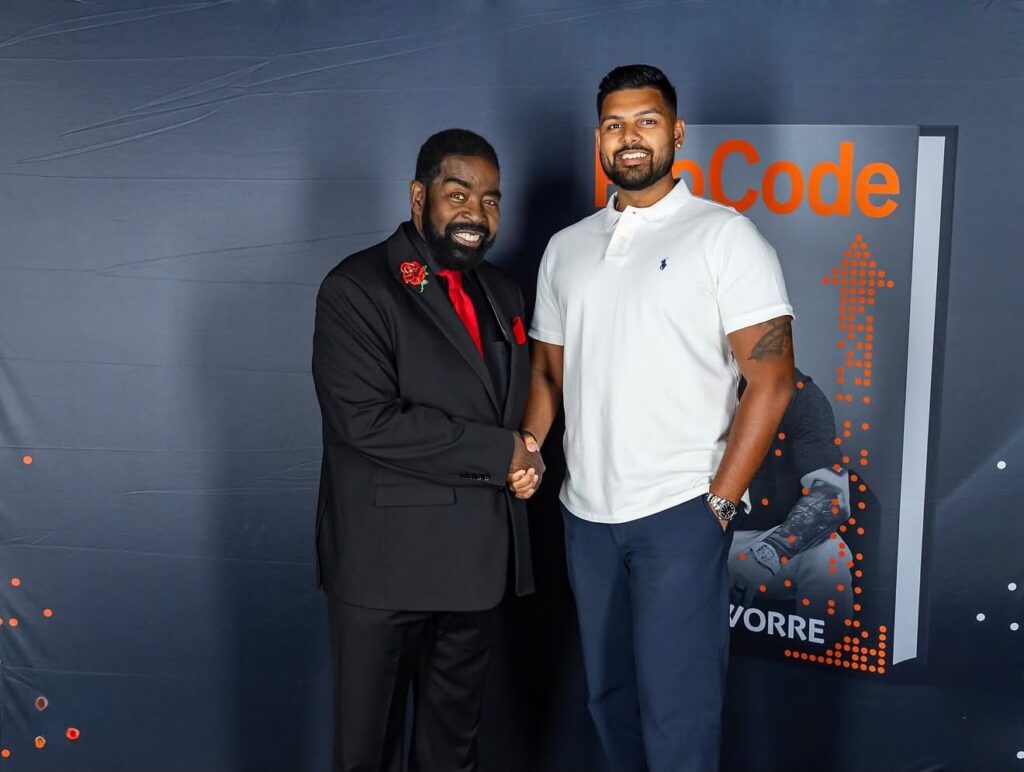
That journey has increasingly placed Fernandez in the company of prominent voices within entrepreneurship, personal development and network marketing. He has had opportunities to connect and share spaces with globally recognized figures such as legendary motivational speaker Les Brown, while also participating in major industry environments alongside established network marketing leaders. In 2025, Fernandez was listed as a panelist at Eric Worre’s Go Pro Experience, an event built around some of the profession’s leading trainers, entrepreneurs and producers.
Exposure to individuals operating at that level has complemented Fernandez’s own experience of building communities and developing entrepreneurs internationally. It also reflects the direction of his career: moving beyond being simply a participant in an industry toward becoming a recognized voice within the wider conversation around entrepreneurship, financial literacy and modern wealth creation.
His involvement in cryptocurrency has expanded beyond education as well. Fernandez works within Done.com Inc.’s OTC business, where the company publicly identifies him as its Head of OTC. The business facilitates cryptocurrency transactions for qualifying individuals and companies looking to move between traditional currencies and digital assets, subject to applicable compliance and regulatory requirements.
That experience places Fernandez within an increasingly important segment of the digital asset economy. As cryptocurrency continues to mature, the challenge for businesses operating in the space is no longer merely providing access to digital assets. It is creating an experience that makes participation simpler while delivering the level of service, professionalism and infrastructure expected by increasingly sophisticated clients.
Across both sides of his career, Fernandez appears focused on solving different parts of the same challenge. One is access, creating ways for people to participate in emerging financial markets. The other is knowledge, giving people a stronger foundation from which to understand the opportunities and risks associated with those markets.
This combination of education, technology, leadership and community building has become the foundation of Fernandez’s professional journey. It has allowed him to develop a presence that crosses financial markets, cryptocurrency and professional network marketing rather than being defined entirely by any one of them.
For Fernandez, the long term opportunity is ultimately larger than any individual cryptocurrency, company or market cycle. His ambition centers on changing how a new generation thinks about money, ownership, entrepreneurship and financial education.
As financial technology continues to reshape the global economy, Matthew Fernandez is positioning himself within that evolution, building communities, developing entrepreneurs and helping create greater access to a financial world that is changing faster than ever before.