








Technology

From CRM Modernization to AI-Powered Sales: A Conversation with Deepak T. Bahuleyan on Enterprise Technology Innovation

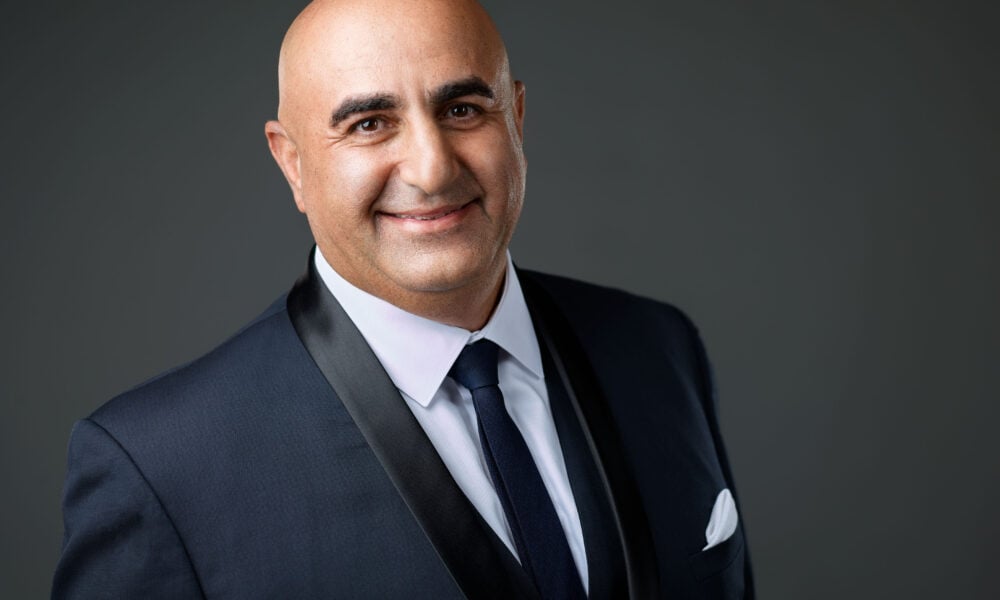
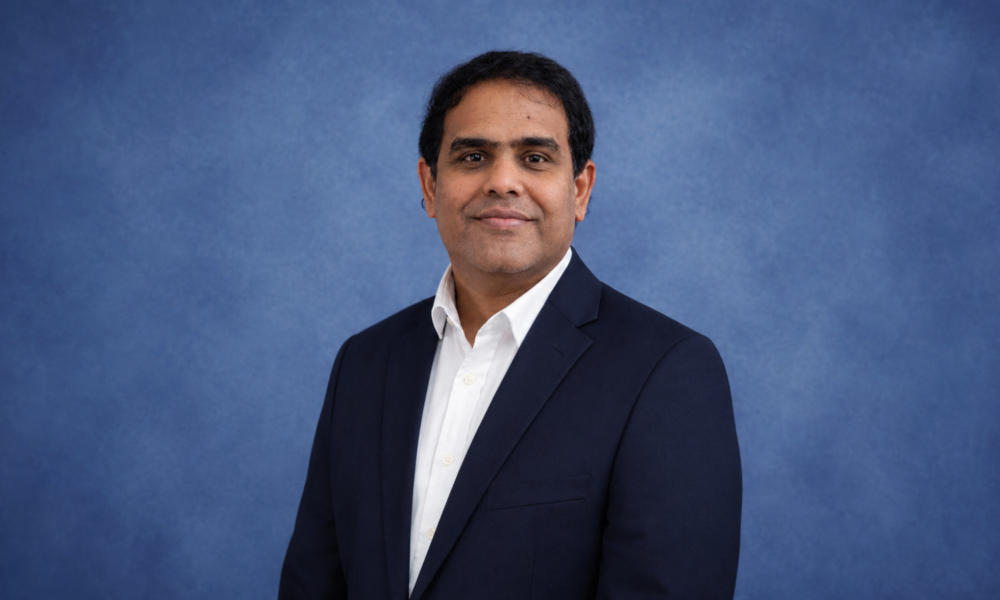
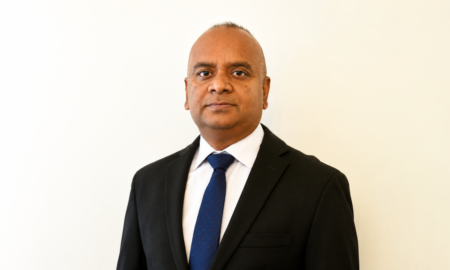
Deepak T. Bahuleyan

Enterprise technology leader Deepak T. Bahuleyan discusses his journey from software engineering to CRM architecture, the evolution of enterprise applications, and how AI is reshaping sales, service, and customer experience.

In today’s enterprise technology landscape, customer relationship management is no longer just a system of record. For large organizations, CRM has become a strategic operating layer that connects sales, service, finance, marketing, compliance, analytics, and increasingly, artificial intelligence.

Deepak T. Bahuleyan has spent more than 18 years designing, modernizing, and scaling CRM and enterprise application solutions across global technology organizations. His career spans software engineering, enterprise applications, CRM architecture, middleware integrations, configure-price-quote systems, service platforms, commerce solutions, and AI-enabled business transformation.

In this conversation, he reflects on his professional journey, lessons learned from large-scale CRM modernization, and the future of AI-powered enterprise systems.

The Journey into Enterprise Architecture

TechBullion: Deepak, how did your journey in technology begin?

Deepak T. Bahuleyan: My journey began in software engineering, where I worked with Java, web applications, databases, and enterprise systems. Early in my career, I learned the importance of understanding not just the code, but the business problem behind the code. That mindset shaped the way I approached every project after that.

As I moved deeper into CRM and enterprise application architecture, I saw how powerful these platforms could be when implemented correctly. CRM was not just a sales tool; it was a flexible enterprise platform that could support sales operations, service workflows, partner ecosystems, marketing processes, approvals, reporting, integrations, and customer experience. That combination of business value and technical complexity drew me into enterprise CRM architecture.

TechBullion: What makes CRM architecture different from traditional application development?

Deepak T. Bahuleyan: Traditional application development often starts with building everything from scratch. CRM architecture is different because it requires balancing platform capabilities, configuration, custom development, integration, data model design, security, governance, and user experience.

A strong CRM architect must understand automation, APIs, data models, integrations, security, performance, release management, and user adoption. At the same time, they must understand how sales, service, finance, marketing, and customer success teams actually work. The best solution is not always the most technically complex one. Often, the best solution is the one that simplifies a process, reduces manual work, improves adoption, and scales cleanly.

Navigating Large-Scale CRM Modernization

TechBullion: You have worked on major CRM transformation initiatives. What has been one of the most important lessons?

Deepak T. Bahuleyan: One major lesson is that CRM transformation is never only a technology project. It is a business transformation project.

When organizations migrate from legacy systems or consolidate multiple CRM platforms, the technical work is only one part of the challenge. You also have to align stakeholders, clean data, simplify processes, manage change, train users, and create a platform that supports future growth.

For example, merging CRM capabilities across large organizations requires careful planning around data, integrations, quoting, service workflows, reporting, security, and user experience. If these areas are not designed properly, the platform can become difficult to maintain. But when the architecture is done correctly, CRM can reduce total cost of ownership, improve customer experience, support revenue growth, and create a foundation for automation and AI.

TechBullion: How do you approach legacy CRM modernization?

Deepak T. Bahuleyan: The first step is understanding why the legacy system exists and what business capabilities it supports. Many legacy systems are deeply embedded in daily operations. They may contain years of business logic, integrations, custom workflows, reports, and tribal knowledge. A successful modernization effort requires discovering those dependencies before replacing the system.

My approach is to identify core business capabilities, simplify processes where possible, modernize the data model, design scalable integrations, and reduce unnecessary customization. It is also important to involve business users early. The goal should not be to copy every old feature into a new platform. The goal should be to create a better operating model.

Integrations and Complex System Architecture

TechBullion: Why are integrations so critical in enterprise CRM?

Deepak T. Bahuleyan: CRM does not operate in isolation. Sales teams need product, pricing, contract, billing, tax, and customer data. Service teams need case history, entitlement information, product details, and communication channels. Finance teams need accurate quoting, invoicing, tax, and revenue data. Executives need unified reporting.

Integrations make that possible. A well-designed integration strategy allows systems to exchange data reliably, securely, and at scale. Poor integrations create duplicate data, manual work, delays, and errors. Strong integrations create operational efficiency and trust in the platform. In modern enterprises, integration architecture is one of the most important foundations for digital transformation.

TechBullion: One of your initiatives involved tax compliance automation. What made that work impactful?

Deepak T. Bahuleyan: Tax compliance is an area where accuracy, automation, and risk reduction are extremely important. When tax rules vary across jurisdictions, manual processes can create financial exposure and operational burden.

By integrating CRM, finance, and tax automation capabilities, the process became more streamlined and scalable. The impact was meaningful because the work did not just improve a technical workflow. It helped reduce compliance risk, improve operational efficiency, and lower financial burden. That is the type of work I enjoy most: technology that directly supports measurable business value.

TechBullion: You have also supported system separation during a corporate transition. What did that experience teach you?

Deepak T. Bahuleyan: System separation during a corporate transition is a significant undertaking because it involves separating data, integrations, business processes, security models, and operational workflows. CRM is often central to many business functions, so the transition has to be handled carefully.

It taught me the importance of clean architecture, data governance, migration planning, dependency mapping, and cross-functional collaboration. A system separation is not just about copying records into a new environment. It requires understanding dependencies, redesigning integrations, validating data, and ensuring that business teams can continue operating without disruption.

The Future: AI and the Evolution of Enterprise Applications

TechBullion: How has enterprise CRM evolved since you started working with the platform?

Deepak T. Bahuleyan: CRM has evolved tremendously. Earlier implementations often focused on sales tracking, service management, custom objects, workflows, basic automation, and reporting. Over time, CRM platforms expanded into advanced automation, configure-price-quote capabilities, customer portals, commerce experiences, analytics, DevOps, integrations, and now AI.

The biggest shift is that CRM is moving from being a system where users enter data to a system that can recommend actions, automate tasks, summarize information, support decision-making, and improve productivity. That shift is very exciting.

TechBullion: What role do you see AI playing in CRM?

Deepak T. Bahuleyan: AI will become a major layer of enterprise CRM. Sales representatives do not need more screens or more manual tasks. They need better prioritization, better recommendations, and faster access to the right customer insights.

Service teams need faster routing, summarization, knowledge recommendations, and coaching. Managers need better visibility into pipeline, performance, risk, and customer behavior.

AI-enabled CRM can support use cases such as lead nurturing, case routing, sales coaching, next-best-action recommendations, customer summarization, and intelligent workflow automation. But AI must be implemented responsibly. It needs clean data, strong governance, human oversight, security controls, and measurable business objectives.

TechBullion: Why are centralized recommendation tools important for sales teams?

Deepak T. Bahuleyan: Sales teams often struggle because they receive too many leads, too many alerts, and too much fragmented information. The challenge is not only generating data; it is helping representatives know where to focus.

A centralized recommendation tool can bring signals from multiple sources into one experience. It can help prioritize leads, suggest next best actions, improve lead quality, and give sales representatives more focused selling time. That is where CRM, data, and AI can come together to improve productivity and support better decision-making.

TechBullion: What advice would you give to companies implementing AI in CRM?

Deepak T. Bahuleyan: Start with the business problem, not the technology. AI should not be implemented simply because it is new. It should solve a real problem, such as reducing case resolution time, improving lead conversion, increasing sales productivity, reducing manual research, or improving customer experience.

Second, invest in data quality. AI is only as good as the data and processes behind it. Third, keep humans in the loop. AI should assist employees, not create blind automation. Finally, measure outcomes. If the AI use case does not improve productivity, accuracy, speed, or customer experience, then it needs to be redesigned.

Leadership and Looking Ahead

TechBullion: What qualities make a successful CRM and enterprise technology leader today?

Deepak T. Bahuleyan: A successful enterprise technology leader needs both technical depth and business empathy. You have to understand architecture, integrations, security, data, automation, and development, but you also have to understand user pain points.

Leadership is about translating business needs into scalable technology decisions. It is also important to build strong teams. Enterprise platforms are too large for one person to manage alone. You need engineers, administrators, analysts, architects, product owners, and business stakeholders working together with shared goals.

TechBullion: Looking ahead, what excites you most about the future of enterprise applications?

Deepak T. Bahuleyan: I am excited about the convergence of CRM, AI, automation, and integration. Enterprise applications are becoming more intelligent and connected. The future will not be about isolated systems. It will be about intelligent platforms that understand context, recommend actions, automate routine work, and help employees make better decisions.

For me, the goal is always the same: build systems that are scalable, secure, useful, and aligned with business value. Technology should simplify work, improve customer experience, and help organizations grow. That is what continues to motivate me.

Comments

TechBullion

FinTech News and Information

Copyright © 2026 TechBullion. All Rights Reserved.

To Top

Pin It on Pinterest

Share This