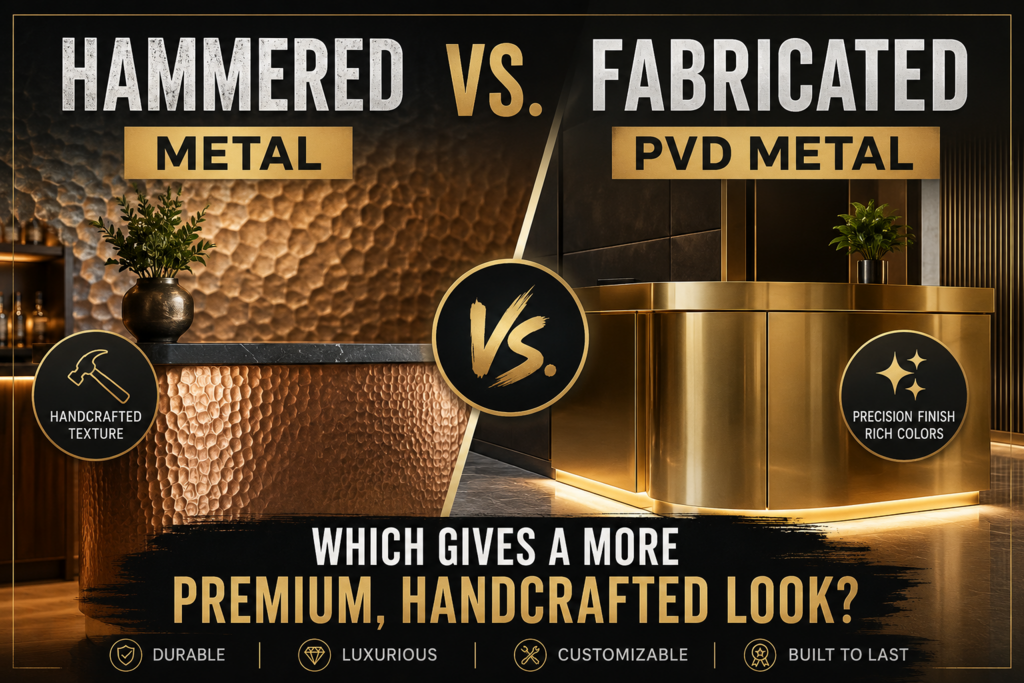
When clients ask for a “premium, handcrafted” metal finish, designers usually land on one of two routes: a hammered texture that mimics the look of hand-forged metal, or custom PVD-fabricated stainless steel that combines shaped forms with a rich, jewel-tone colour coating. Both deliver a high-end result, but they get there in very different ways and each suits a different kind of project.
Here’s how to tell them apart and decide which one belongs in your next brief.
What Is a Hammered Metal Finish?
A hammered finish replicates the irregular, dimpled surface left behind by traditional hand-forging. The indentations are directionless and slightly random, which is exactly what gives the material its handcrafted, artisanal character. Unlike a smooth or mirror-polished sheet, hammered metal catches and diffuses light unevenly across its surface, so it never looks flat or sterile.
Where it shines:
- Bar counters, range hoods, and F&B interiors going for a rustic or industrial vibe
- Door inlays, furniture accents, and decorative panel inserts
- High-touch surfaces, since the irregular texture is naturally forgiving of fingerprints and light scratches
- Projects with a warm, tactile design language rather than a sleek, minimal one
You can review the available grades and thickness options on the hammered metal sheet product page if this texture fits your brief.
What Is Fabricated PVD Metal?
Fabricated PVD metal is a different proposition altogether. Rather than a surface texture applied to a flat sheet, it’s custom stainless steel fabrication cutting, forming, and welding finished with Physical Vapour Deposition (PVD) coating in colours like gold, rose gold, bronze, or black. The “premium” feel here comes less from texture and more from precision shaping combined with a coloured, mirror-like or brushed finish that doesn’t fade, tarnish, or wear off the way electroplating does.
Where it shines:
- Custom reception counters, showroom fixtures, and jewellery display units
- Elevator door surrounds, signage frames, and architectural trims that need exact dimensions
- Retail and hospitality installations where a specific brand colour (gold, black, bronze) needs to be replicated precisely
- Projects that require welded joints, curves, or bespoke shapes rather than flat sheet cladding
Because PVD coating is applied through a vacuum-based molecular bonding process rather than paint or plating, it holds up far better under daily handling, a meaningful advantage for handrails, counters, and door frames. You can see examples of custom shapes and colour finishes on the stainless steel fabrication with PVD page.
Side-by-Side: Which Feels More “Premium”?
| Factor | Hammered Metal | Fabricated PVD Metal |
| Source of “premium” feel | Organic surface texture | Precision shaping + rich colour |
| Customization | Sheet form, limited to flat/curved panels | Fully custom shapes, welds, and dimensions |
| Colour options | Natural steel tone, occasionally PVD-coated | Wide PVD colour range (gold, rose gold, bronze, black) |
| Best for | Rustic, artisanal, tactile interiors | Sleek, branded, showroom-grade installations |
| Maintenance | Very forgiving of scratches/fingerprints | Durable coating, but a smooth finish shows fingerprints more |
| Typical use case | Panels, counters, furniture accents | Structural trims, custom fixtures, showroom fittings |
Can You Combine Them?
Often, yes and some of the most striking installations do exactly that. A hammered metal panel as a textured backdrop paired with gold PVD-fabricated trims or a counter edge creates contrast between raw texture and refined colour, giving a space both warmth and polish. This combination works particularly well in jewellery showrooms, boutique retail, and upscale F&B interiors where the goal is to feel bespoke rather than mass-produced.
How to Decide
Ask which of these matters more for your project:
- Do you need a textured surface finish, or a custom-shaped fixture? Hammered sheets are for cladding and panelling; PVD fabrication is for built forms counters, frames, trims.
- Is brand colour non-negotiable? If a client’s brand palette calls for a specific gold or bronze tone, PVD fabrication offers more control than a natural hammered finish.
- What’s the daily wear profile of the surface? High-touch areas (counters, handrails) benefit from hammered’s forgiving texture or a durable PVD coat both hold up better than polished mirror finishes in busy spaces.
Final Thoughts
Neither finish is objectively “more premium” ; they express luxury differently. Hammered metal leans into imperfection and craftsmanship; fabricated PVD metal leans into precision and colour. The strongest interiors often use both: hammered texture for warmth and depth, PVD-coated fabrication for the structural and colour-critical elements that need to hold their finish for years.