
How a 3D Product Configurator Boosts Sales

When was the last time you purchased a customisable product online and felt 100% confident based on a single photograph? While the photo may have been taken by a professional photographer, you may still have found yourself squinting at the screen and checking multiple websites to understand the exact color and material.
This kind of uncertainty is impacting companies everyday and your business may be one of them. The solution is actually much less complicated than you think as all you need to do is invest in a 3D product configurator. Technology companies like INHAABIT enable customers to visualise products in their space, with the assistance of 3D visualisation and Augmented Reality (AR).
Understanding the Shift to Interactive 3D Shopping
The moment a purchase gets even slightly complex, static images start showing their limits fast. That’s the gap interactive shopping fills. Here’s why businesses that understand this are making a move to 3D product configurators:
- Meeting high consumer expectations: Brands still leaning entirely on static photography are quietly asking customers to trust them blindly. Fewer and fewer people are willing to do that. This is why shopping through 3D product configurators is essential.
- Simplifying complex buying decisions: Live visual feedback helps customers know immediately what’s right. That clarity is enormously valuable to someone standing at the edge of a significant purchase.
- Bridging the digital retail gap: The one thing a physical store has always had over e-commerce is the ability to let you handle the product. Interactive 3D tools are the closest digital retail has ever come to replicating that experience.
- Gaining a powerful competitive edge: Moving to interactive visualisation doesn’t just improve customer experience, it repositions your brand in a way that’s immediately visible and felt. That matters more than most businesses realise.
Key Ways a 3D Product Configurator Drives Higher Conversion Rates
Using a 3D Product Configurator turns passive web page scrolling into an engaging activity. Providing customer creative control directly eliminates standard friction points.
Eliminating Purchase Doubt with 360-Degree Visualisation
A modular configurator platform thoroughly addresses the uncertainty customers feel when shopping online. A homeowner using outdoor kitchen configurators to plan their backyard renovation can see, with real precision, how every element fits together before an order is placed. A renowned outdoor kitchen company in Europe, Brabura Grills, partnered with INHAABIT, giving their customers a better experience by combining grills, sinks, kitchen cabinets, and more, resulting in a great layout.
Boosting Customer Engagement and Time-on-Site
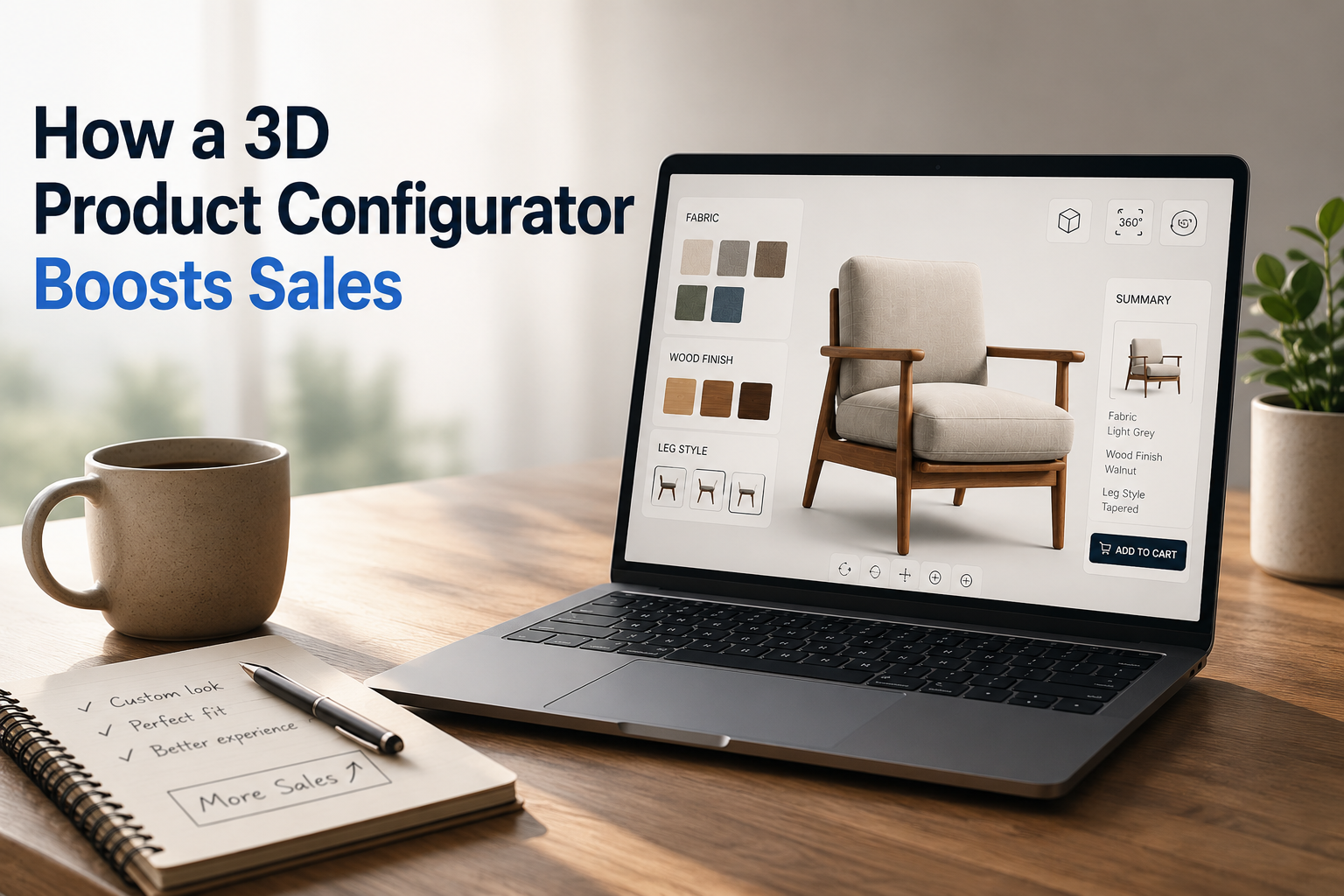
A configurator like the 3D furniture configurator lets customers swap fabrics, wood finishes and leg styles in real time. This creates an engaging experience, which makes people stay longer and purchase the product. A popular online retailer, Temple & Webster partnered with INHAABIT, which resulted in its customers being able to easily create modular sofa layouts and purchase furniture without needing to visit a showroom.
Personalising a Product Leads to Emotional Ownership
There’s a specific psychological shift that happens when someone adds their own customisations to a product. Twenty minutes of seeing a product with a great quality 360 degree product viewer, adjusting colours, selecting materials, and fine-tuning details makes the customer feel that the thing on their screen seems like what they imagined. That emotional ownership is one of the most powerful conversion drivers that exists in e-commerce.
Reducing Costly Product Returns and Exchanges
Every return tells a story. Usually, it’s the same story that the product arrived, and it wasn’t what the customer had pictured. A 3D product configurator closes that gap with a precision that photography simply cannot match. For example, when a customer uses a 3D furniture configurator to match a sofa against their actual room colours, what arrives is what they configured, not a surprise. Customer satisfaction increases significantly this way.
Increasing Average Customer Spend With Fully Customised Products
Shoppers will pay more for items that feel personal. That’s not a marketing assumption but a consistent, observable human behaviour across almost every product category. A product configurator with dynamic pricing makes the logic of premium upgrades immediately visible and tangible. Customers can see what a better material looks like and what it costs, simultaneously, in real time.
Creating a Shareable Social Media Experience
The 3D bathroom planner deluxe helps customers create a bathroom project easily with the drag and drop option, and they don’t even need any complex skills to use it.
When someone shares their bathroom planner’s layout or posts a bathroom renovation they’re proud of, that content carries authenticity that no paid advertisement can fake. It drives them to your e-commerce store and results in qualified traffic that your ad budget didn’t have to buy.
Conclusion
A 3D Product Configurator isn’t a feature you add to make your e-commerce website look impressive at a board presentation. It’s a tool that reaches directly into the moments where customers hesitate and resolves these moments with clarity and confidence.
The return on that investment shows up in conversion rates. It is reflected in order values. It changes the return rate, making it less of a constant, expensive thing to worry about. And it shows up in customers who arrive knowing what they want because they already built it themselves. If you’re looking to deliver a more immersive online shopping experience, INHAABIT helps businesses bring products to life with advanced 3D product configurators and Augmented Reality solutions.





Comment