
How to Get Peak Performance and Efficiency from PVC Profile Extrusion

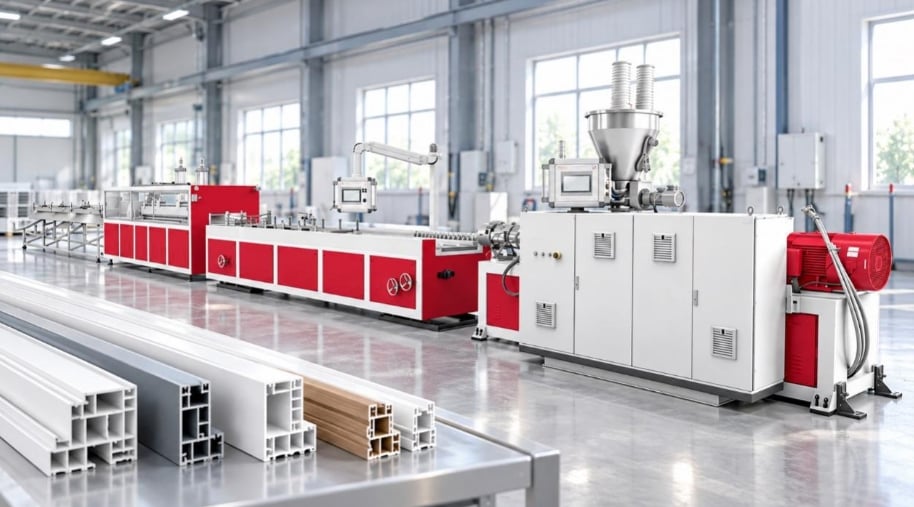
Is your PVC profile extrusion line running faster but still producing inconsistent quality, high scrap, or excessive energy consumption? Peak performance is not about maximum speed alone—it depends on how efficiently the entire system works together. This article explains how to diagnose performance issues, optimize key operating conditions, improve line efficiency, and determine when your PVC profile production line has reached its practical performance limit.
What Does Peak Performance Mean in PVC Profile Extrusion?
Simply put, peak performance is never about chasing theoretical top speeds. Instead, it means operating the entire PVC profile extrusion line at its optimal operating equilibrium—balancing throughput, dimensional precision, and power efficiency. In industrial practice, this standard rests on two core pillars.
The first pillar is stable output and consistent profile quality. A high-efficiency PVC profile extrusion machine delivers predictable hourly capacity, maintaining stable motor load and temperatures so that wall thicknesses and internal ribs remain locked within tight tolerances without endless manual adjustments.
The second pillar is a low scrap rate and minimal specific energy consumption. High material conversion ensures resin feeds directly into prime profiles with minimal start-up waste, while motor and heating power are utilized efficiently to lower specific energy consumption (kWh/kg).
Diagnose PVC Profile Extrusion Performance Before Making Adjustments
Successful line optimization is never built on guesswork; it requires rigorous data. Before optimizing extruder mechanics, thermal balance, or downstream tooling, technicians must first evaluate actual operating conditions.
Check Motor Load and Barrel Temperatures
The starting point is checking the actual temperature of each barrel zone, which indicates PVC gelation quality. Unstable temperatures or load fluctuations indicate inhomogeneous blending, bridging, or incomplete plasticization.
Simultaneously, monitoring motor amperage and torque reveals whether the PVC profile extruder operates within safe limits. High torque points to lubricant deficiency, head backpressure, or low barrel temperatures.
Compare Screw Speed, Output, and Energy Consumption
Next, calculate specific output by dividing throughput (kg/h) by screw speed (RPM). A dropping ratio at higher speeds indicates screw slippage, backflow, or feed-zone wear.
Comparing throughput against electrical power shows whether added motor energy yields productive output or dissipates as frictional heat.
Track Pressure, Temperature, Load, and Output Trends
Finally, plant managers should track continuous trend logs of pressure, temperature, and motor load across shifts.
Upward drifts over weeks signal heater degradation, thermocouple drift, or barrel carbonization—indicating required mechanical maintenance.
Optimize Extruder Condition and Process Control
With baseline data established, the first optimization phase focuses on restoring mechanical precision. Technicians must recalibrate screw-to-barrel clearances, eliminating gaps that cause backflow, over-shearing, and discoloration. Simultaneously, adjust gearbox thrust bearing end-play to eliminate screw oscillation, stabilizing extrusion output and preventing downstream wall thickness variations.
To optimize process control, technicians must calibrate temperature sensing and control loop accuracy. Ensure thermocouples seat firmly against sensor well bottoms to eliminate false low readings that cause overheating. Test solid-state relays and cooling solenoids to prevent temperature overshoots, ensuring PVC plasticizes within a controlled window without die buildup or surface burning.
For parameter optimization, configure a progressive temperature profile matched to formulation gelation. Controlled heating ensures powder compaction, effective barrel venting, and uniform plasticization without hot spots. Finally, calibrate feeder speed with screw RPM to optimize flight fill, achieving steady material delivery at target throughput.
Optimize Thermal Management and Energy Balance
After stabilizing mechanics, the second optimization phase focuses on thermal management and energy balance, balancing electrical heating with mechanical shear. The priority is eliminating simultaneous heating and cooling: refining controller PID deadbands prevents temperature oscillation, ensuring blowers engage strictly when frictional heat exceeds process setpoints.
To optimize energy input, technicians should adjust formulation lubricant ratios. Balancing lubrication minimizes frictional drag while ensuring complete fusion, allowing the PVC profile extruder to rely on efficient mechanical shear without degrading polymer chains. Installing barrel insulation jackets significantly reduces electrical heat dissipation and shields zones from ambient air currents.
To lower specific energy consumption (kWh/kg) without sacrificing plasticization quality, technicians should step-tune barrel temperature profiles to let efficient mechanical shear provide the primary heat for plasticization, reducing reliance on continuous electrical heater draw. By monitoring surface gloss, homogeneity, and pressure stability at the die, operators identify the lowest temperature setpoints that achieve complete PVC gelation. Eliminating extruder thermal waste sets the stage for optimizing downstream tooling.
Optimize the Entire PVC Profile Production Line, Not Just the Extruder
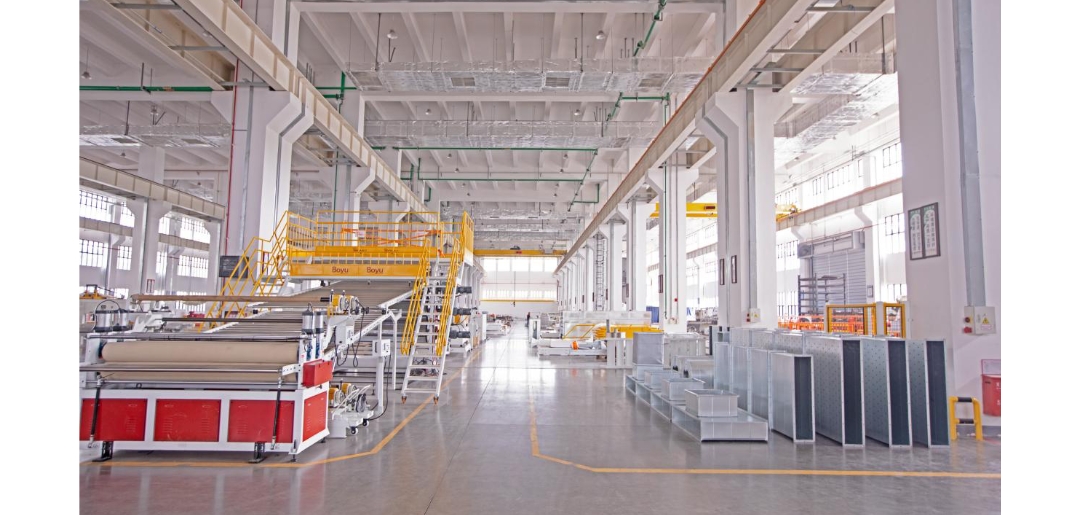
The third optimization phase expands beyond the extruder to eliminate downstream bottlenecks that restrict line capacity. Downstream optimization begins by balancing die channels and calibration cooling: streamline die channels so material distributes uniformly across all walls and ribs, preventing distortion that forces speed reductions. Next, optimize vacuum table water flow and vacuum levels to rapidly solidify outer profile walls, locking in dimensions at higher speeds.
Optimizing haul-off traction requires eliminating pulling pulsations and surges. Replace worn pads and calibrate clamping pressure to ensure uniform grip without slippage or chatter marks. Furthermore, synchronize haul-off drives directly with extruder output, using automated coordination to prevent tension spikes that thin profile walls.
Finally, optimize cutter cycle times and haul-off speeds to ensure downstream equipment does not limit line throughput. Systematically adjusting line speed, vacuum levels, cooling capacity, and haul-off synchronization removes auxiliary bottlenecks, allowing the PVC profile extrusion line to achieve its full designed capacity.
Recommended reading: Top 5 Tips to Improve Extrusion Process Stability in Manufacturing
How Do You Know When Your PVC Profile Extrusion Line Has Reached Its Performance Limit?
Every extrusion system has physical boundaries. Recognizing when machinery has reached its operational limits prevents wasted optimization hours and equipment damage.
Required Output Cannot Be Reached Within a Stable Process Window
The first clear sign is an excessively narrow process window. When slight material variations cause instability, or material temperature approaches decomposition limits despite cooling, screw plasticizing capacity is exhausted.
Higher Line Speed Causes Dimensional or Surface-Quality Problems
Second, raising speed inevitably generates wall collapse, rib cracking, or surface dulling that vacuum tuning cannot fix, proving downstream cooling capacity has reached its limit.
Scrap and Energy Consumption Remain High After Optimization
Finally, if extensive refurbishment and alignment fail to lower scrap rates and energy consumption, the equipment architecture is obsolete. At this stage, upgrading to next-generation extrusion technology becomes the only profitable path.
Improve Output and Efficiency with the Boyu Machinery PVC Profile Production Line
When legacy machinery reaches physical limits, upgrading to a modern industrial extrusion system eliminates throughput bottlenecks. The Boyu Machinery PVC profile production line offers a reliable, energy-conscious solution designed for long-term operational consistency:
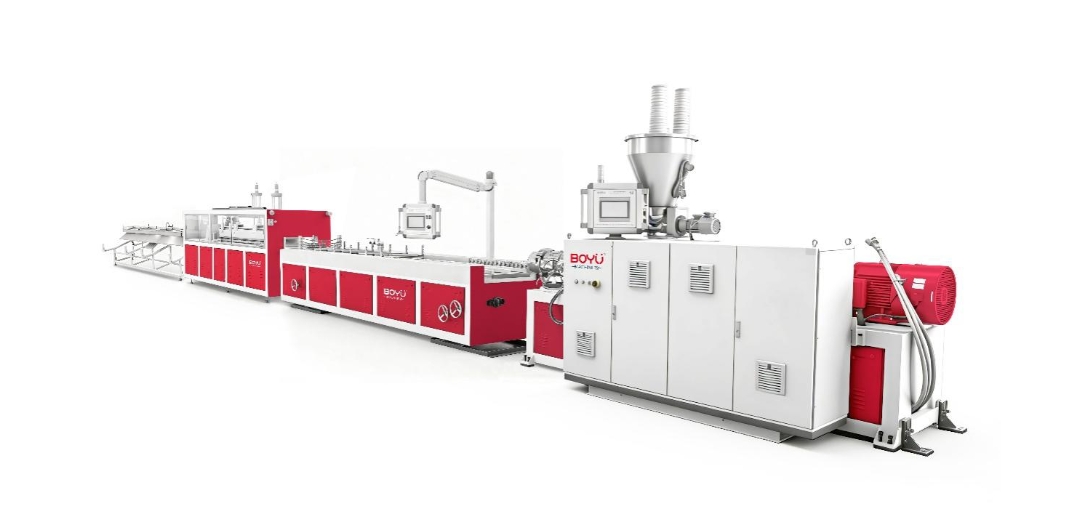
- Stable Plasticization & Heavy-Duty Reliability: Built with twin-screw extrusion technology optimized for PVC compounds, robust drive components ensure smooth conveying and steady pressure, helping maintain consistent profile dimensions and surface quality.
- Energy Efficiency & User-Friendly Control: Featuring an intelligent automated control system, the line balances thermal input and drive power effectively, maintaining compound fusion while reducing specific energy consumption and operating costs.
- Integrated Downstream Line Coordination: Tailored to customer profile specifications, Boyu Machinery provides complete tooling, vacuum calibration, traction, and cutting units that operate in synchronized harmony, supporting smooth, continuous production.
The Final Verdict: Tuning or Upgrading?
Achieving peak efficiency in PVC profile extrusion requires objective diagnostics, thermal balance, and downstream coordination. When legacy equipment reaches physical limits, manual adjustments yield diminishing returns. Are persistent wall variations or high electricity bills leaving you uncertain if your machinery has reached its limit? Contact Boyu Machinery today to consult our technical team and explore a customized PVC profile production line solution.





Comment