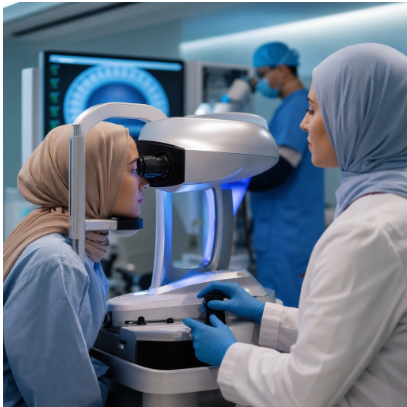
Vision health has never been more central to modern medicine. As populations age, screen time increases, and chronic eye conditions become more prevalent, the demand for sophisticated, patient-centered solutions has grown exponentially. From cutting-edge surgical procedures to next-generation contact lens technologies, the eye care industry is undergoing a quiet but profound revolution. Understanding the forces driving this transformation helps patients, practitioners, and investors alike make better decisions about the future of ocular health.
The Rise of Therapeutic Contact Lenses
Contact lenses have long served a corrective purpose, but the newest generation of therapeutic lenses goes far beyond simple vision correction. These devices are engineered to deliver medication directly to the ocular surface, manage chronic conditions such as dry eye disease, and even monitor intraocular pressure in glaucoma patients. The convergence of materials science, pharmacology, and optics has made this possible, and the market is responding accordingly.
According to recent industry analysis, the therapeutic contact lens market is projected to grow at a compound annual growth rate of 7.5% between 2022 and 2031, reflecting strong clinical interest and increasing patient adoption. This growth is being fueled by rising incidences of conditions like keratoconus, corneal ulcers, and post-surgical recovery needs, all of which benefit from the sustained, localized treatment that therapeutic lenses can provide.
Drug-Eluting Lenses: A New Frontier in Ocular Pharmacology
One of the most promising developments within the therapeutic lens category is the drug-eluting contact lens. Traditional eye drops suffer from a fundamental limitation: most of the medication washes away within seconds of application, with only a fraction actually absorbed by the eye. Drug-eluting lenses address this inefficiency by embedding pharmaceutical agents directly into the lens matrix, allowing for controlled, sustained release over hours or even days. Clinical trials have demonstrated meaningful improvements in patient compliance and therapeutic outcomes, particularly for conditions requiring consistent medication schedules such as glaucoma and allergic conjunctivitis.
Surgical Innovation and the Expanding Scope of Refractive Procedures
While therapeutic lenses represent a non-invasive frontier, surgical innovation continues to redefine what is possible in vision correction and restoration. Laser-assisted procedures have matured significantly since their introduction, with techniques such as LASIK, SMILE, and PRK now offering patients highly predictable outcomes with minimal recovery time. Beyond refractive correction, cataract surgery has evolved into one of the most refined and commonly performed procedures in all of medicine, with premium intraocular lens options allowing patients to achieve functional vision across multiple distances without glasses.
Corneal Procedures and the Role of Precision Medicine
Corneal health sits at the intersection of therapeutic lens use and surgical intervention. Conditions such as keratoconus, Fuchs’ endothelial dystrophy, and corneal scarring from infection or trauma often require a layered treatment approach. Corneal cross-linking, a procedure that uses ultraviolet light and riboflavin to strengthen corneal tissue, has become a standard of care for progressive keratoconus. Meanwhile, partial-thickness corneal transplants, including DSAEK and DMEK procedures, have dramatically improved outcomes for patients with endothelial dysfunction. These advances reflect a broader shift toward precision medicine in ophthalmology, where treatment is tailored to the specific anatomical and physiological profile of each patient.
Understanding the Anatomy Behind the Technology
To appreciate why these innovations matter, it helps to understand the complexity of the eye itself. The human eye is a remarkably intricate structure, with multiple layers of tissue, fluid dynamics, and neural connections all working in concert to produce vision. Detailed anatomical references on ocular structure underscore just how many components must function correctly for clear, comfortable vision to occur. Even minor disruptions at the corneal surface, within the lens, or along the retinal pathway can have significant consequences for visual acuity and quality of life. This complexity is precisely why both therapeutic lenses and surgical procedures must be designed with extraordinary precision.
The Retina and Beyond: Treating Conditions at the Back of the Eye
While much of the current innovation in therapeutic lenses focuses on the anterior segment of the eye, posterior segment conditions such as age-related macular degeneration, diabetic retinopathy, and retinal vein occlusion represent some of the most significant causes of vision loss worldwide. Intravitreal injections of anti-VEGF agents have transformed the management of these conditions, but researchers are actively exploring sustained-release implants and even gene therapy as longer-term solutions. The goal is to reduce the burden of frequent clinic visits while maintaining or improving visual outcomes for patients with chronic retinal disease.
Eye Surgery Today: A Trusted Resource for Patients and Professionals
Navigating the rapidly evolving landscape of eye care requires access to reliable, up-to-date information. Whether a patient is considering refractive surgery for the first time or a clinician is evaluating the latest therapeutic lens options for a complex case, having a trusted source of expert guidance is invaluable. Eye Surgery Today serves as a comprehensive platform dedicated to delivering accurate, clinically grounded content on the full spectrum of ophthalmic procedures and treatments. From detailed procedure overviews to recovery guidance and emerging research summaries, the platform bridges the gap between clinical expertise and patient understanding, empowering individuals to make informed decisions about their vision health.
The platform’s commitment to editorial accuracy and clinical relevance makes it a valuable resource not only for patients preparing for surgery but also for eye care professionals seeking accessible summaries of the latest developments in their field. In an era where health misinformation spreads rapidly online, resources grounded in medical evidence serve a critical public health function.
What Patients Should Know Before Choosing a Treatment Path
For patients facing a diagnosis that may require either therapeutic lens use or surgical intervention, the decision-making process can feel overwhelming. Several key factors should guide the conversation with an ophthalmologist. First, the underlying condition and its severity will largely determine which options are appropriate. Second, lifestyle considerations, including occupation, recreational activities, and tolerance for follow-up care, play an important role in treatment selection. Third, the experience and specialization of the treating surgeon or optometrist matters enormously, particularly for complex or high-stakes procedures.
The Importance of Comprehensive Eye Examinations
Before any treatment decision is made, a thorough diagnostic evaluation is essential. Modern ophthalmic diagnostics include corneal topography, optical coherence tomography, wavefront aberrometry, and endothelial cell counting, among other tools. These assessments provide a detailed map of the eye’s structure and function, enabling clinicians to identify the most appropriate intervention and set realistic expectations for outcomes. Patients who invest time in comprehensive evaluation are far better positioned to achieve lasting improvements in their vision.
Conclusion: A Convergent Future for Eye Care
The trajectory of eye care is one of increasing sophistication, personalization, and integration. Therapeutic contact lenses and surgical procedures are no longer competing modalities but complementary tools within a broader ecosystem of vision health management. As research continues to advance and technology becomes more accessible, patients across the globe stand to benefit from treatments that were unimaginable just a decade ago. Staying informed, seeking expert guidance, and engaging proactively with eye health are the most powerful steps any individual can take toward preserving and enhancing their vision for years to come.
Read More From Techbullion