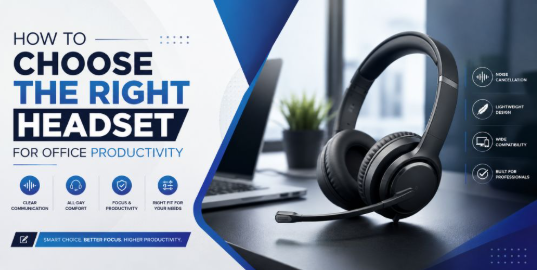
Modern workplaces rely heavily on communication. Meetings happen over calls, discussions take place on video platforms, and collaboration often depends on clear audio. A headset plays a central role in this setup. It affects how well you hear others and how clearly they understand you.
Many professionals overlook this small device. They choose something cheap or trendy without considering daily usage. Over time, this decision starts to affect comfort, focus, and performance. A well-chosen headset, on the other hand, supports long work hours and improves communication without effort.
This guide explains how to choose the right headset for office productivity with practical insights that actually help.
Why the Right Headset Matters More Than You Think
A headset is not just about listening and speaking. It directly impacts how you perform throughout the day.
Poor audio quality creates confusion. Background noise disrupts conversations. An uncomfortable headset leads to fatigue. These small issues build up and reduce productivity.
A reliable headset solves these problems. It helps you stay focused during meetings, improves clarity in calls, and reduces the need to repeat information. Over time, this leads to smoother workflows and better results.
Start with Your Work Environment
Every office setup is different. Your environment should guide your decision.
A quiet home office allows more flexibility. You can use a simple stereo headset without advanced features. On the other hand, a busy office requires better noise control. Background chatter, keyboard sounds, and nearby conversations can interrupt calls.
Noise-canceling headsets work well in such conditions. They reduce unwanted sound and keep your voice clear. This improves both sides of the conversation.
Think about where you spend most of your workday. A headset that matches your environment will always perform better.
Wired vs Wireless: Choosing the Right Type
This is one of the most common decisions people face. Both options offer clear advantages.
Wired headsets provide stable connectivity. There are no interruptions, and you never need to worry about charging. They work best for people who stay at their desks most of the day.
Wireless headsets offer freedom. You can move around, attend calls while walking, or multitask easily. This flexibility can improve comfort and efficiency.
Before you decide, consider your routine. If your work involves frequent movement, wireless makes sense. If you prefer a fixed setup, wired is a reliable option.
Many professionals prefer to buy headsets online because it allows them to compare both options easily and choose based on their exact needs rather than limited store availability.
Comfort Should Be a Priority
A headset may feel fine at first. However, after several hours, small discomforts become noticeable.
Pressure on the ears, a tight headband, or heavy weight can lead to fatigue. This affects concentration and reduces work efficiency.
Look for headsets with adjustable headbands. Soft ear cushions improve comfort during long sessions. Lightweight designs reduce strain and make it easier to wear the headset all day.
Comfort is not a luxury. It is essential for productivity.
Microphone Quality Makes a Big Difference
Many people focus on sound output but ignore microphone quality. This is a mistake.
A poor microphone leads to unclear communication. You may need to repeat yourself often. This slows down meetings and creates frustration.
A good microphone captures your voice clearly. Noise-canceling microphones filter out background sounds and focus on speech. This is especially useful in shared spaces or call center environments.
Clear communication saves time and improves professional interactions.
Audio Quality and Listening Experience
Clear audio helps you understand conversations without effort. It reduces listening fatigue and improves focus.
Stereo headsets provide balanced sound. They are ideal for immersive meetings and detailed discussions. Mono headsets keep one ear open, which can be useful in offices where awareness is needed.
Choose based on your work style. If your job involves constant calls, comfort and clarity matter more than deep audio features.
Device Compatibility and Connectivity
Before choosing a headset, check its compatibility with your devices.
Some headsets connect via USB. Others use Bluetooth or a 3.5mm jack. Make sure your headset works with your laptop, mobile device, or communication software.
Compatibility issues can interrupt your workflow. A smooth connection ensures consistent performance throughout the day.
Business Features That Improve Efficiency
Modern headsets offer more than basic audio functions. Business-focused features can improve daily operations.
Call control buttons allow you to answer or end calls quickly. Mute options help during meetings. Integration with communication platforms simplifies usage.
Professionals working in customer support or sales often benefit from advanced features. Many businesses rely on trusted brands like poly headsets because they offer consistent performance, clear audio, and reliable build quality for demanding work environments.
Battery Life for Wireless Headsets
Battery performance is an important factor for wireless users.
A headset that runs out of battery during a meeting can disrupt your workflow. It also creates unnecessary stress.
Choose a headset that offers enough battery life for a full workday. Fast charging can be helpful if you forget to charge it overnight.
Reliable battery performance ensures uninterrupted productivity.
Durability and Build Quality
Office headsets are used daily. They need to handle regular wear and tear.
Low-quality materials may break easily. This leads to frequent replacements and higher costs over time.
A durable headset lasts longer and performs consistently. It also provides better value in the long run.
Look for sturdy construction and reliable materials. This small investment pays off over time.
Noise Cancellation: Passive vs Active
Noise control plays a key role in office environments.
Passive noise isolation blocks external sound through design. It works well in moderately noisy spaces.
Active noise cancellation uses technology to reduce background noise. It is more effective in busy environments.
Choose based on your surroundings. Strong noise control improves focus and call quality.
Choosing the Right Fit for Your Role
Different roles require different headset features.
Customer support agents need clear microphones and long-lasting comfort. Sales professionals benefit from wireless flexibility. Remote workers may prefer balanced audio and comfort.
Understand your daily tasks. Choose a headset that supports your role instead of following trends.
Common Mistakes to Avoid
Many people make simple mistakes when choosing a headset.
They focus only on price. They ignore comfort. They choose features they never use.
Another common mistake is buying without research. This often leads to poor performance and dissatisfaction.
Take time to compare options. Focus on what matters for your work.
Long-Term Value Over Short-Term Savings
A cheap headset may save money initially. However, it often lacks durability and performance.
A slightly higher investment can provide better comfort, clearer audio, and longer lifespan.
Think of a headset as a work tool, not just an accessory. The right choice supports productivity every day.
Final Thoughts
Choosing the right headset for office productivity requires a thoughtful approach. It involves understanding your work environment, daily tasks, and personal comfort.
A good headset improves communication, reduces distractions, and supports long working hours. It helps you stay focused and perform better in every meeting.
Take time to evaluate your needs before making a decision. The right headset will not only improve your work experience but also enhance overall productivity in a meaningful way.
FAQs
What type of headset is best for office work?
A headset with a noise-canceling microphone and comfortable design works best. Choose wired for stability or wireless for flexibility based on your routine.
Are wireless headsets better than wired ones?
Wireless headsets offer mobility and convenience. Wired headsets provide stable connections without battery concerns. The better choice depends on your work style.
Do noise-canceling headsets really improve productivity?
Yes, they reduce background distractions and improve call clarity. This helps maintain focus and reduces communication errors during meetings.
How important is microphone quality in a headset?
Microphone quality is very important. A clear microphone improves communication and reduces the need to repeat information during calls.
Can I use a gaming headset for office work?
Gaming headsets can work, but they may not offer the comfort and microphone clarity needed for long office hours.
How long should a good wireless headset battery last?
A good wireless headset should last at least 8 to 12 hours on a single charge to support a full workday.
What should I check before buying a headset?
Check comfort, audio quality, microphone performance, compatibility, and durability. These factors ensure long-term satisfaction.
Is it better to invest in a premium headset?
Yes, a premium headset often provides better comfort, sound quality, and durability. It offers better value over time compared to cheaper options.
Read More From Techbullion