Before any cutting, drilling, or machining takes place, workers must carefully mark the surface of the material to indicate where the operation should occur. These markings act as guides that help ensure tools follow the correct path during the manufacturing process. Without accurate layout lines, achieving consistent results in metalworking would be extremely difficult.
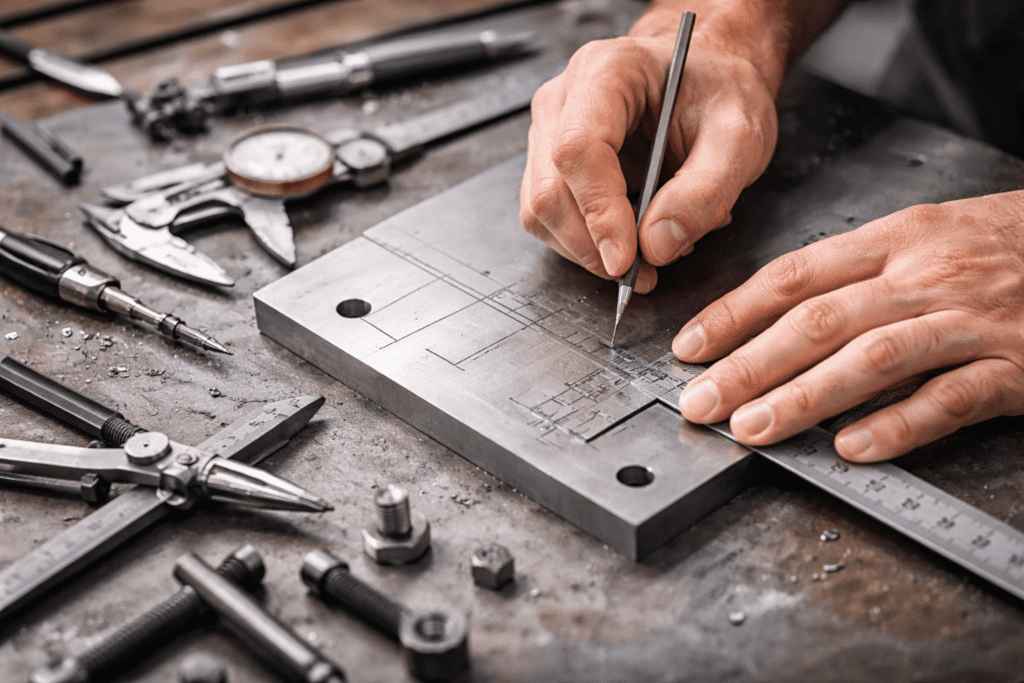
To create these precise markings, technicians and machinists often use a scriber tool, which is specifically designed to scratch fine, visible lines on metal surfaces. Unlike pencils or markers that can fade or smear, this tool creates a permanent mark that remains visible even during machining operations.
Why Marking Is Critical in Metalworking
In manufacturing and fabrication, marking the material is usually the first step before any shaping or machining begins. Engineers and technicians rely on layout markings to guide processes such as drilling, cutting, grinding, and milling.
These marks help define the exact location where work must be performed. For example, when drilling holes in a metal plate, accurate markings ensure that each hole is positioned correctly according to the design specifications. If the marks are inaccurate, the finished part may not align properly with other components.
Clear and precise markings therefore help reduce errors, improve efficiency, and maintain consistent product quality.
How Surface Marking Tools Work
Surface marking tools are designed to create thin, visible lines on hard materials such as metal, plastic, or glass. These lines act as reference points that guide machining operations.
A scriber tool typically features a sharp, hardened tip capable of scratching the surface of the material. By dragging the tip across the metal, the user creates a fine groove that remains visible even after handling or cleaning.
Because the mark is physically etched into the surface rather than drawn with ink or graphite, it will not fade or rub off during subsequent manufacturing processes.
Advantages of Using Precision Marking Tools
Using specialized marking tools provides several benefits compared with temporary marking methods.
Permanent markings
Scratched lines remain visible throughout the entire machining process, even when the material is exposed to oils, coolants, or handling.
Greater accuracy
Fine tips allow machinists to create thin, precise lines that improve measurement accuracy.
Improved durability
Unlike pencil or marker lines, etched markings are not easily erased by friction or contact.
Better alignment
Permanent layout lines make it easier for technicians to align cutting or drilling tools exactly where needed.
These advantages make precision marking tools essential in many manufacturing environments.
Common Applications in Workshops
Precision marking tools are widely used in workshops where accuracy is essential.
Metal fabrication
Fabricators use layout markings to guide cutting, welding, and assembly operations on metal components.
Machining operations
Machinists mark surfaces before milling or drilling to ensure that the cutting tools follow the correct path.
Engineering prototyping
When building prototype components, engineers rely on accurate markings to verify dimensions and positioning.
Maintenance and repair work
Technicians sometimes mark surfaces before modifying or repairing mechanical parts.
In each of these situations, precise markings help ensure that the final results meet design specifications.
Features That Improve Usability
Modern marking tools often include design features that improve comfort and usability.
Hardened tips
Tips are typically made from hardened steel or carbide to maintain sharpness and durability.
Ergonomic handles
Comfortable handles help users maintain control when marking long lines or working on detailed layouts.
Replaceable tips
Some tools allow tips to be replaced when they become worn, extending the lifespan of the tool.
Magnetic or pocket clips
Additional features can make tools easier to carry and store in a workshop environment.
These design elements help professionals perform marking tasks efficiently while maintaining accuracy.
Tips for Achieving Accurate Layout Marks
Creating accurate markings requires both proper technique and careful preparation.
Prepare the surface
Cleaning the metal surface removes oil or debris that could interfere with marking.
Use a straight edge
Guides such as rulers or squares help create straight, precise lines.
Apply consistent pressure
Steady pressure ensures that the mark is visible without damaging the surface.
Double-check measurements
Verifying measurements before marking helps prevent costly mistakes later in the process.
Developing these habits helps improve precision and efficiency in workshop tasks.
Why Precision Tools Remain Important
Despite the growing use of digital design and automated manufacturing systems, manual layout tools continue to play an important role in fabrication and repair work. In many cases, technicians must quickly mark materials on-site before performing modifications or maintenance tasks.
A scriber tool remains one of the simplest and most reliable ways to create accurate reference lines on hard surfaces. Its ability to produce permanent, fine markings makes it an essential tool in workshops where precision is critical.
Conclusion
Accurate marking is a fundamental step in many metalworking and fabrication processes. Clear layout lines guide cutting, drilling, and machining operations, helping ensure that components are produced according to exact specifications.
Using the right marking tools allows technicians to create precise and durable reference lines that remain visible throughout the manufacturing process. This improves efficiency, reduces errors, and contributes to the overall quality of the finished product.
For professionals working with metal and other hard materials, precision marking tools provide a simple yet effective way to maintain accuracy and consistency in every project.